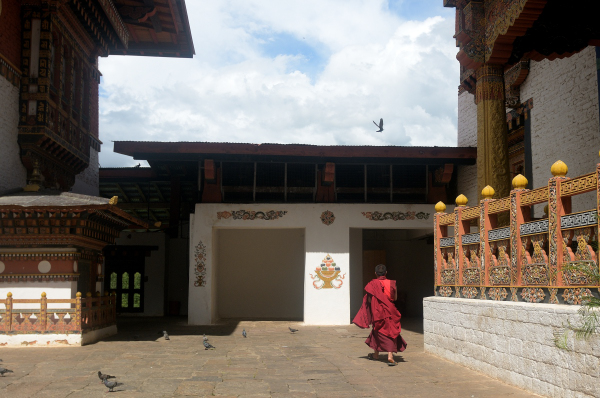
Bhutan is known for its unique architectural heritage, which is reflected in its Dzongs (Fortress-Monastery). Bhutanese Dzongs serve as both religious sanctuaries for monks and administrative centres for government officials. They showcase the harmony between spiritual and temporal governance in Bhutan. Punakha Dzong is the second-oldest Dzong in Bhutan.
Zhabdrung Ngawang Namgyel was a 16th-century Buddhist leader who established a centralised government and unified Bhutan. He laid the foundation of the magnificent Punakha Dzong ( the palace of great happiness) in 1637. This grand Dzong was completed in a span of 1 year. It was the administrative centre and the seat of the Government of Bhutan until 1955. After that, the capital was moved to Thimphu.
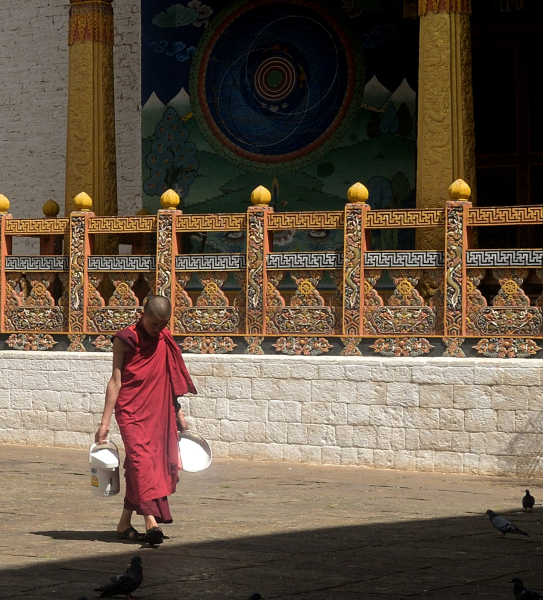
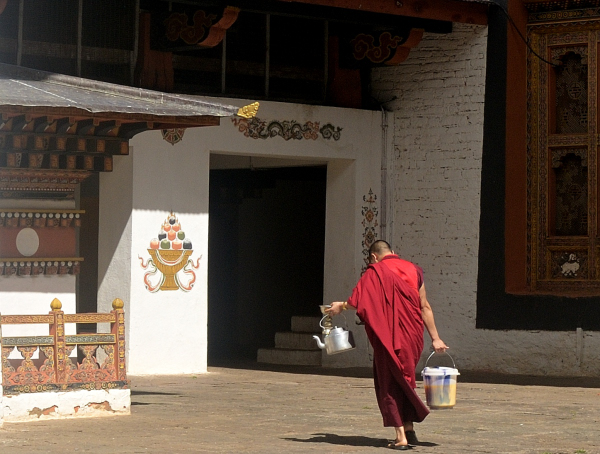
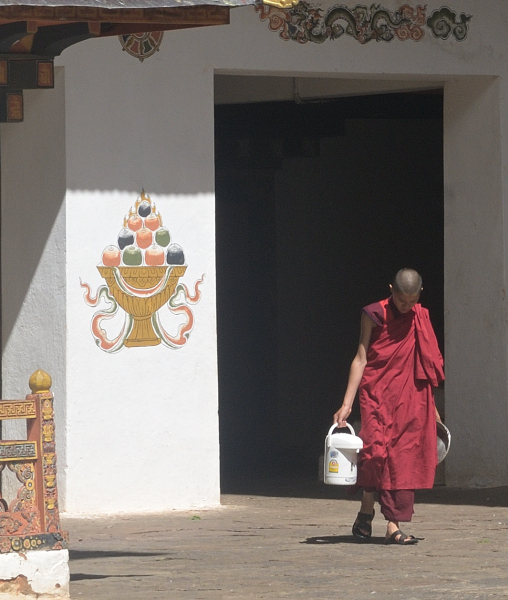
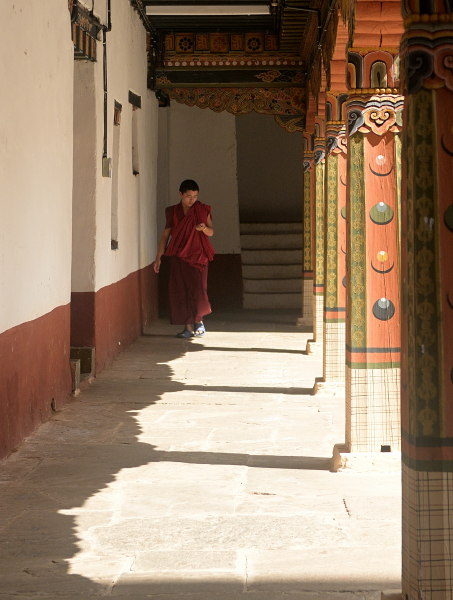
Punakha Dzong is a Bhutanese architectural marvel, constructed by interlocking stones and wooden beams, without the use of nails. From the ornately carved wooden windows to the towering whitewashed walls, it is an architectural masterpiece. It is situated at the confluence of two rivers, the Pho Chhu and Mo Chhu, at an altitude of 1,200 meters (approximately 3,937 feet).
It has three docheys (courtyards), unlike the other dzongs that usually have only two courtyards. The first courtyard is dedicated to administrative functions, featuring a large white Victory Chorten and a Bodhi tree. The second, the smallest, serves as the entrance to the central tower. The third docheys of Punakha Dzong houses the main temple and the temple holding national treasures. This beautiful palace houses many sacred relics.
The Bazam Bridge of Punakha, Bhutan, rebuilt in 2008, is the only access to Punakha Dzong. The original bridge, built in the 17th century, was washed away during a flood in 1958. The traditional Bhutanese architecture and colourful prayer flags make the bridge unique.
Photos and text by Prerna Jain.

 Prerna's Photographs