“We have given the title to a madman or a genius; time will tell,” said the director of the ETSAB Escola Tècnica Superior d’Arquitectura de Barcelona when Antoni Gaudi was awarded the title of architect in 1878.
Antoni Gaudi masterfully blended functional features in nature with aesthetics in his iconic building Casa Mila, also known as La Pedrera. It was commissioned by Pere Mila i Camps and his wife Roser Segimon i Artells as their family home. The building was designed to be a modern and comfortable family home. The couple lived in the building as long as they were alive. After their death, Casa Mila was opened to the public as a museum and cultural centre.
Biomimicry means emulating nature’s forms and processes to create designs. Antoni Gaudi’s Casa Mila is a beautiful example of architectural biomimicry. It displays Gaudi’s innovative approach to architecture.
According to Gaudi, nature was his teacher. “The big book, always open and we must strive to read, is that of nature,” he said.”
The Casa Mila building is divided into nine floors: a basement, ground floor, mezzanine, main level, four upper levels, and an attic. A central courtyard helps climate control on all nine stories.

Casa Mila is known for its stone facades and wrought-iron balconies. The façade features stone-styled twisted iron railings (designed by Josep Maria Jujol). La Casa Mila has no right angles, the curved lines and shapes mimic the forms found in nature. The lack of right angles in the building gives it a sense of movement, evoking the fluidity of waves.

This flowing design creates the impression that the building is sculpted not constructed. The façade is adorned with intricate stone carvings. These carvings are a characteristic feature of Gaudi’s work and reflect his interest in elements of nature. The name La Pedrera comes from its quarry-like appearance and open floor design. Contemporary designs, curved structures, the play of light and shadow, and his meticulous attention to detail make it a photographer’s delight.


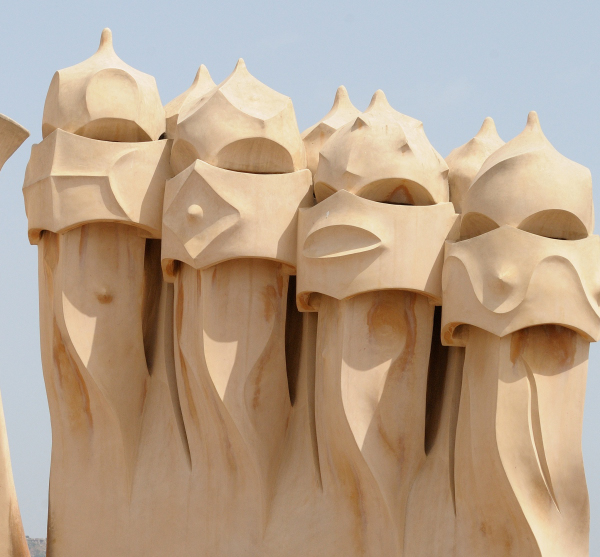
On the roof is the famous sculpture terrace. It houses skylights, emergency stairs, fans, and chimneys They have been designed like sculptures. The interior of the building is as innovative as the exterior, with a series of winding staircases, arched doorways, and colourful mosaics. Gaudi’s use of curves is evident throughout the building. The interior spaces are designed to flow seamlessly into one another. The entrance hall is remarkable. A sweeping staircase and skylight flood the place, with natural light. The public spaces of the building, such as the ballroom and the salon, are beautiful. They have high ceilings, ornate plasterwork, and colourful mosaics.


La Casa Mila was declared a World Heritage Site by UNESCO in 1984, because of its architectural and cultural significance.
Antoni Gaudi, one of the most renowned architects of all time, was run over by a tram. He lay unconscious on the track for a long time. People didn’t recognise him because of his shabby appearance. They thought he was a beggar. Precious time was lost, after a long time, a civil guard admitted him to the hospital. Gaudi died there on June 10, 1926. He rests in the chapel of the Sagrada Familia, one of his most famous works, Spain’s most visited architectural works.
His tombstone reads “…here the ashes of such a great man await the resurrection of the dead”.
Photos and content by Prerna Jain.

 Prerna's Photographs