
The festival of colours
As a child, Holi was my favourite festival. My most beautiful Holi memories are from the years spent in the Kumaon region of Uttarakhand. The Holi songs I heard decades ago, sung by Kumaoni men and women, are fresh in my ears. I wonder if Holi in Kumaon is still as beautiful as it used to be.
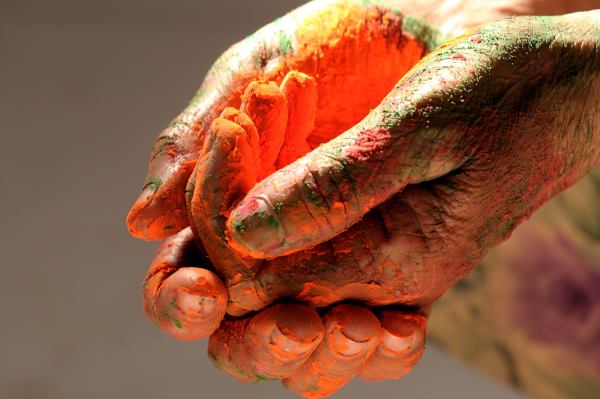
The songs I remember revolved around the love stories of Radha and Krishna. My friend’s grandmother told me a beautiful story about why Holi is a festival of colours. Baby Lord Krishna complained to his mother, asking why was Radha fair while he was dark skinned. His mother, Yashoda, told him he could paint Radha’s face with any colours he liked. Krishna playfully applied colours on her face.
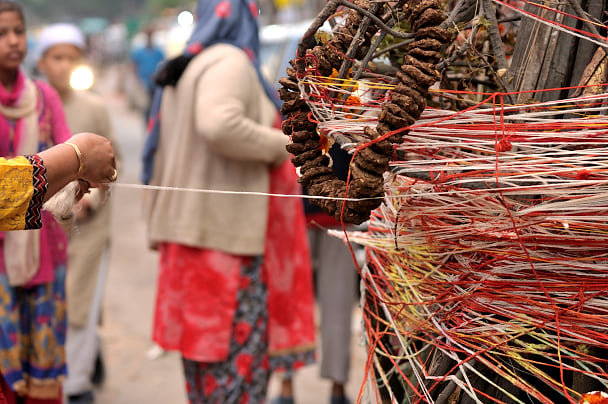
The festivities start on the night before Holi. The evening of the full moon night in the month of Falgun, which falls either in March or February in the Gregorian calendar. It begins with the lighting of bonfires. People gather around the flames to sing and pray. This ritual is called Holika Dahan. The ritual is an enactment of the death of the demoness Holika. She tried to kill her nephew, Prahlada, by burning him in a pyre. Prahlada was saved from the flames by Lord Vishnu. Holika was burnt to death– a classic story of the victory of good over evil.
The real fun for me was on the day of Holi. People of all ages got together, smearing each other with gulal(colored powders). Children, young men and women drenched one another with colored water. As children, on Holi, we used to get up early to fill water balloons. We threw balloons at each other. Gulal was meant for the elderly. My grandmother made organic colour for us with Tesu flowers. We hardly played with it; it wasn’t enough to last for hours. We loved playing with bright colours, not just one colour.
Playing with colours was usually restricted to the first half of the day. After that, we retreated to their homes to shower and gorge on festive Holi food. We were soaked in colours, and our parents could only see our eyes and teeth. The rest of our face was hidden behind multiple layers of colours. The bathroom was colored with rainbow colours after we had taken a shower. Some stubborn colours that would not go away with besan(chick pea flour) and mustard oil concoction had to be removed with kerosene.
“I told you to apply mustard oil on your skin before playing Holi, but you never listen to me,” My mother would repeat every year. She was concerned about the harm kerosene oil could do to my skin.
A pile of clothes soaked in Holi colours was kept outside the bathroom, in a corner.
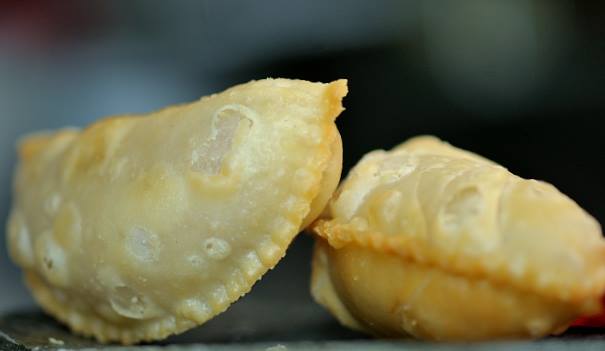
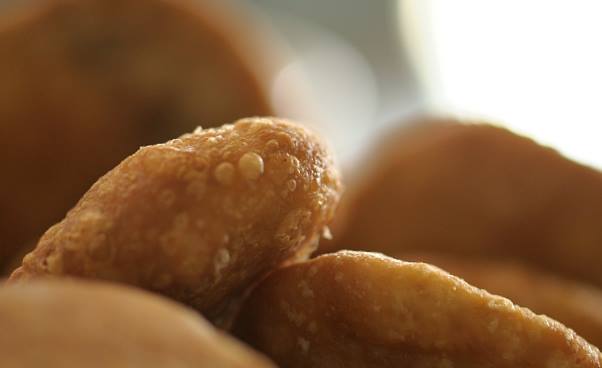
We used to be very hungry and tired after all this fun. Our favourite food was waiting for us. Gujiyas(fried sweets filled with dry fruits and nuts), Kachoris( spicy, fried bread filled with lentils) served with sweet and sour pumkin and potato curries, dahi vadas(deep-fried lentil fritters served with yogurt and tamarind chutney), and kanji(a traditional drink made by fermenting black carrots in water and spices). Another traditional Holi drink was Thandai, which was served to the guests who visited us to play Holi. It was served in the verandah, with gujhiyas and other savoury snacks. The guests did not enter the house as they were all doused in colours. Thandai was a concoction of milk, rose petals, cardamom, almonds, a hint of black pepper and fennel seeds.
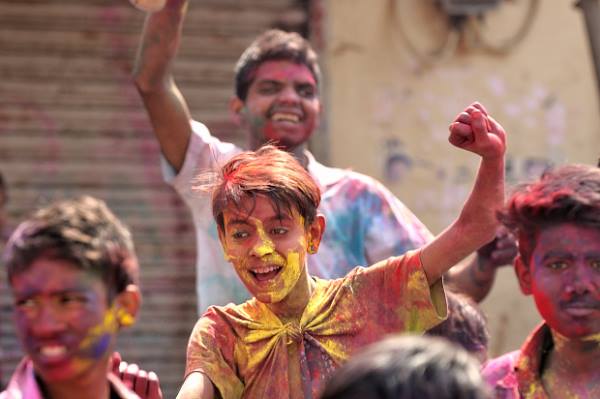
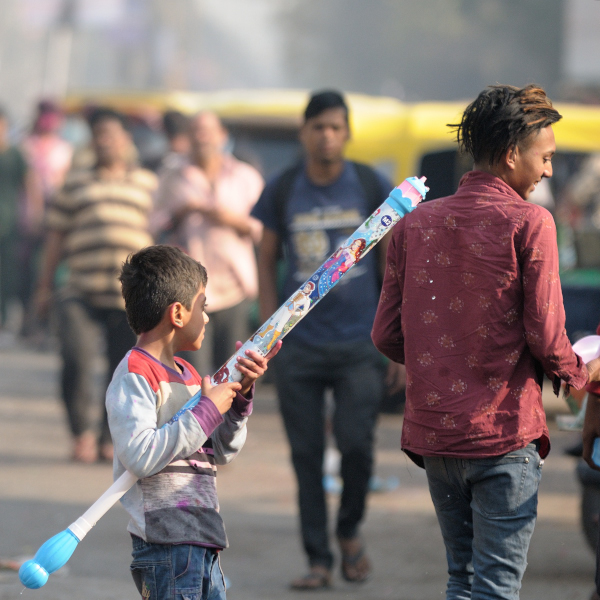
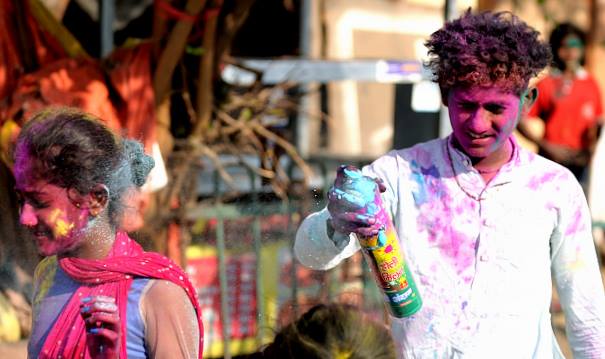
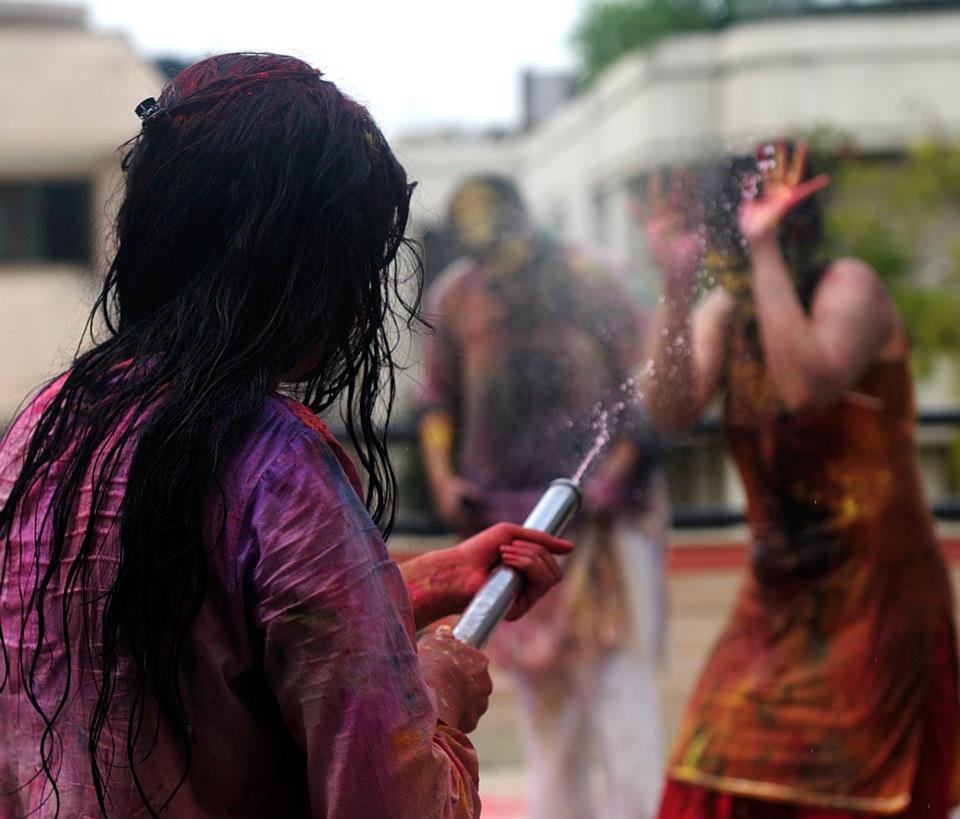
I saw young kids playing Holi; it brought back so many childhood memories. A rainbow of gulal(coloured powder) swirled as kids doused each other with fists full of gulal. Red, yellow, and green colours hovered in the air. Children were throwing coloured water on each other. The pichkaris(water guns) used by children these days are different now, mostly plastic. Haven’t seen brass pickaris for a very long time.
Times have changed. On good old Doordarshan, the evening headlines used to be, Holi ka tyohar sare desh mein harsh-ulhas key sath manaya gaya. Unfortunately, polarised debates have replaced traditional festive news.
Photos and content by Prerna Jain.

 Prerna's Photographs