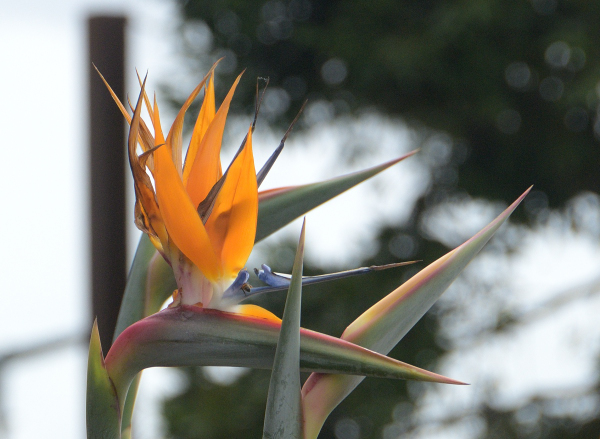
Once upon a time, there was a family of pretty birds with long legs and colourful feathers. They could fly much higher than the other birds. These birds made nests on high mountaintops. They were arrogant and too full of themselves; they bullied other animals and made fun of others. God punished them and stuck their legs into the ground. Their beautiful legs turned into roots, and their beautiful wings into dull green leaves. The only parts that could remind them of their beauty were the orange and purple ‘plumes’ on their heads.
I am referring to the Strelitzia, also known as the Bird of Paradise flower. The name is confusing; is it a bird or a flower? The story clears up the confusion. The story is fictional, but Strelitzia is an exotic flower, characterised by its crane-like petals that fan out to resemble a bird in flight. Bird-of-paradise flowers are brightly coloured; they look like the head of a bird, with purple and orange feathers emerging from the top. In full bloom, these flowers look like several birds hidden in a clump of foliage, craning their necks up with beaks pointing in different directions.
The bird-of-paradise flower’s Latin name, scientific name, Strelitzia reginae, is in honour of Queen Charlotte of Mecklenburg-Strelitz. She was a patron of botany and the wife of King George III of England.
It is a tropical plant in the family known as gingers (Zingiberales).
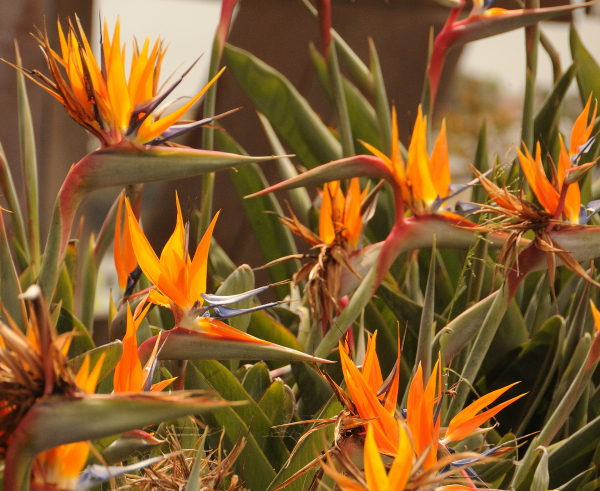
A healthy, mature bird-of-paradise can produce up to 36 flower spikes a year, and can bloom all year round. Placed on long stalks that can reach five feet in height, these brightly coloured flowers entice bird pollinators. Birds come to them looking for the nectar, which is found at the base of the flower where two petals join together.
A green, red, or purplish bract forms on the stalk. The flower emerges from this hard, beak-like sheath called a spathe.
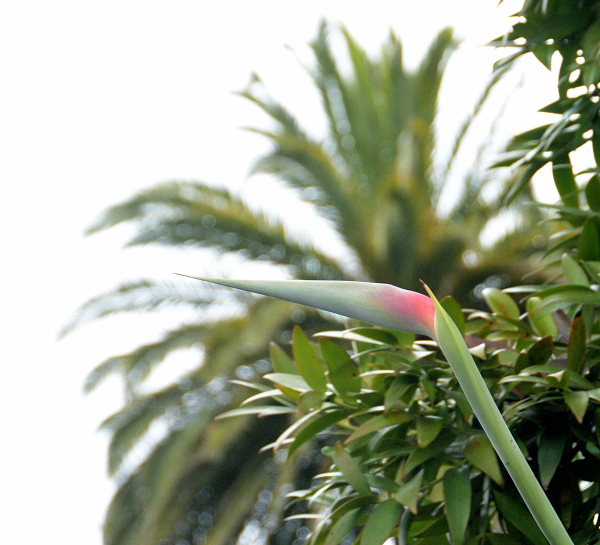
The flowers emerge one at a time from the spathe. The spathe opens along its top edge and reveals the flower’s petals, stamens, and stigma. When a bird hops onto the smaller, lower petal, the bird’s weight exposes the anthers. They brush their pollen on the bird’s feet. When the bird flies to another flower, it lands on the sticky stigma and deposits pollen on it.
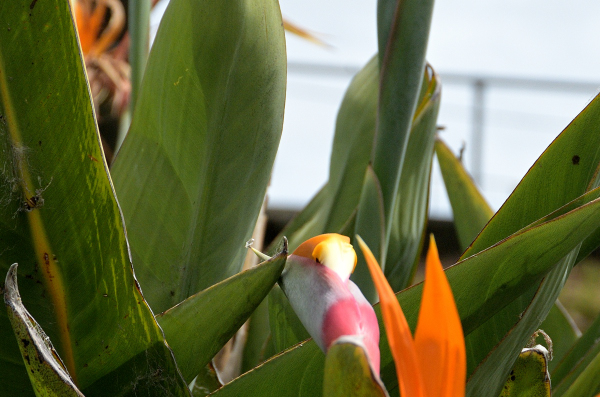
The leaves on a bird-of-paradise plant are arranged to form a clump of thick, waxy, and evergreen foliage. The colour of the leaves varies from glossy, deep green to blue-green to grey-green.
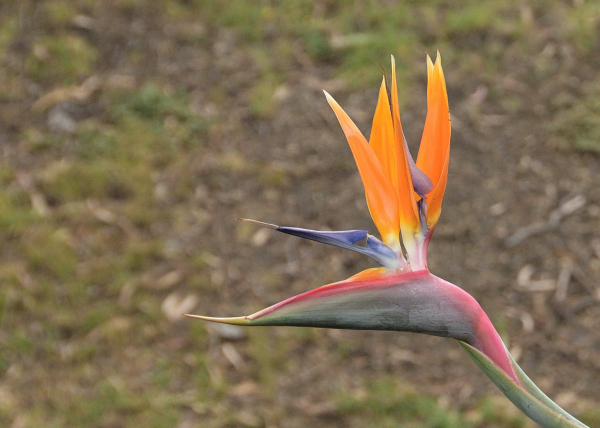
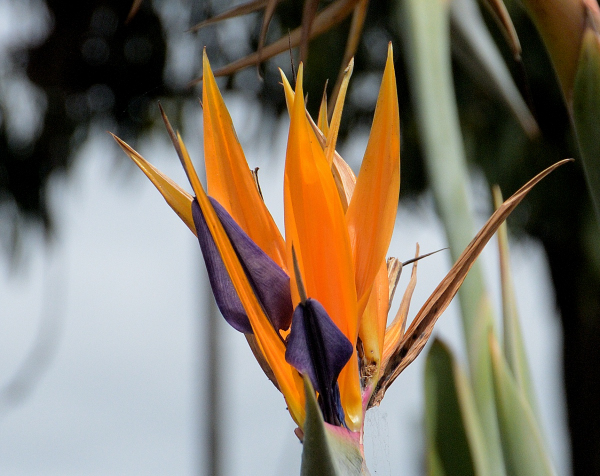
The crown of sepals is white or faintly pink, with petals arising from a dark purplish black bract.
The Bird of Paradise flower symbolises joy and freedom. It resembles an exotic bird taking flight, which is why this beautiful flower is linked to soaring to new heights.
Photos and content by Prerna Jain.

 Prerna's Photographs