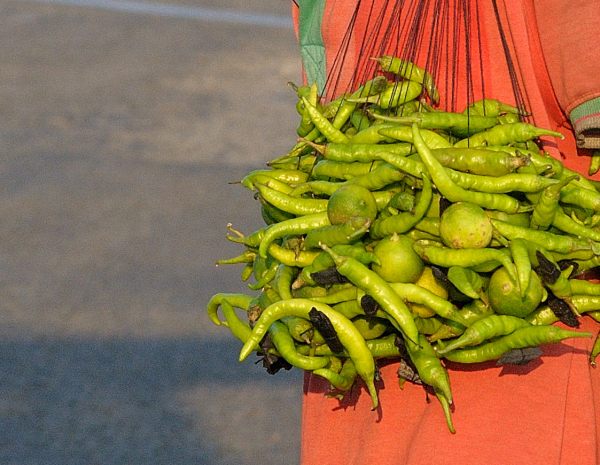
“Buri Nazar Waale Tera Muh Kaala” roughly translates to “The one with evil eye, may your face be blackened”. This Hindi phrase can often be read behind trucks. The “evil eye” or “nazar lagna” is a common superstition. It is believed that all kinds of illnesses, pains, epileptic fits and handicaps can be caused by an evil eye, which explains mothers making a black mark on the forehead of the child before taking him/her out of the house. Black mud pots with fierce faces drawn on them are also hung on the door of a new home; the purpose is to protect the house from “ the evil eye.” There are commercials selling yantras and other “remedies” to protect from the evil eye.

Some things don’t change, even with everything changing around you. I realised this while enjoying lunch with my friends. There was a breaking news sort of announcement by one of my friends. We were trying to keep our handbags on the floor next to our chairs, to make room for plates and cutlery, on the not-so-roomy table. A table for eight should ideally be a table for six in most restaurants. My friend said that she has been advised by a wise man that handbags should not be kept on the floor, as they contain money. Placing them on the floor would mean insulting Goddess Laxmi. Within no time, all the women picked up their handbags and kept them on their laps, or on the back of their chairs if possible. I wasn’t surprised; nobody wants to annoy Laxmiji.
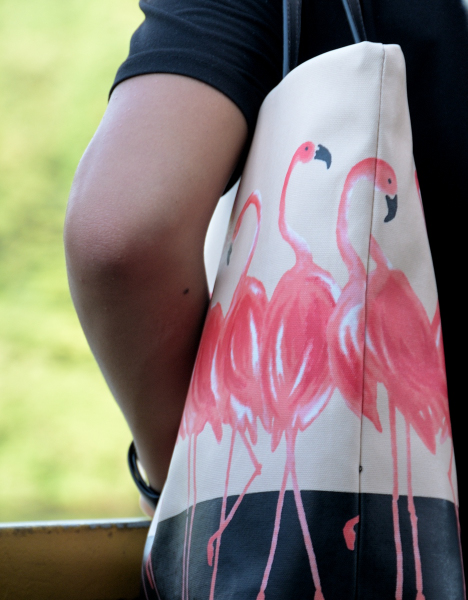
I am reasonably sure that none of these women will ever put their handbags on the floor again. Was this the birth of a new superstition? The very mention of superstition opened the floodgates, and a long debate about superstitions started; some of it was quite fascinating. Remember, all these women were literate and represented the elite of the society. One of them complained that her mother wouldn’t let her wash her hair on Thursday, and when she protested, she was emotionally blackmailed- You have only one brother, it might bring harm to him. My friend couldn’t risk that ever, even if she didn’t believe her mother. I would not let these idiosyncrasies pass to the next generation, she exclaimed. Not washing hair is not the only taboo on Thursday, another one of the distinguished ladies made another revelation- we don’t eat bananas on Thursdays. Why? Bananas don’t know the days of the week, but her mother thought otherwise.
Superstitions tend to unite Indians as they are almost identical, all over India, despite religious and cultural differences. I would like to list a few which are common to most Indians-
A pregnant woman should avoid coming into the open during an eclipse to prevent deformity in her newborn.
A horseshoe nailed to the front gate assures that evil spirits won’t enter the house.
A black cat crossing your path is not a good omen. Some people would drive around the block to avoid going over the cat’s trail, or wait for a long time for somebody to walk over the trail before they step on it.
My grandmother believed that when you find one of your shoes lying over the other, you should get ready to travel.
If you get hiccups, it is an indication that you are remembered by someone near and dear, if you recite the names of all the people who can possibly remember you, there is a chance that you can might get relief when you pronounce the name of the right person.
If the left eye of a woman quivers, she is going to get some good news, however if it is the right eye it could mean bad news. My mother believed this one.
A cawing crow heralds the arrival of a guest. I guess before the phones were invented, this was the only way of knowing if you had to cook for some extra people. The crows around my house are pretty lazy; they are mostly quiet, although I regularly host a large number of guests.
There are two versions about the effect of sneezing, the first one — If you sneeze, it means that someone is speaking well of you. The other version is that if you sneeze, it brings bad luck. My family believes in the second version. During my uncle’s marriage, unfortunately, I was in the grip of a common cold. The result was that I sneezed on all possible occasions. The expression on my mother’s face was one of embarrassment. I won’t like to mention the expression on the faces of my not-so-friendly relatives. My uncle is an old man now, happily married to date, although I am not sure if the relatives are happy about their marriage
Long before Ekta Kapoor and Karan Johar popularised the addition of the letter ‘k’ in the titles of their films and soaps, there was a very popular film director (late) Mehboob Khan who got obsessed with the alphabet A, which he took as a guarantee for success. He produced Anokhi Ada (1948), Andaz (1949) and Aan (1952), all of them proved box-office hits. Amar flopped in 1954, and hopefully, he realised his mistake.
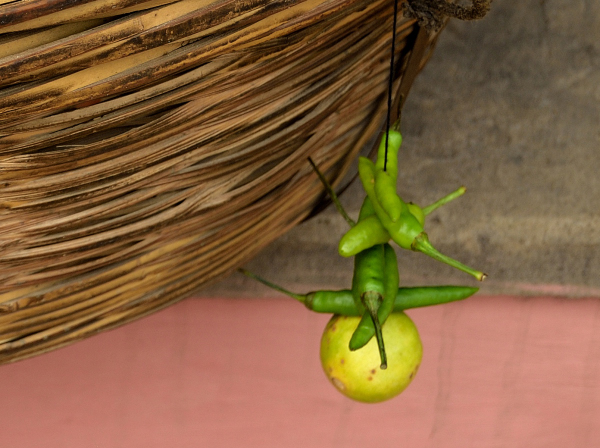

A lemon with chillies tied together, hanging outside small shops to protect the business from an evil eye, is a common sight. Once I saw a modern version of lemon and chilly string, it was made of plastic. I wonder if it is considered as effective as the time-tested natural version.
Another common superstition is not sitting under a peepal tree at night. It is said that the Peepal tree is home to ghosts or spirits at night. Sitting under one can make them stick to you.

Couples lock padlocks, especially on bridges, and then throw the key away, symbolising their everlasting bond.
In many cultures, the number 13 is considered unlucky. I have heard about buildings or lifts where the number 13 is missing. The fear of 13 is called triskaidekaphobia. It is considered extra unlucky when coupled with Friday, because it was the day Christ died.
According to the dictionary, superstition is an irrational belief arising from ignorance or fear. They may be weird and don’t make sense, yet superstitions often influence the everyday actions of quite a few people, all over the world. If anybody has heard about any new superstitions, please share.
Photos and content by Prerna Jain.


 Prerna's Photographs