
If you see the Oriental darter (Anhinga melanogaster) swimming from a distance, you might confuse it with a snake. They swim with their bodies underwater. Only their long, serpentine necks are visible. That is why they are called ‘snakebirds.’ The name Anhinga was given to them for the same reason. Anhinga comes from the Tupi Indians in Brazil, meaning “devil bird” or “evil spirit of the woods.”
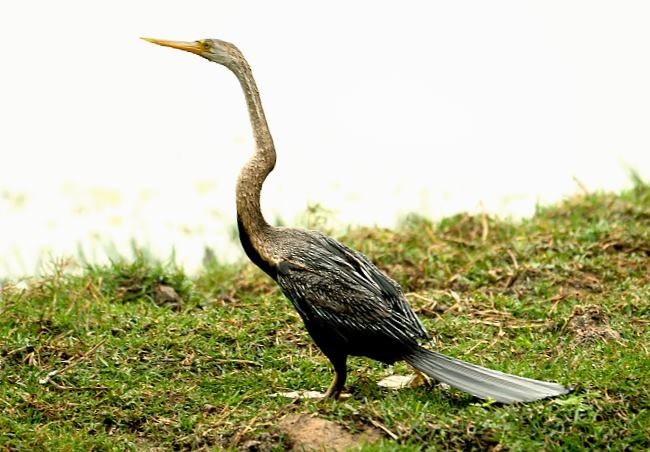
Anhinga is a long-tailed water bird with dark, glossy wings and a long, snake-like neck. Most other waterbirds have three toes, but Anhingas, like cormorants and pelicans, have four webbed toes.
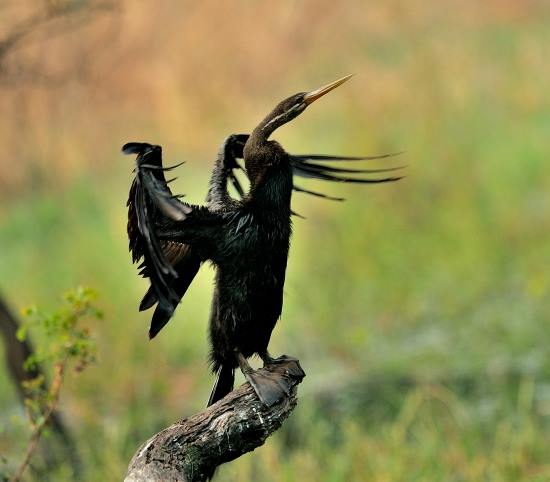
You can see them perched on branches above a water body, with their wings spread to dry.
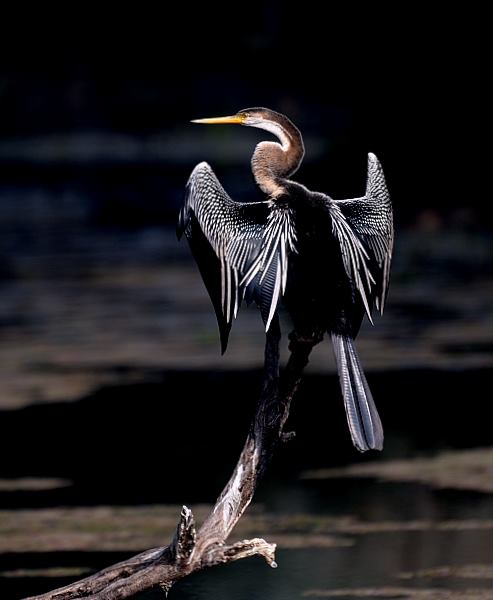
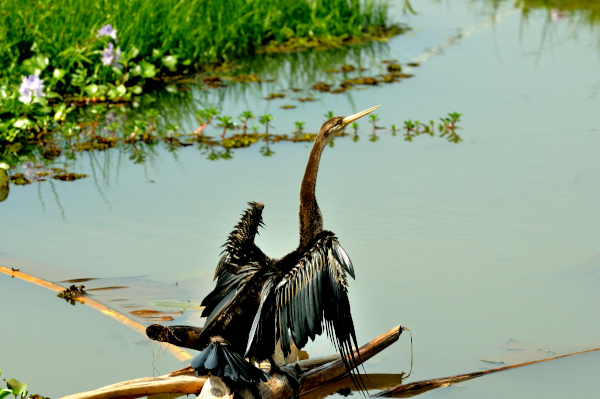
They propel themselves underwater with their big, webbed feet and spear the fish with their sharp, long, dagger-like bills. To get the fish into their mouths, they jerk their heads and force the fish toward the tip of their beak. They then toss it up and catch it in the beak. Unlike other water birds, they don’t have waterproof feathers. After fishing, they perch on branches of trees, on the edges of water bodies, with their silvery wings outstretched to dry their feathers.
Photos and text by Prerna Jain.

 Prerna's Photographs