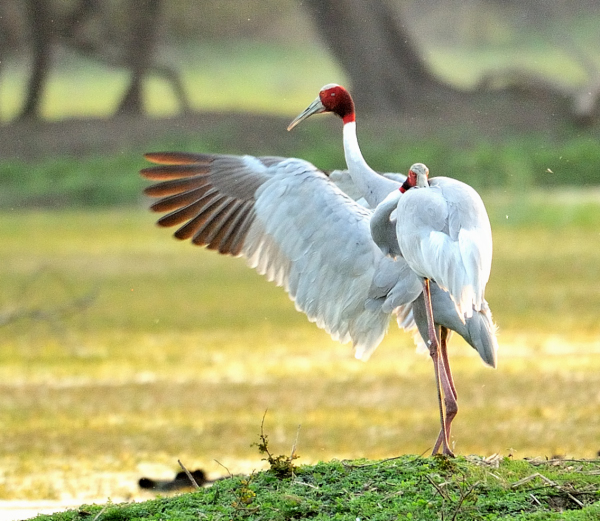
For centuries, the sarus crane (Grus Antigone) has been revered as a symbol of love and fidelity.
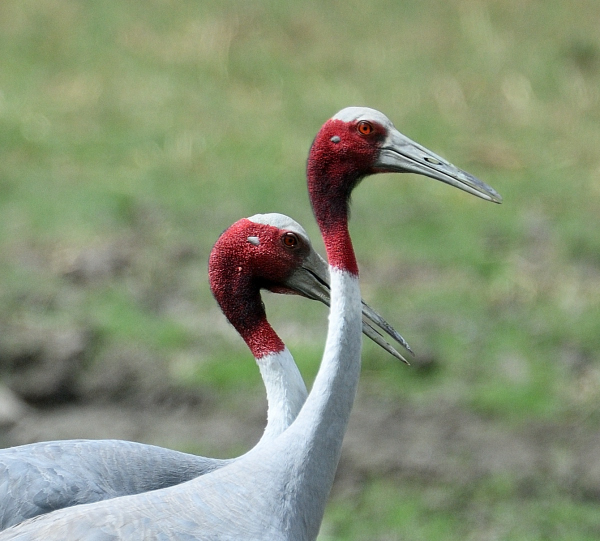
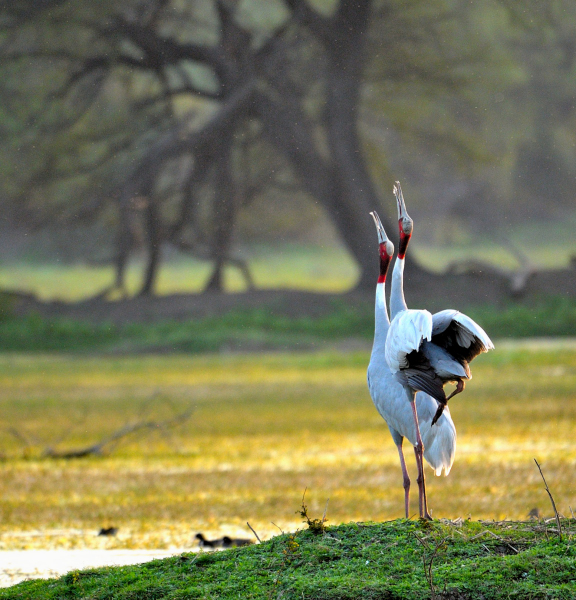
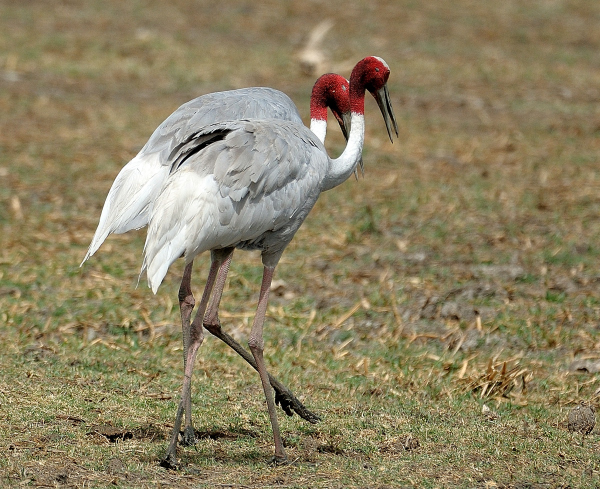
Sarus cranes eat, sleep, fly, walk and dance together. They produce loud trumpeting calls during the breeding season. Sarus cranes dance, bow, arch, and spring into the air with wings spread in ecstasy. The couple shares the responsibility of building a nest and raising their young. Both parents take turns incubating the eggs.
It is said that sarus cranes mate for life, a bond that can last for over 20 years. The surviving partner pines away if one of the partners dies, a notion that has been passed down through generations. In some regions of India, it is a custom to take the newlyweds to see a pair of sarus cranes. The Gond tribes consider the sarus cranes a sacred bird.
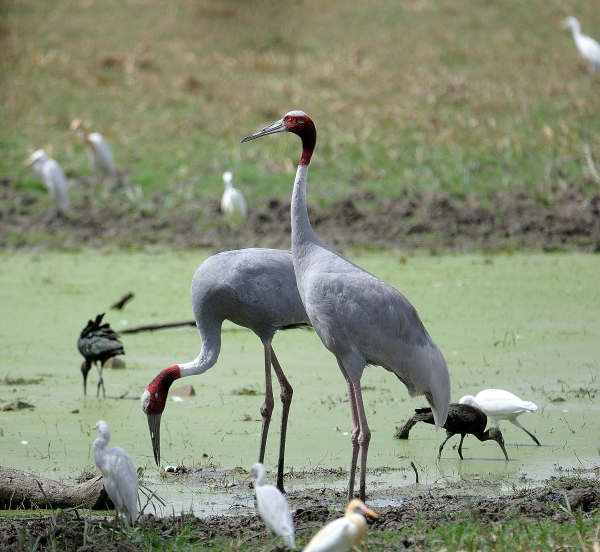
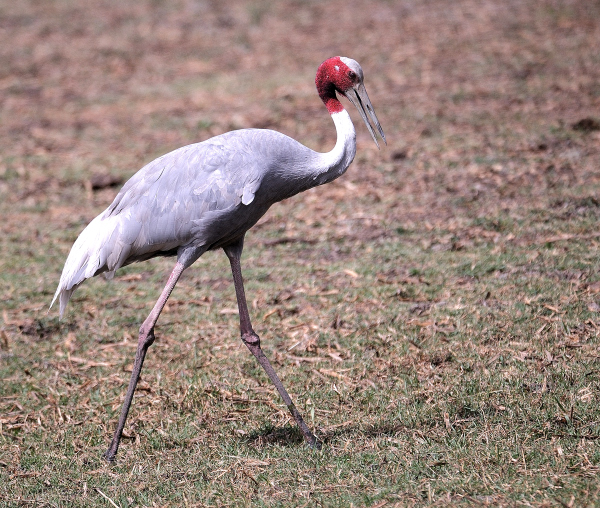
At about six feet in height, sarus cranes are the world’s tallest flying birds. Their wings spread to about eight feet. The head, throat and upper neck of the sarus crane are deep red; the rest of its body is light grey in colour. There is a white collar separating the red of his upper neck from the grey below. The red colour turns brighter during the breeding season. The top of the head has a white patch, and a small white spot is located behind the eye. The beak is white to light grey, and its long legs are pale red. Males and females are identical, but males tend to be larger than females. The heads of juveniles (less than four months of age) are dull red, while adults have a dark red colour with a bald patch on top.
Sarus cranes have inspired numerous legends and folktales. Legend has it that sage Valmiki was inspired by sarus cranes when he wrote the epic Ramayana. He was watching a pair of courting sarus cranes when a hunter’s arrow killed the male sarus crane. The female sarus was bereaved. Its loud wailing calls moved sage Valmiki. He cursed the hunter. The curse turned out to be in rhyme.
The sarus crane is mentioned in the poetry of Kalidasa, one of India’s greatest poets and writers. And in the story of Lord Buddha. Mughal Emperor Jahangir, who ruled India in the early 17th century, used to breed sarus cranes.
The number of sarus cranes is gradually decreasing due to widespread shrinking of their wetland habitats. Due to its declining population, the Indian sarus crane has been listed as a globally threatened avian species (The IUCN Red List, 2017; Bird Life International, 2017). The sarus crane was declared the state bird of Uttar Pradesh in 2014.
Photos and text by Prerna Jain.

 Prerna's Photographs