Quirky, chaotic, yet meditative. Banaras is a lifetime of experience; its contradictions leave you intrigued and enthralled at the same time. A visit to Banaras impacts all your senses and your soul. Its history, art, culture, and food leave an unforgettable imprint. You are left wondering what impacted you more: the antiquity, the culture, the social and religious traditions, or the people of Banaras.
Banaras means so many different things to different people. Kedarnath Singh, the celebrated Hindi poet, eminent critic and essayist, skillfully captures this diverse essence of Banaras in the poem “Banaras”.
इस शहर में वसंत
अचानक आता है
और जब आता है तो मैंने देखा है
लहरतारा या मडुवाडीह की तरफ से
उठता है धूल का एक बवंडर
और इस महान पुराने शहर की जीभ
किरकिराने लगती है
Spring comes to this city very suddenly,
And when it does, I have seen a whirlwind of dust rising from Lehartara or Maduvadeeh and the tongue of this grand old city
starts feeling gritty.
(Maduadeeh is the birthplace of Saint Raidas, and Lehartara is associated with Saint Kabirdas).
The poem vividly portrays the unique identity of this ancient city. It paints a nuanced picture of Banaras that showcases its enigmatic charm. On one end are the celebrations symbolised by spring, and on the other end is the spiritual side, symbolised by the whirlwind of dust created by the wisdom of saints like Raidas and Kabirdas.
Mirza Ghalib, one of the greatest poets of the Urdu language, describes Banaras as the “Ka’aba of Hindustan” or the Mecca of India in his masnavi (long poem) “Chiragh-e-Dair ( Temple Lamp), written as a homage to the city of Banaras.
Ibādatkhāna-e-nāqūsiyānast
hamānā ka’aba-e-hindostānast
The (supreme) place of worship for
the conch-blowers, surely, (Banaras) is the Kaaba
of Hindustan.
In another verse, he compares Banaras to paradise-
Ta’ālallah banāras chashm-e-bad dūr
bahisht-e-khurram-o-firdaus-e-ma’mūr
May god keep Banaras
from the evil eye, it is heavenly bliss,
paradise established.
(Translated from Persian to English by Dr Maaz Bin Bilal in his much-acclaimed book, Temple Lamp) – Chiragh-e-Dair (Temple Lamp: Verses on Banaras)
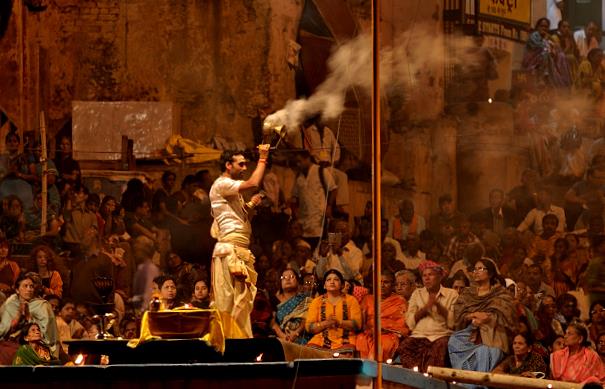
Witnessing the Ganga Aarti, is an overwhelming experience.

Devotees bathe in the ghats (embankment steps) along the Ganges.
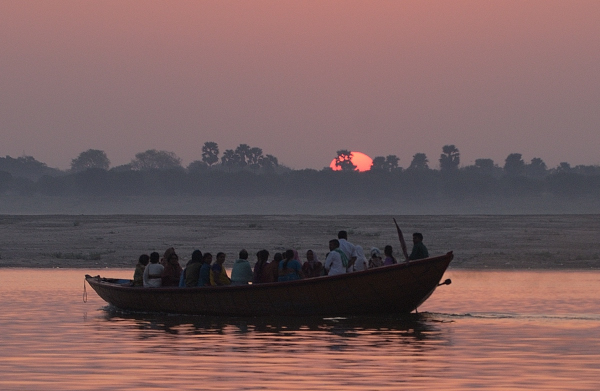
The experience of boating at sunrise is overwhelming.
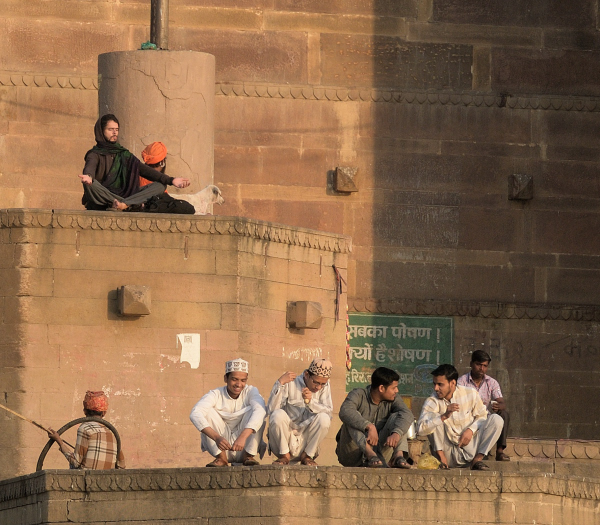
Banaras is renowned for its syncretic culture. It is referred to as “Ganga-Jamuni tehzeeb.”
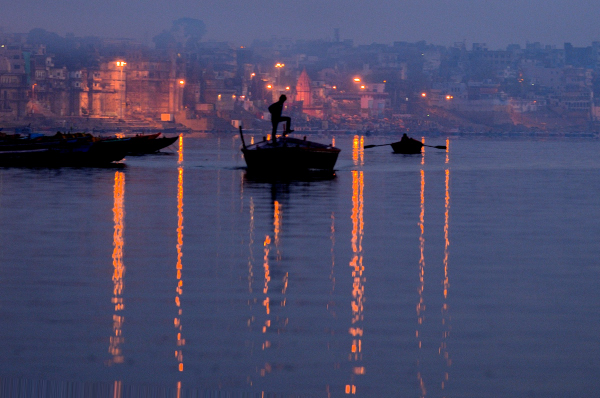
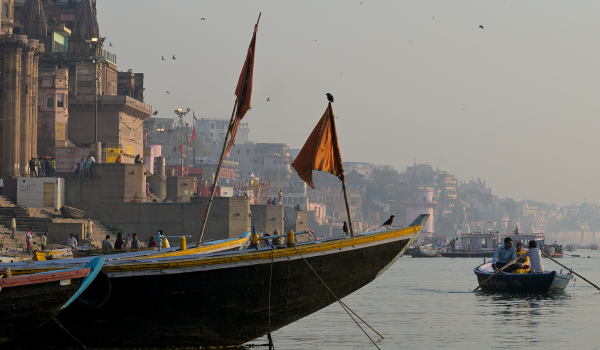
The buildings by the ghats cast golden reflections on the Ganga.
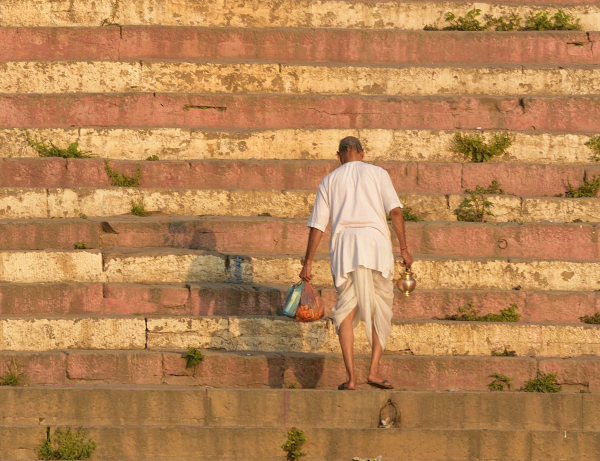
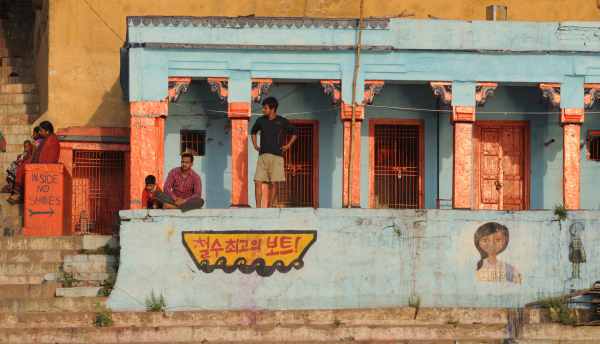
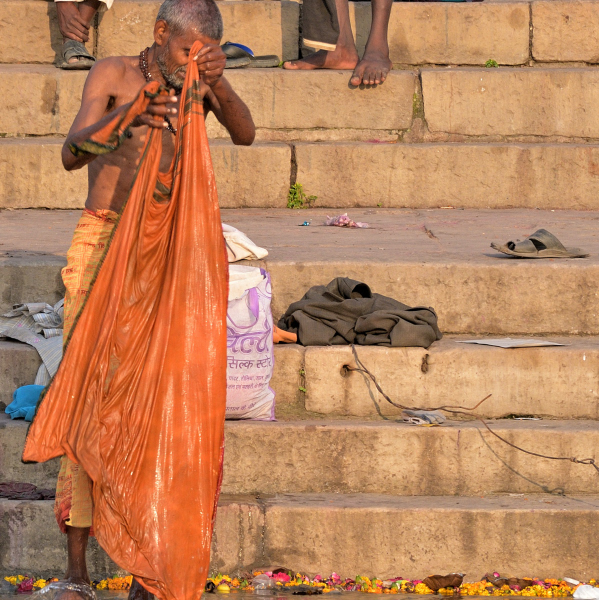

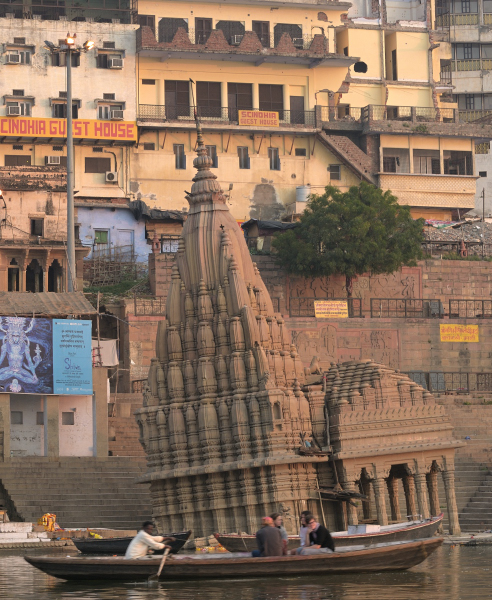

People light ‘diyas’ lamps made of leaves with flowers and float them.
Banaras is the city of Lord Shiva. He is seen as a wandering ascetic and a free-spirited personality. Shiva is magnanimous. He loves all his followers, devtas, humans and demons alike. That is probably where the people of Banaras get their carefree attitude from. The definition of being a proverbial “Banarasi” is an undefined happiness, contented, fun-loving person. From the chaiwallah, to the street food seller, to the master weaver, to the Sanskrit scholar, to the classical musician, to the common man on the road, all tied by a standard invisible rope of being Banarasi. An identity that is stronger than caste, religion, or ethnicity.
Photos and text by Prerna Jain.


 Prerna's Photographs