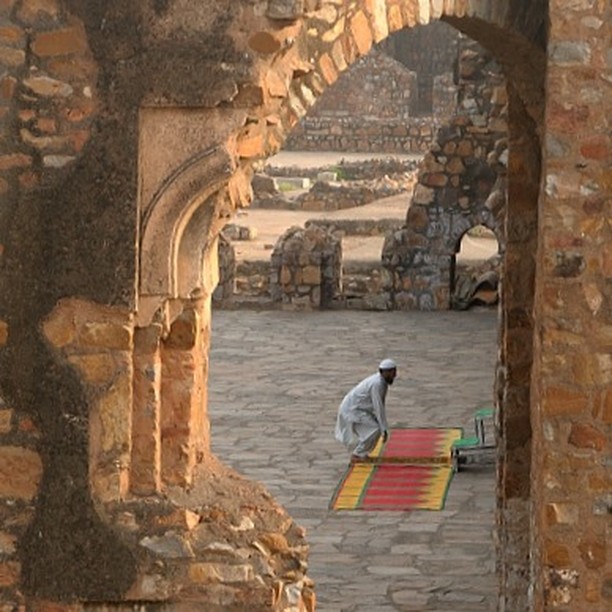
In my conversations with many people from Delhi, when I mentioned the name Firoz Shah Kotla, even those who are not interested in cricket knew that there was a cricket stadium by that name. Hardly anyone knew or remembered that it is now known as Arun Jaitley Stadium. Thus proved Shakespeare right, “What’s in a name?”
All of them agreed that Firoz Shah Kotla stands as a memorial of India’s history. Cricket fans associate Firoz Shah Kotla with history because of Sunil Gavaskar’s record-equalling test century in 1983 (he equalled Don Bradman’s record of the maximum number of centuries) and because Anil Kumble clinched all 10 wickets against Pakistan at this venue. I remember both those matches, even after so many years have passed. The stadium was built in 1883 and is the second-oldest cricket stadium in India, after the Eden Gardens in Kolkata. This post is not about cricket, though it is very easy to get carried away when you mention cricket to most Indians. Many centuries before the stadium was built, and long before centuries in Test cricket matches were scored, a magnificent fortress was constructed here by Sultan Firoz Shah Tughlaq, which is why the stadium is known as the Firoz Shah Kotla Stadium.
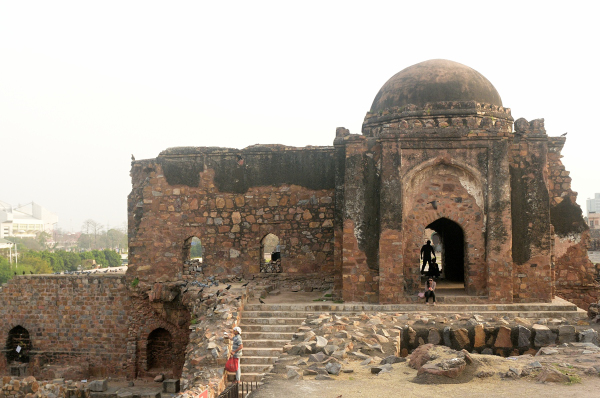
Kotla Firoz Shah, once known as Kushk-i-Firoz (meaning ‘Palace of Firoz’), a 14th-century monument, is a short walk from the stadium. It is said to be the fifth city of Delhi and is one of the oldest structures in the city. The complex is protected by the Archaeological Survey of India (ASI). It houses the ruins of a grand fortress, a sandstone Ashokan pillar, the Jami Masjid (Mosque), a baoli, and a large garden complex. Apart from these three structures, Firoz Shah Kotla houses several other ruined structures, including archways, gates and fragments of the outer wall. Shrouding these ruins are tales that evoke mysticism and faith. These structures are believed to be inhabited by Jinns, who are also revered as saints.
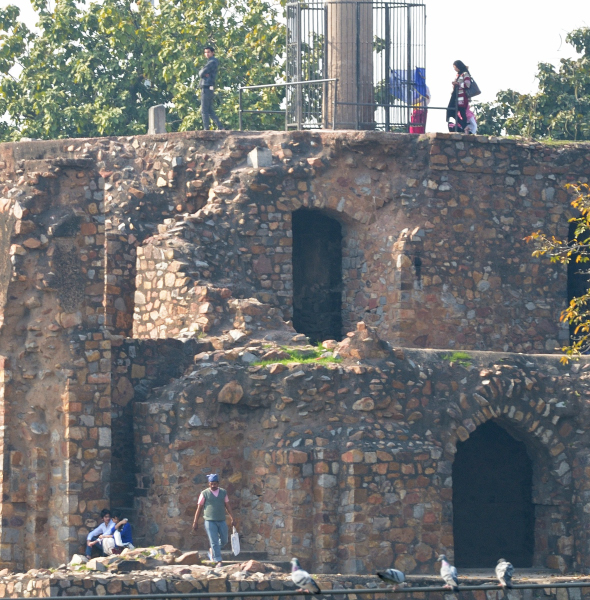
The Ashokan Pillar, made of polished sandstone, dates back to the 3rd century B.C. This ancient treasure was erected by Emperor Ashoka. It was brought to the fortress from Topra Kalan in Haryana and placed atop the Hawa Mahal, which is a three-tiered stepped structure. The inscriptions on its surface are a blend of Brahmi script, Prakrit, Pali, and Sanskrit.
Jami Masjid is an architectural splendour; it is a testament to the architectural brilliance of the Tughlaq dynasty. This Mosque is one of the oldest surviving structures from that period. When the Mongol invader Timur visited Delhi in 1398 AD, he was so impressed by its beauty that he built a Mosque inspired by its design in his own empire. The Mosque rests on a series of cells on the ground floor. It is an active mosque, where devotees offer their namaz.
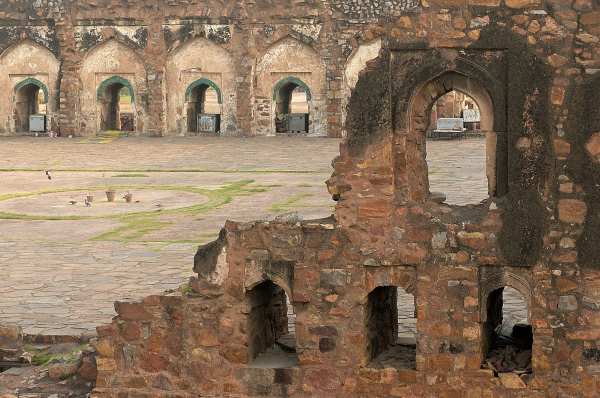
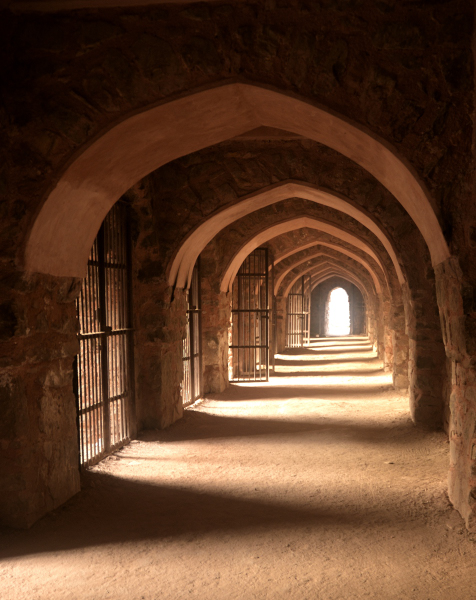
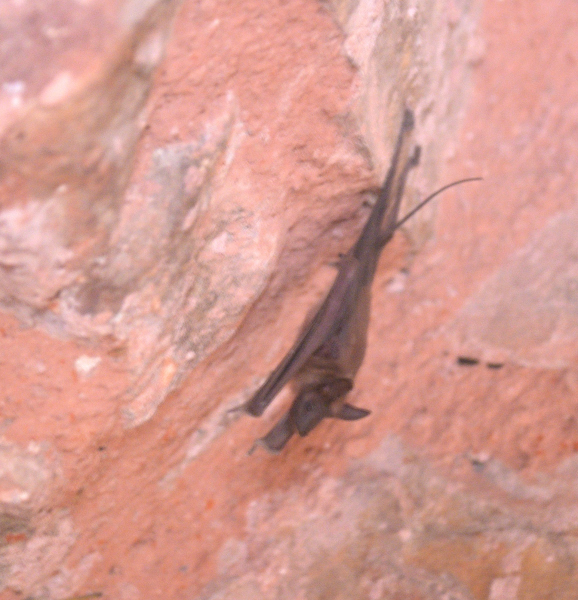
The Jami Masjid is situated above a network of dark corridors leading into cave-like chambers. They also serve as bat caves; clusters of bats hang from the ceilings and walls.
Legend has it that Firoz Shah Kotla is home to Jinns. Believers visit it to seek blessings and answers to their problems. In Islam, Jinns are believed to have been created from smokeless fire, whereas humans are formed from clay, and Angels are composed of light. They are considered to be witnesses to previous eras in history and serve as a supernatural bridge between epochs. They are worshipped at Firoz Shah Kotla. Each chamber and various other places in the complex are believed to be occupied by a different resident Jinn.

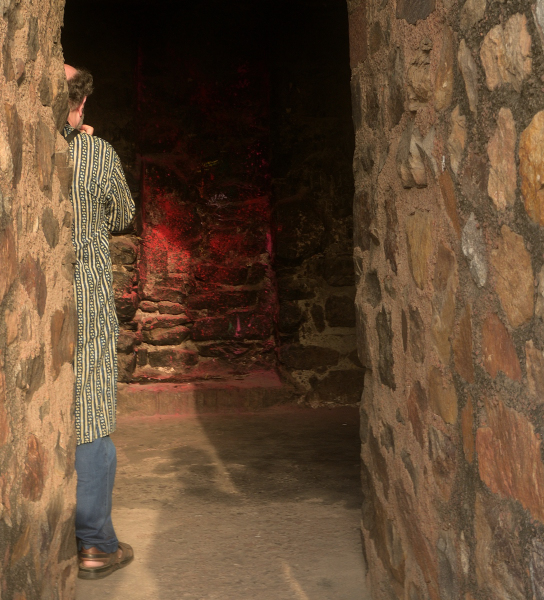
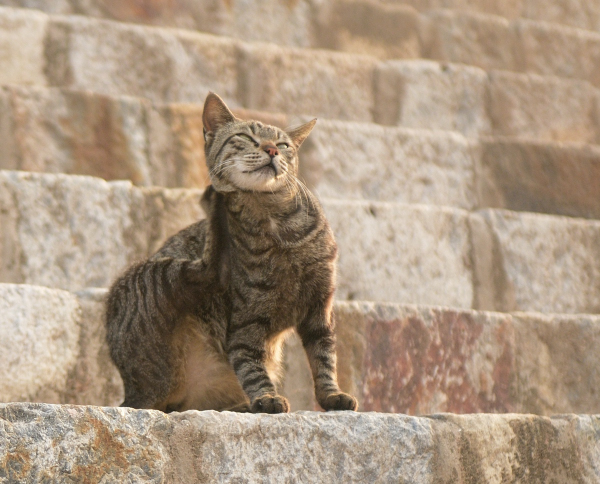
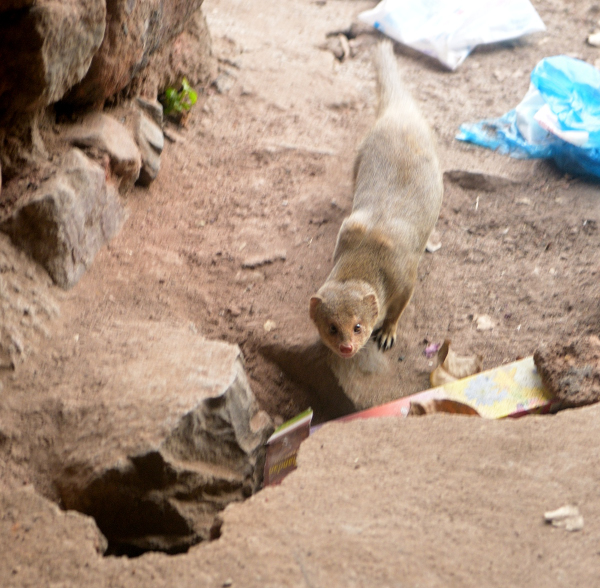
Jinns are believed to be imperceptible to the senses but are said to manifest in various forms. At Firoz Shah Kotla, it is said that they also appear in animal forms. That is why Nazrana (Offering) is given to the animals at the Firoz Shah Kotla. Cats, pigeons, and kites (predatory birds) are offered milk, grains, meat, and other foods. No gender discrimination is practiced here; women have access to all sacred sites at Firoz Shah Kotla.
Irrespective of their religion, those who believed in supernatural powers used to visit the fort, burn incense, and write letters to the Jinns, stating their problems, in the hope of finding a resolution. They stuck the letters on different spots of the citadel and offered prayers. Post-2020 (COVID time), however, no one is allowed to burn incense or place arzis (letters of prayers) at Firoz Shah Kotla. I haven’t been there post-2020. These photographs were taken during my earlier visits.
In front of the stepped pyramid is a baoli. The baoli (stepwell) is unique due to its circular design.
In addition to this fortress, Firoz Shah Tughlaq is credited with building a large number of gardens, towns, Mosques, villages, reservoirs, dams, and bridges in and around Delhi.
Photos and text by Prerna Jain.

 Prerna's Photographs