
We never realised the greatness of Maithili Sharan Gupt when we were being taught about him in school. I didn’t know much about him, still don’t know much, but I’m making an effort now. The convenient route will be to blame the government for not teaching us about our Rashtra Kavi, just as people blame the government for not teaching us history. The truth is that his work was a part of our syllabus, but most of us didn’t take an interest in it. As I read his work, I can understand why he was called Rashtra Kavi and why the literary world referred to him as Dadda; he loved India and its people.
Mahatma Gandhi gave him the title of ‘National Poet’ because of his collection of nationalist poems, ‘Bharat-Bharati’, published in 1912, which proved to be widely influential during the freedom struggle. He is considered the first significant poet of the Khari Boli version of the Hindi language. Love for India and the upliftment of its people are the main themes of his writings.
Excerpts from his poems to show that he was a humanist who wrote moral and cultural poetry, he was a true believer in the idea of India-
Gautama Buddha left his wife, Yashodhara, and his son while they were sleeping to embark on his own journey to find the truth. It is regarded as a testament to the greatness of Lord Buddha. Maithili Sharan Gupta saw Yashodhra’s perspective-
“Sakhi, wo keh kar jaate to kya pag badha hi paate.”
(Dear friend, if he had told me before leaving, would he have found obstacles in his path?)

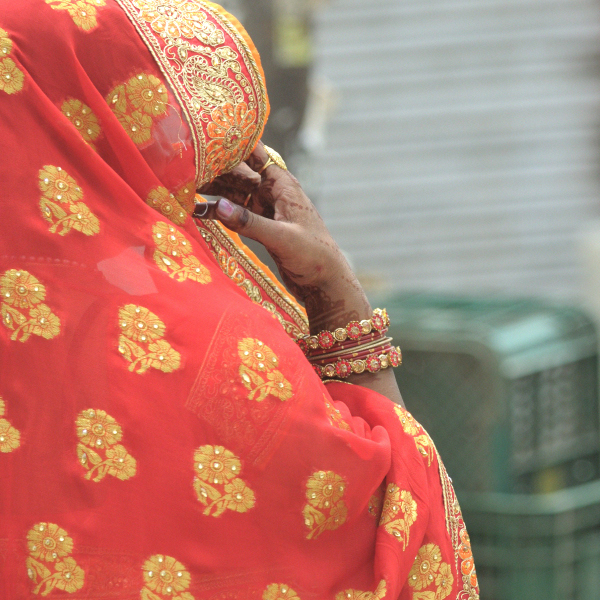
Sita’s sacrifice in the Ramayana is well-known; Maithili Sharan Gupta reminded us of Urmila’s (Laxman’s wife) sacrifice.
“Kaha Urmila ne he man, pati path main tu vighan na ban”.
(Urmila said, O my heart, do not become an obstacle in the path of your husband.”)

He wrote on the tragedy of Karbala-
Karbala Kafila Hussain ka pahuncha
“Matra bahattar manuj idhar yeh dera daale
Pashu baiis sahastra utar wo ladne wale
(Only seventy-two men have camped here, fighting with twenty thousand animals.)
Unkey peeche bhara Phurat nadi ka jal hai
Swed bahata aap marusthal tap vikal hai
(Behind them is the water of the Euphrates River
The desert is restless, and is sweating profusely.)
Marichika hi door door tak hai drishti lubhti
Kiran kiran hai yahan kani ki ani chubhati
(From a distance, a mirage is the only thing that attracts the eyes; every particle of the ray pricks.)
Hoon hoon karti hui bayar bhu bhaal bharti hai
Dhu dhu karti hui ghoomti si rahi hai”
मात्र बहत्तर मनुज इधर यह डेरे डाले |
पशु बाईस सहस्त्र उतर वो लड़ने वाले |
उनके पीछे भरा फुरात नदी का जल है |
स्वेद बहाता आप मरुस्थल ताप -विकल है |
मरीचिका ही दूर दूर है द्रष्टि लुभती |
किरण किरण है यहाँ कनी की अनी चुभाती |
हूँ हूँ करती हुई ब्यार भू भाल भरती है |
धू धू करती हुयी घूमती सी रही है |
“Bachche kumbhla chale phool se hai humare
Phaans rahi hai rom rom kiranon ki sansein
Jhulsaati hain honth aap apni hi sansein”
बच्चे कुम्भला चले फूल से हाय हमारे |
फाँस रही है रोम रोम किरणों की फांसे |
झुलसाती हैं होंठ आप अपनी ही सांसें |
“Ek ek tha Hussain ka dran anuyayi
Usmein bhi Abbas jaisa unka bhai “
एक एक जन था हुसैन का द्रण अनुयायी |
उसमे भी अब्बास जैसा उनका भाई |
Maithli Sharan Gupta perhaps knew what was in store for us and wrote-
“Hum kaun thay, kya ho gaye hain, aur kya honge abhi, aao vicharain aaj milkar yeh samasyaein sabhi.”
It is not easy to respond to the Rashtra Kavi. I will quote the great Urdu poet, a significant poet of the progressive movement, Ali Sardar Jafri–
“Inqalab ayega, raftar se mayoos na ho,
bahut ahista nahin hai, jo bahut tez nahin”
Photos and text by Prerna Jain.

 Prerna's Photographs