The monsoon in North India means drama in the sky and on the ground. The grey skies magically turn into a bright blue soon after the rain stops. A shade of blue in the sky that you only see in Delhi/NCR during monsoons. Sun plays peek-a-boo from behind the clouds. On the ground, there are different shades of green; the plants breathe a sigh of relief after the end of the hot summer months. There are colourful umbrellas and raincoats on the road. There is chaos on the streets due to waterlogging and traffic jams. You are eager to reach home, and if you are lucky, there could be ‘Arbi key Patod,’ waiting for you along with hot masala chai.
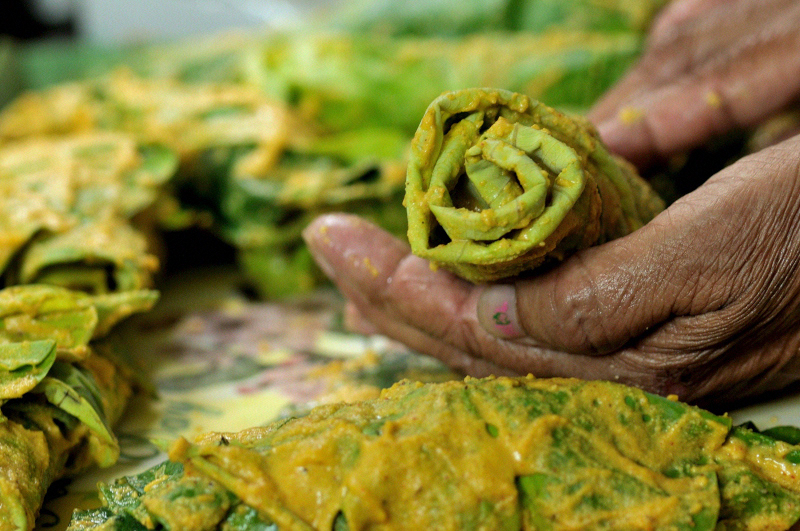
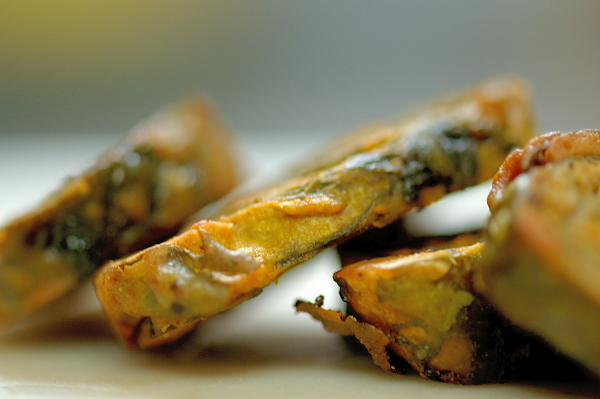
If you are wondering what Arbi ke Patod are, they are multilayered Colocasia leaves layered with spices and chickpea flour, steamed, fried, and sliced to make a pinwheel-like, bite-sized snack. It is a traditional Indian recipe that is cooked and eaten during the monsoon season, when fresh Colocasia leaves are abundant. It is known by different names in various regions of India, such as Patode in Punjab and Patir in Himachal. Alu Chi Wadi in Maharashtra and Arikanchan in Bihar.
Apart from Colocasia leaves, all the ingredients needed for this recipe are readily available in Indian kitchens. Colocasia leaves, gram flour (besan), finely chopped ginger, finely chopped green chillies, coriander powder, amchoor powder(Dry Mango powder), turmeric powder, salt to taste, and oil for frying are all you need. The recipe sounds a little complicated, as it requires more time than regular fritters because it involves rolling, steaming, slicing, and then frying. I would say it’s worth the effort.
Select the softest and youngest leaves available, cut the central stem and remove the hard veins. Wash them thoroughly, and set them aside to dry. Mix all the ingredients except the leaves. Add a little water & stir. Add water little by little, ensuring that no lumps form. Form a thick paste. Spread the leaves, with the stem side facing up, and spread the paste on the back side of the leaf. Roll the leaf from the broad end, roll both ends & bring them to the stem’s starting point. Then, roll them together until the other end. The thick paste will help in sticking the leaf together. Steam the leaves, they will become hard, and their colour will turn a duller version of green. After refrigerating for an hour or more, slice them into the shape of a pinwheel. Fry them till they are crisp and brown.
Not just for taste, Colocasia leaves are considered a healthy snack option. You can eat them after steaming, you can skip the frying part. It becomes a main course dish when soaked in gravy. According to the Ministry of Ayush, “Iron-rich colocasia leaves help in improving the haemoglobin level. The leaves contain phenols, tannins, flavonoids, glycosides and sterols, which help in reducing chronic inflammation such as rheumatoid arthritis. The leaves have significant amounts of vitamin C and beta carotene”.
Text and photos by Prerna Jain.

 Prerna's Photographs