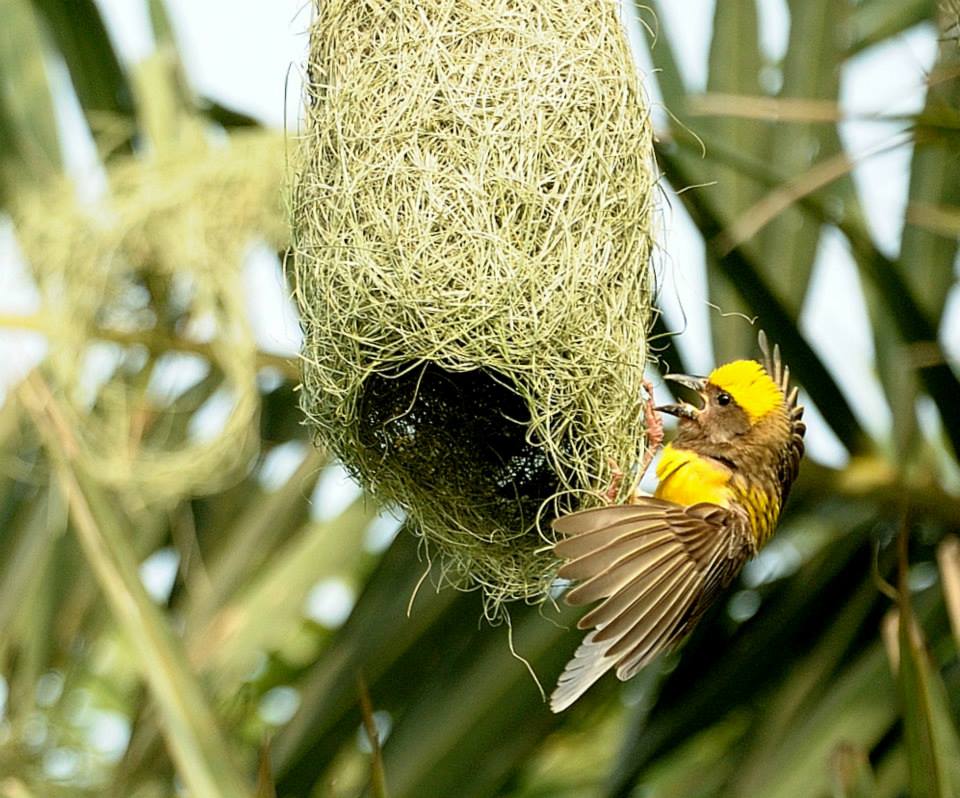
The onset of the monsoon is a busy time for the Baya weavers( Ploceus philippinus ); they are occupied in weaving their nests and wooing their partners. The monsoon is the season when they breed and raise their families.
In Hindi, the word ‘Sugarh’ is, nearly always, used for women. A ‘sugarh grihani’ is the one who is skilled in managing her household duties proficiently. Baya weaver is called ‘Sugri,’ in Gujarati. The name is believed to have originated from ‘sugrahi.’ Which has roughly the same meaning as sugarh in Hindi.
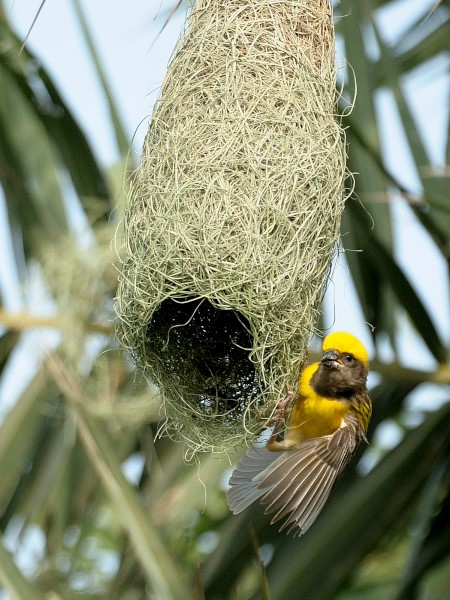
The male Baya weavers are expected to be the sugarh ones. They are supposed to impress the females with their nest-weaving skills. Dangling from the branches, these inverted bottle-shaped nests are hard to reach for enemies. They are mostly constructed over water for stronger defence.
The nests are meticulously woven, strand after strand, from grass and twigs. Beginning from the branch, woven into a strong rope, it expands into a broad chamber with one or two tubes for entry.
Hanging from their nests when they are partially built, the male Baya weavers flap their wings to display them to the prospective partners. The females inspect the nest and signal their acceptance. The male finishes the nest only after that. If the nest is rejected, he starts building another at the base of the first one. Baya weavers are polygamous. Male Baya weavers could make more than one nest in every breeding cycle to woo females. After the nest is constructed and it is accepted, the male can start creating another nest. The nests are built in colonies; you can see multiple nests hanging from a tree on the edges of water bodies. The nests are usually not reused; they are used only once.
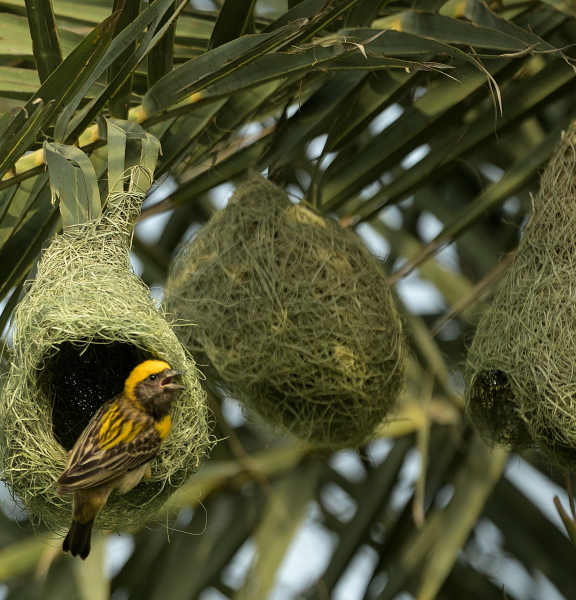
Nests on a date palm.
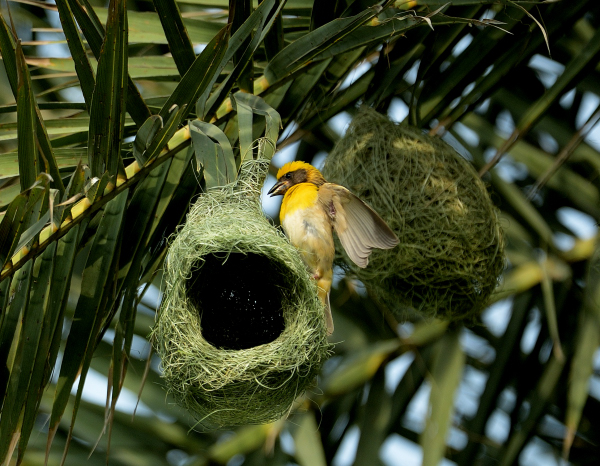

The Baya Weaver (Ploceus philippinus) is a testament to nature’s artistic prowess.
Photos and text by Prerna Jain.

 Prerna's Photographs