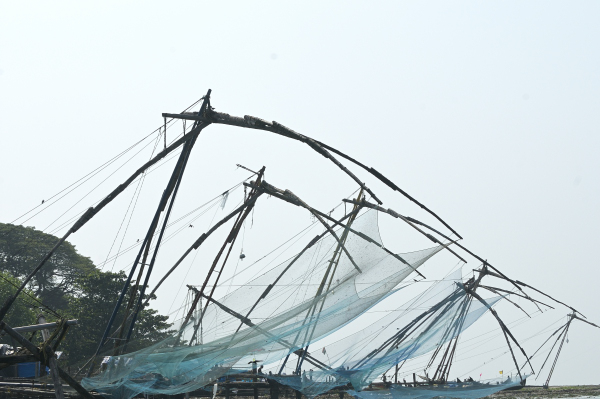
After existing for more than five centuries, the iconic symbol of Kochi, the Chinese fishing nets, seems to be losing the battle between aesthetics and commerce. Due to high maintenance costs and diminishing returns, they are gradually vanishing from the Kochi coastline.
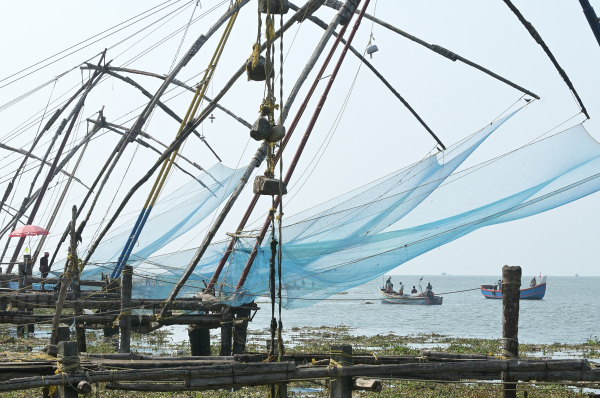
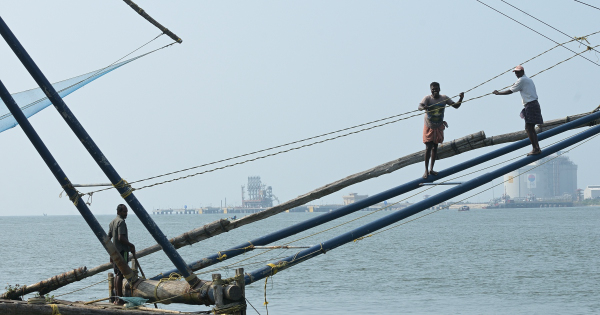
Chinese fishing nets are not just about aesthetics; there is a lot of physics involved. The entire structure is approximately 10 metres in height, and the net extends to about twice that size. These nets are set up on bamboo and teak poles. The weight of the man walking along the main beam makes the net descend into the water. The net is submerged for a few minutes, and it is then raised by pulling the ropes.
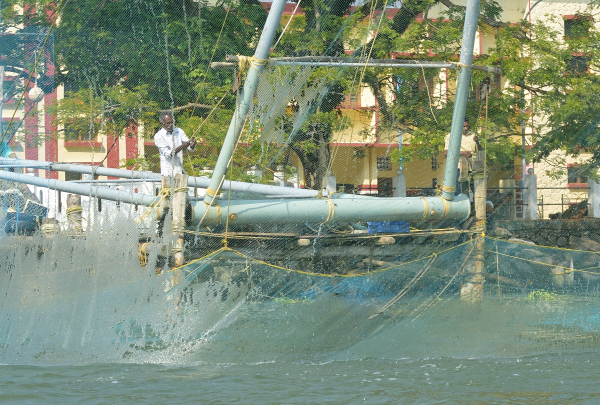
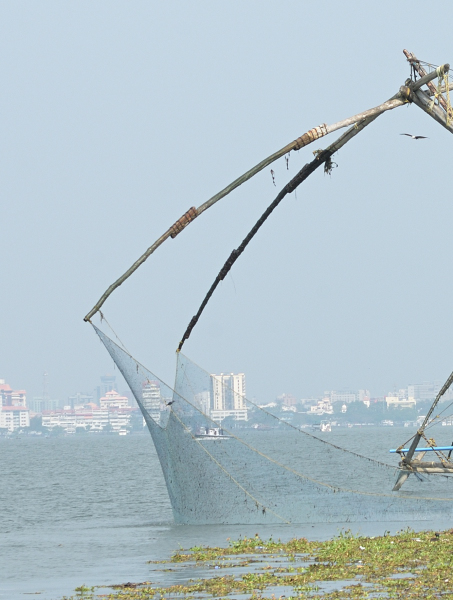
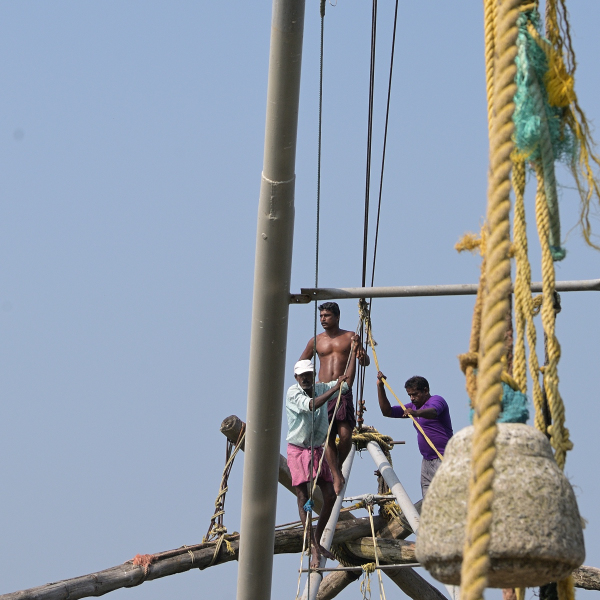
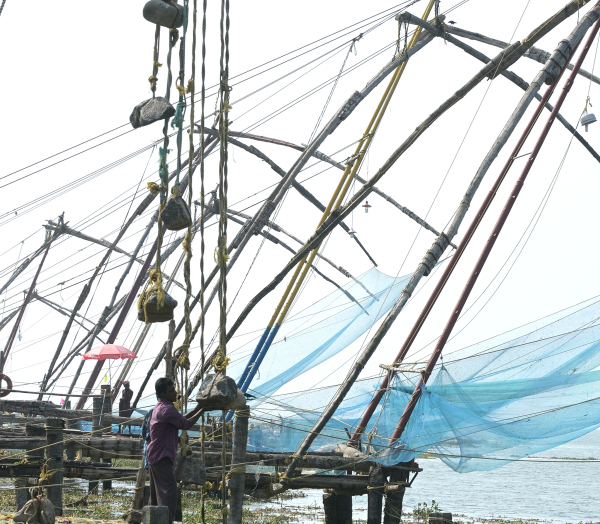
Chinese Nets are not just the nets. The structure features an outstretched net suspended over the sea, and large stones serving as counterweights, suspended from ropes on the other side.
As the name suggests, the origins of the Chinese fishing nets can be traced back to China. Locally, they are known as ‘Cheena Vala’ (Chinese Net). They used to be smaller in size and were made of bamboo, tree poles and rope and were erected on hardened coconut trunks. Over time, bamboo, tree and rope gave way to teak and wire rope. The operating system remained unchanged, rooted in traditional knowledge and utilising human power. The newer ones are made from steel and plastic.
There are different versions of who brought these fishing nets to Kerala. Some people say that they were introduced in Kochi by the Chinese explorer Zheng He, from the court of Kublai Khan, between 1350 and 1450. Another account mentions that these nets were set up by the Portuguese from Macau, which used to be a Portuguese colony.
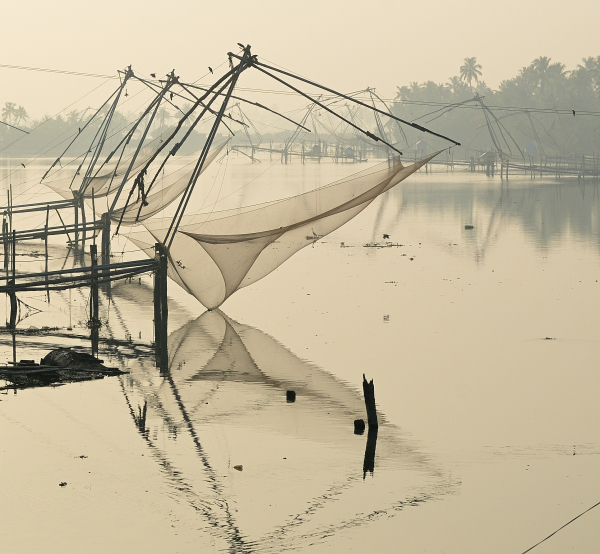
A row of bamboo structures in the waters along the shoreline.
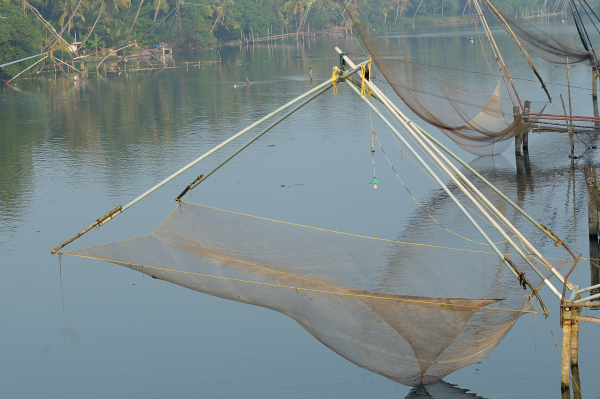
Small fishing nets near Cherai Beach on the Vypeen Island.
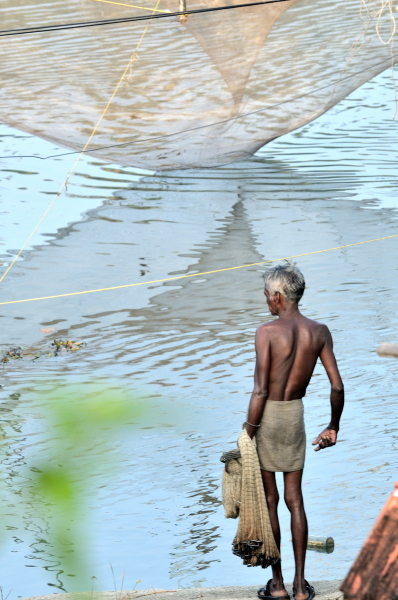
A fisherman trying his luck with his handheld net under the Chinese fishing net.
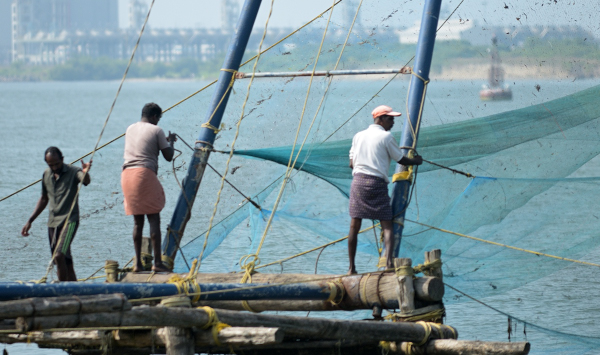
The fishermen are in action on the Chinese nets during the morning and evening. The Chinese nets, silhouetted against the sunset, are a mesmerising sight. They are Kochi’s treasured heritage, and should be saved.
Photos and text by Prerna Jain.

 Prerna's Photographs