Patras Bukhari is one of the most celebrated humourists of
Urdu literature. His prose, based on exaggeration of funny situations, is legendary. Recently, I read his article, Marhoom ki yaad mein (cycle ki sawari). I had heard it on YouTube by one of the all-time greats in the art of recitation, Zia Mohyeddin. It is the story of an old bicycle that the narrator had bought. The excitement of owning the cycle contrasts with the owner’s utter helplessness after realising the poor condition of the bike, leading to amusing situations. Written in the first half of the twentieth century, it makes people laugh even today. Undoubtedly, it is the brilliance of the writer that creates the impact. The credit for staying relevant even in 2025, to some extent, goes to the bicycle as well.
About half a century ago, the cycle was a significant means of cheap urban transportation for Indians. It was the most common mode of transportation for most people. Though cycling as a sport hasn’t been too popular in India. Jankidas was a rare exception. He was the only Indian to have broken the world record in cycling between 1934 and 1942 (source: Wikipedia). He, along with Mr Sohrab Bhoot, founded the Cycling Federation of India in 1946. However, Hindi films have always celebrated cycles. In the 50s and the 60s, couples riding bicycles added glamour to Hindi films. Bicycle songs were included in the movie for that reason. Even in this era of swanky motorbikes and luxury cars, the humble bicycle has retained its romantic charm in Hindi films. It imparts a special character to the Hindi film songs.
Whether it was the girl gang of Saira Banu on their colourful bicycles in the 1960s film Padosan, or Rajesh Khanna riding a bicycle, as a Postman singing Dakiya daak laya in Palkon ki chhaon mein, there is a certain romance in the slowness of a cycle. Cycling became a metaphor for teenage love in Jo Jeeta Wohi Sikandar, Aamir Khan’s superhit film released in 1992. One of the most heartwarming moments in the Shoojit Sircar film, Piku, was the sight of frail Bhashkor, played by Amitabh Bachchan, cycling around the streets of Kolkata, enjoying a momentary return to his youth.
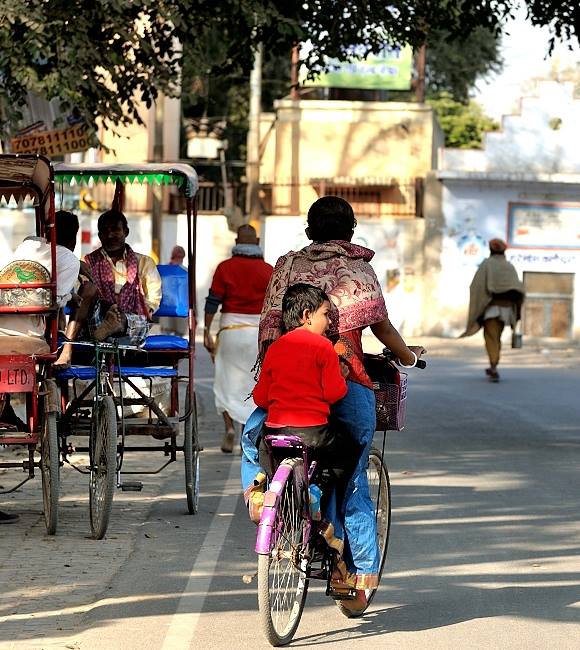
It sounds very romantic to imagine travelling as a couple on a bicycle. Women cycling on roads is still a common sight in small towns across India. There is nothing romantic about it, though. This is a necessity for them; it gives them the freedom to commute for their daily needs.
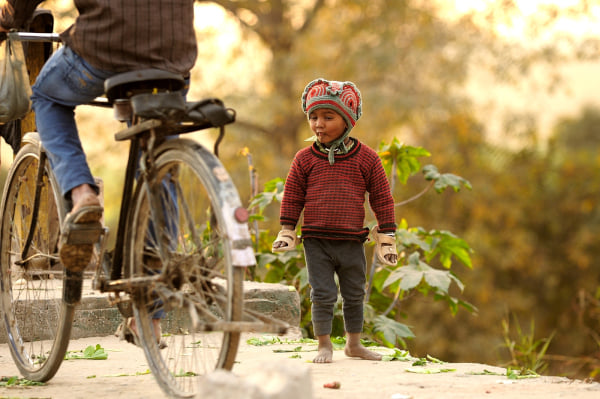
A child looks at a cyclist passing by in a suburb of Delhi.
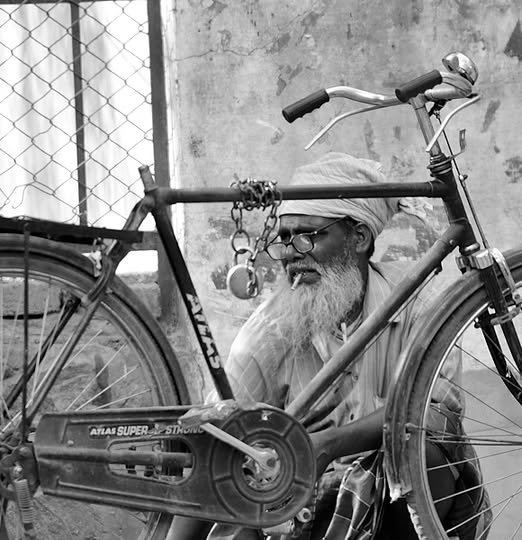
When there are cycles, there have to be mechanics repairing them. Atlas has always been a popular cycle brand in India.
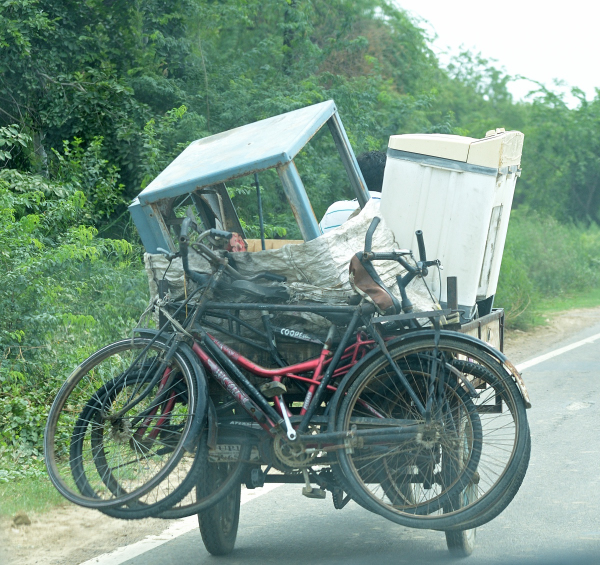
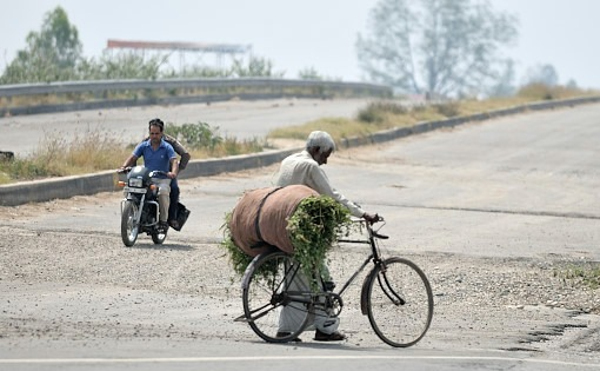
Transporting a mode of transport on a village road in North India.
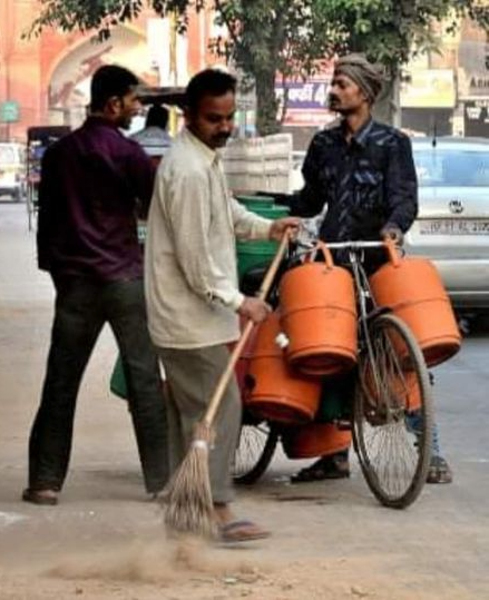
Water transportation by a cycle.
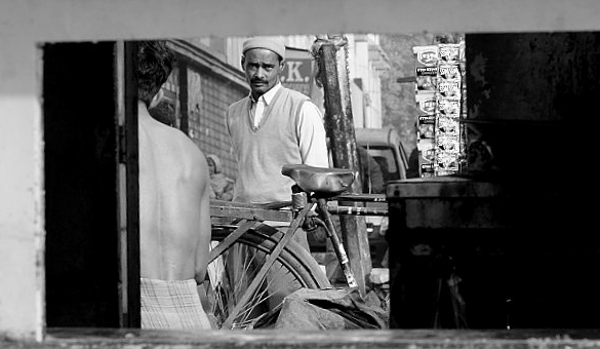
A cycle framed.
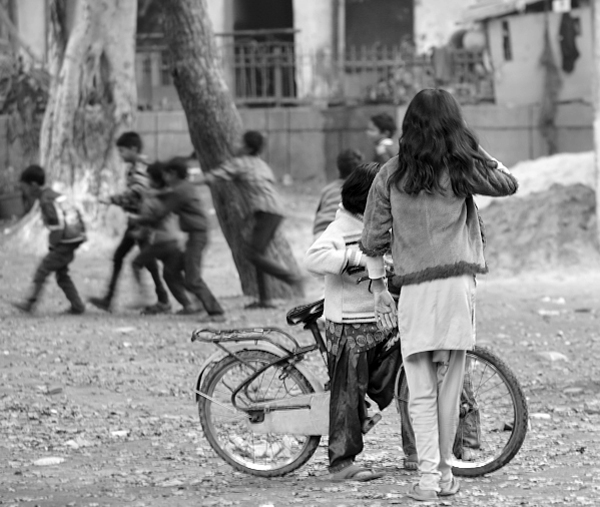
Cycling brings joy to children’s lives.
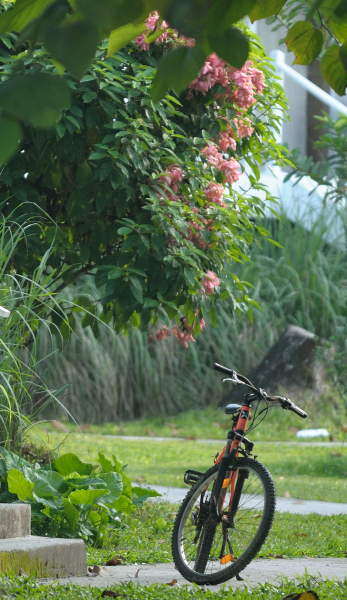
Pink flowers, matched by the pink in the bicycle, make a perfect romantic setting.
According to an unsubstantiated claim, Leonardo da Vinci is supposed to have sketched the first cycle. Whosoever invented it, it is a popular sport, adds glamour to films, makes children happy, and empowers less privileged women and men. It is important to remember that this mode of transport is environmentally friendly and helps keep people fit. Last but not least, super-talented writers like Patras Bukhari add humour to people’s lives through the humble cycle. Long live the bicycle.
Photos and text by Prerna Jain.

 Prerna's Photographs