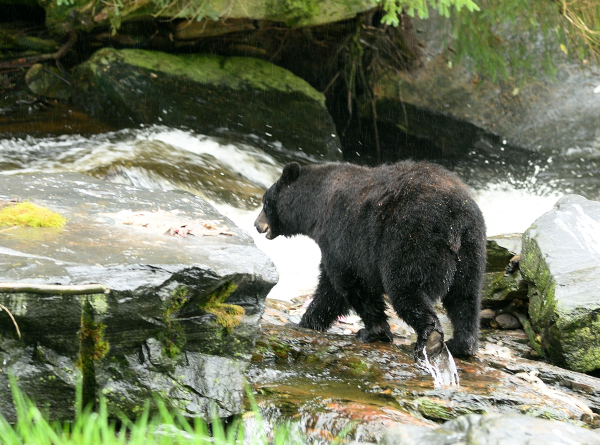
The Back bear ducked when the seagull flew over its head; the high and mighty, too, are insecure, I wondered.
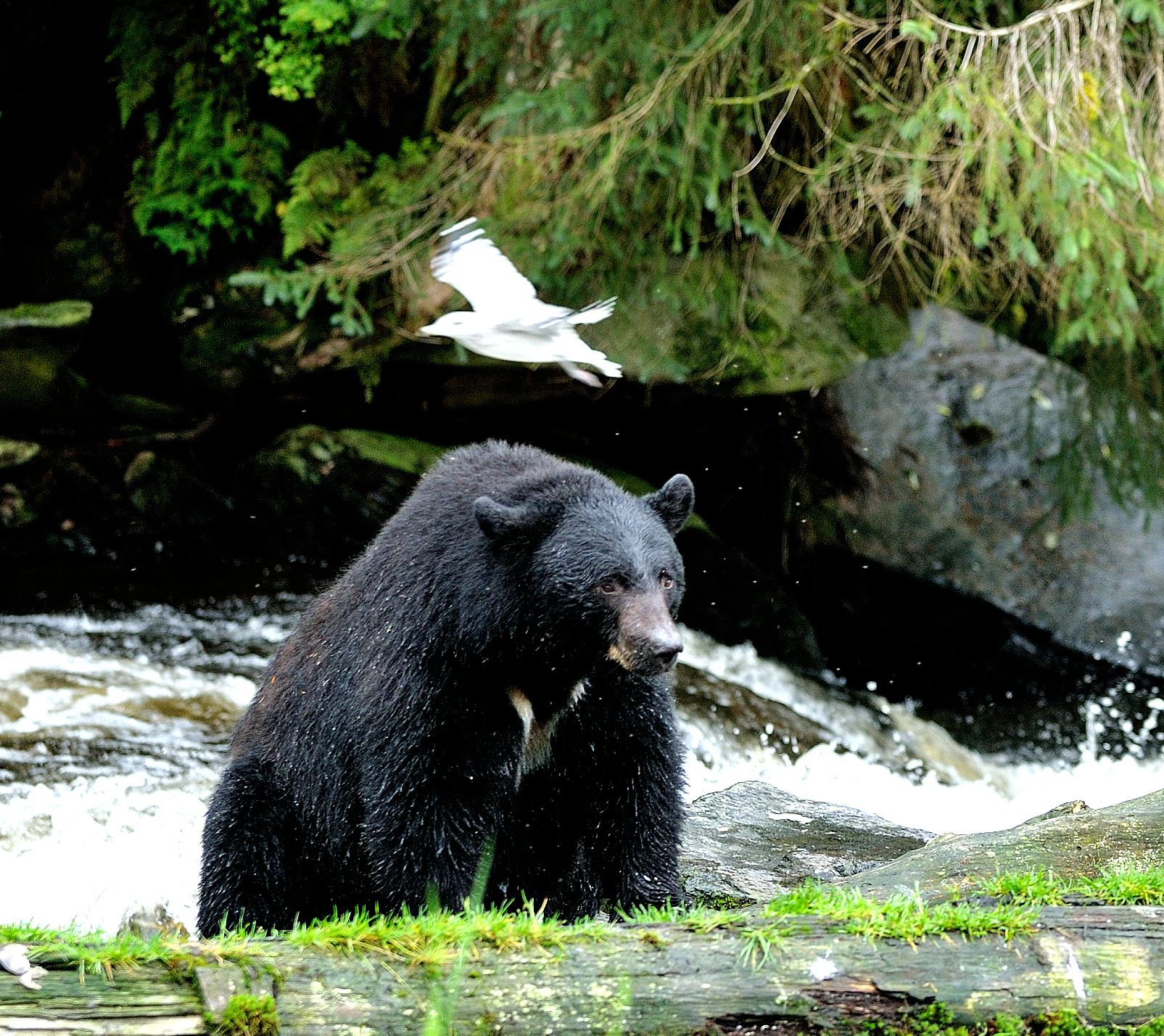
“What’s in a name? That which we call a rose, by any other name would smell as sweet“. Someone from the Black bear world perhaps read this famous quote from Shakespeare’s ‘Romeo and Juliet’. That could explain why a Black bear can be black, brown, or cinnamon. They may even have silver-tipped hairs that look bluish in sunlight, yet they will be called Black bears. They are recognised by their straight nose profile and shorter, curved claws (compared to brown bears). Their muzzles are brown, and some have a patch of white hair on their chest.
As far as diet is concerned, they are “maukatarians( not a real word, Hinglish for opportunists)”. They eat whatever is available to them. Berries, grass, buds, roots, and the inner bark of trees, as well as fish, small mammals, and even human food; they consume whatever is available. Black bears eat a large variety of plants and berries when available. They love to eat calorie-rich foods like berries to build up fat reserves for winter dormancy. Since their goal is to store up as much body fat as possible before the food becomes scarce, they are not fussy eaters. This process of eating and drinking as much as possible to gain weight for long winter hibernation is called hyperphagia.
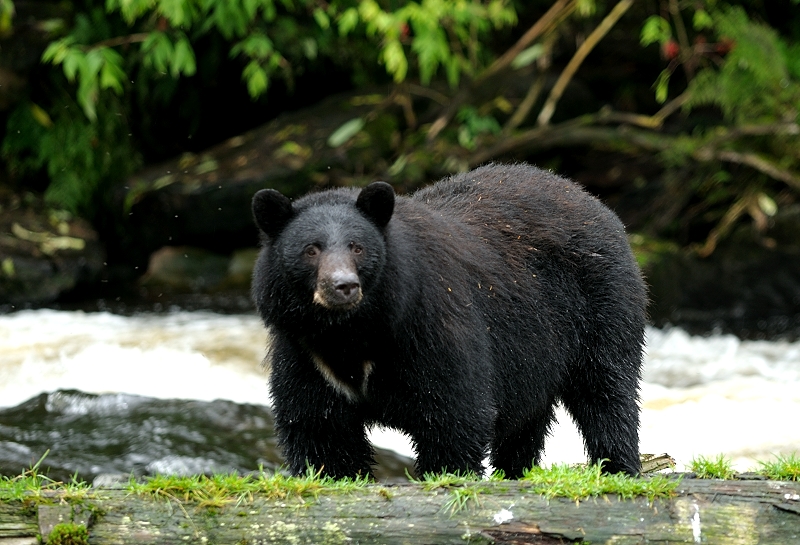
Black bears are the smallest and most widely distributed species of North American bears. According to estimates, there are nearly 100,000 Black bears in Alaska. The best chance of seeing them is at dawn and dusk along beaches and streams during the summer and spring seasons. In the fall, as food becomes scarce, they enter a deep winter sleep and emerge only after the temperature rises in the spring. Males are larger than females. Black bears weigh more in the spring and are lighter after winter hibernation. They are heavier and fatter in the fall. During hibernation, their body temperature and heart rate drop, and their breathing slows. They survive on the body fat they store during the summer and fall.
After emerging from their winter dens, bears mark their territories by leaving their scent through bites and scratches on trees and utility poles. This is their way of communication. They bite into the pole and mark it with their teeth. They leave scent in those marks as they have scent glands in their mouths. Skeletons found in some caves suggest that Black bears have inhabited the Alaska region for 18,000 years.
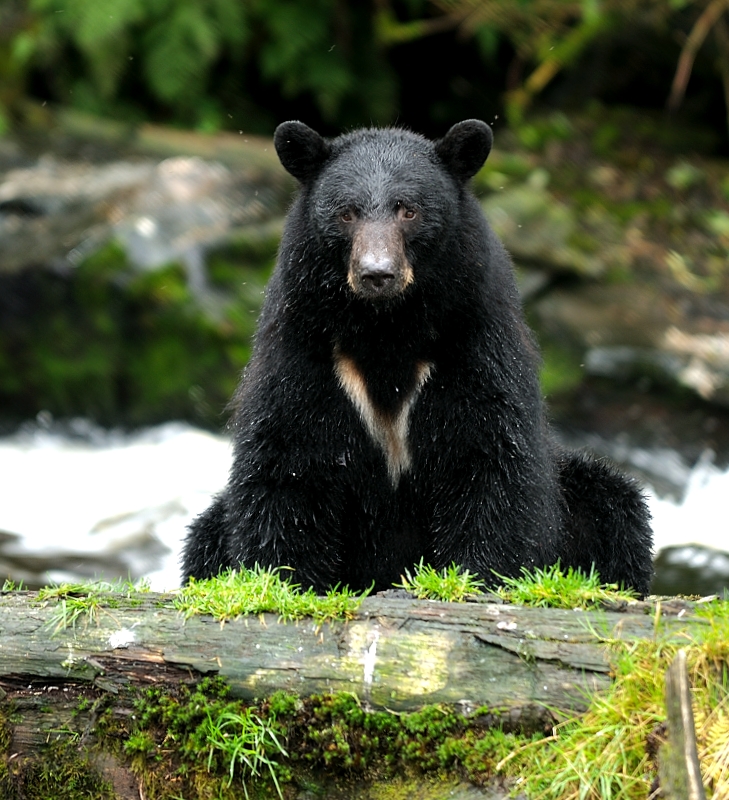
A Black bear balanced on a fallen tree and a rock in the middle of a river, waiting for its prey.
Photos and text by Prerna Jain.

 Prerna's Photographs