
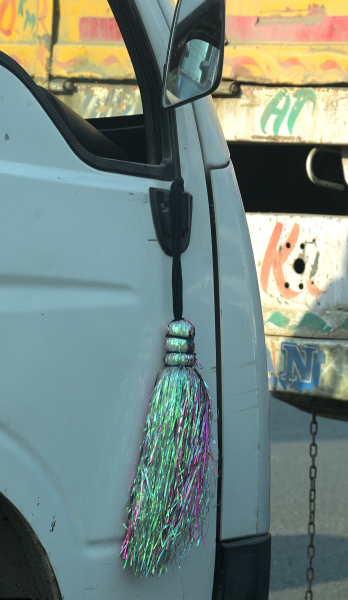
Express highways are excellent for the economy, but like everything else in this world, they take away some pleasures from our lives. When stuck in bumper-to-bumper traffic on a highway, truck art is an excellent source of entertainment in India. This art form cannot be enjoyed from speeding vehicles. Colourful tassels and a red Mata ki chunri with a gota border, hanging from the rear-view mirrors and fluttering in the breeze, a dangling shoe, and a string of green chillies and lemons slung at the back of the truck can only be observed in slow-moving traffic.
Painted verses are an essential part of trucks in India. The spelling may be wrong, the calligraphy may be to say it in a civil way, not up to the mark, yet it is entertaining.

Greetings, prayers, proverbs and quotes from famous movie characters, painted poems on vehicles, badly painted portraits of film actors, and floral designs give trucks a distinct personality.
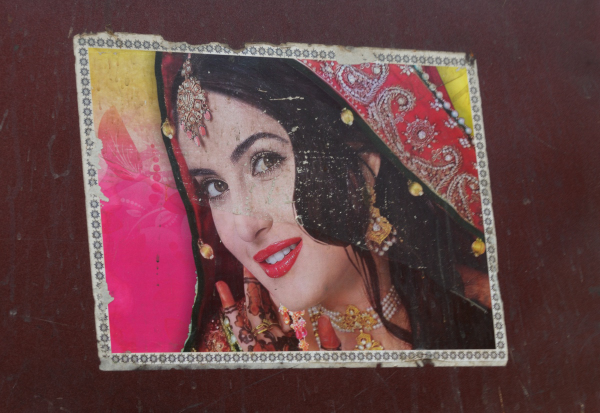
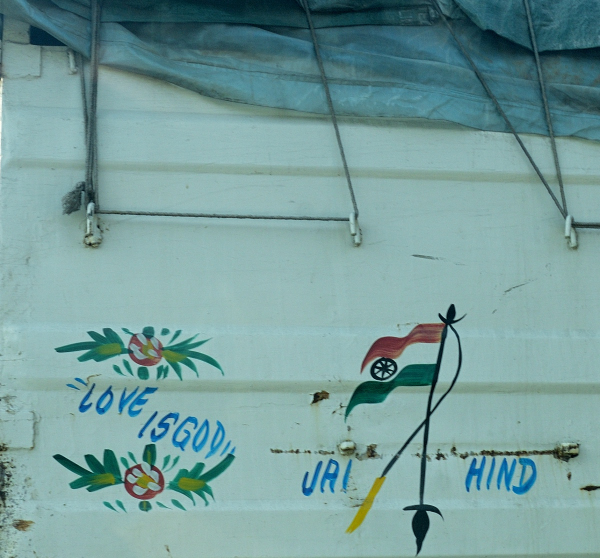
Authored by marginalised citizens, these writings express personal feelings. They not only bring a smile to your face but also force you to pause and reflect. Is this an attempt to converse with strangers, trying to make people too busy with their day-to-day issues to think about you?
Truckers are romantic and have a great sense of humour.
“Phir milenge” (see you later) written on trucks is cute.
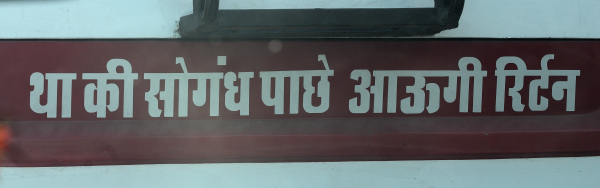
Tha ki sougangndh pachche aoungi return( I swear on you, I will come after you) is funny and poetic.
Chal hat koi dekh lega( Move away, someone might see us) is naughty.
Dekho magar pyaar se(Look at me with love) is brazen.

This verse says, Save us from the beautiful girls who are proud of their beauty; they throw their hair across their cheeks and defame the driver.
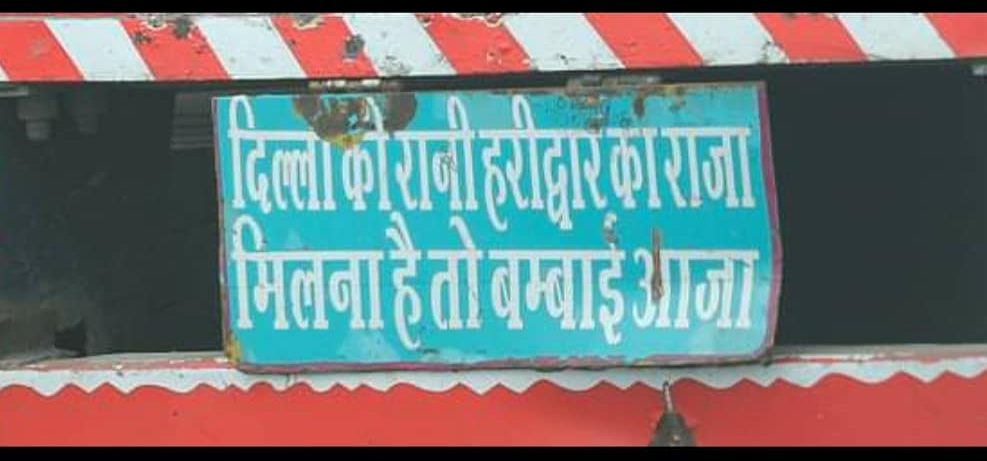
The author of this verse, written on the truck, says- Dilli ki Rani, Haridwar ka Raja, milna hai to Bambai aaja( The queen is from Delhi, the King is from Haridwar, if you want to meet, come to Bombay). Why Bombay? Why so far from Delhi and Haridwar, both north Indian towns? I wondered as I clicked this picture.
The poetry on long-distance trucks often reflects the loneliness of being away from their families for long periods. I loved this one, with a demure woman and the message, ‘Ghar kab aoge( When will you come home).

Road se dosti safar se yaari
Dekh pyaray zindgi hamari
(The road is my friend, the journey is my companion
See the life I lead, my dear friend.)
I remember one couplet written on a truck from my childhood. The author is complaining about society’s money-mindedness.
Toot jata hai garibi mein wo har rishta jo khaas hota hai,
ban jaate hain sab rishtedar jab zar paas hota hai
(In poverty, even the closest of relations break; everyone becomes your relative when you have money.)
Mohabbat na kar ameeron say jo barbad kartay hain
mohabbat kar gareebon say jo hamesha yaad kartay hain
(Do not love the rich who are only there to ruin you,
love the poor who always remember you.)
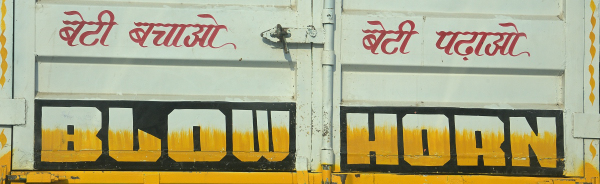
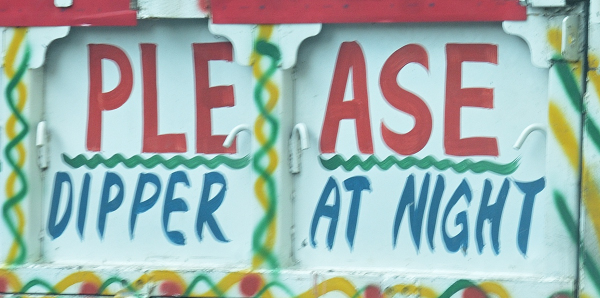
“Blow horn,” and “Use dipper at night” written behind trucks have always confused me. Don’t they honk enough?
“Jagah milne par side di jayegi,” could be an instruction to stop honking to overtake; the side can be given only when they find space. Dipper cannot be used in the daylight.
If you dare to cast an evil eye on this truck, then better beware! Besides the usual antidotes to the evil eye, like a dangling shoe or the string of lemons and green chillies, which are not enough to ward off evil eyes, you can spot this remark on the truck, along with a scary picture painted on the truck.
“Buri nazar wale tera munh kala”
(The one with an evil eyes may your face be blackened.)
There are funny versions of this-
“Buri nazar wale tere bachche jiyein,
bade hokar desi sharab peeyein/tera khoon peeyein.”
(The ones with evil eye, may your children live long and get addicted to country liquor/drink your blood, not literally, they mean completely mess your life.)

The patriotic streak of Truck drivers is amply visible on their trucks-
“Mera Bharat Mahan(My India is great) is patriotic.
Sau mein se nabbe beiman, phir bhi mera desh mahan(90 out of hundred are corrupt yet my country is great) is cynical patriotic.
A trucker loves his vehicle and starts treating it like a beloved. This verse addresses the truck as the trucker’s beloved and is my absolute favourite-
Kam peeyo meri Rani, bahot mehenga hai Iraq ka paani(Drink less, my Dear/ the water of Iraq is very expensive).
Beti bachao beti padhao (Educate girls, save girls) slogan has become the default writing on most trucks in North India.
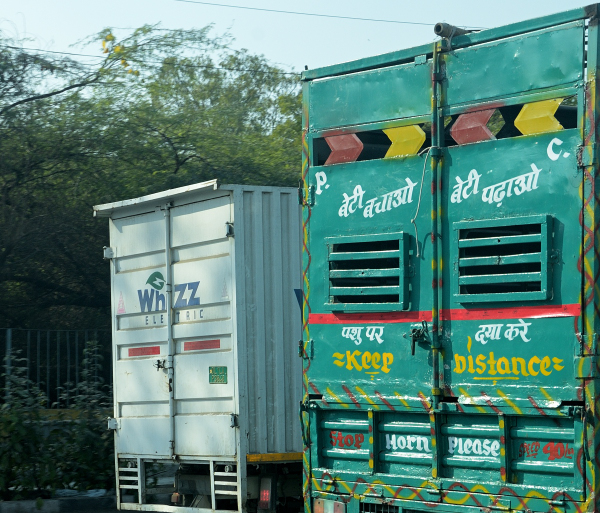
Inscriptions on the backs of the vehicles have always amused me. The messages are short, entertaining and funny. The verses serve as a medium for public expression, a means to propagate feelings and opinions.
Text and photos are by Prerna Jain.

 Prerna's Photographs