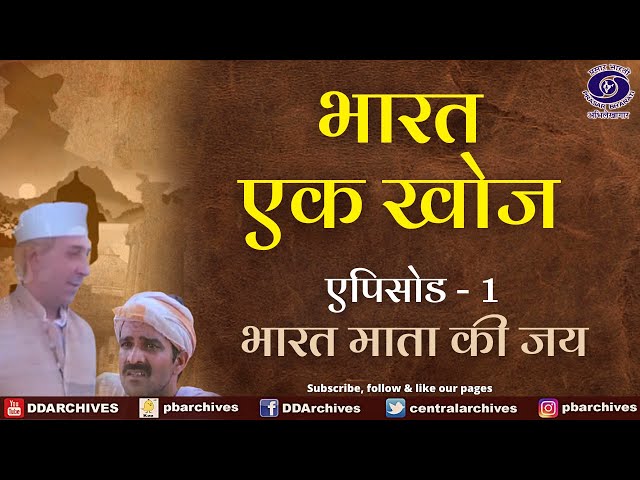
Between 1988 and 1989, every Sunday at 11:00 AM, we used to eagerly wait for a non-glamorous show telecast on Doordarshan. The first episode aired on 13th November 1988, and the series concluded on 12th November 1989. The show used to open with the Nasadiya Sukta from the Rig Veda, recited in chorus, set to beautifully composed music by Vanraj Bhatia.
Srishti se pehle sat nahin tha, asat bhi nahin,
Antariksha bhi nahin, akaash bhi nahin
Chipa tha kya, kahan kisney dhaka tha
Us pal to agam, atal jal bhi kahan tha.
(Before creation, there was no truth, there was no untruth.
There was no space, not even sky.
What was hidden, where, and who covered it?
At that moment, where was even the unfathomable, bottomless water?)
The teleserial was titled Bharat ek khoj, written by Pundit Jawaharlal Nehru, the first Prime Minister of India, and directed by Shyam Benegal, one of the all-time great directors. The Discovery of India was written by Nehru in just five months in 1944, while he was in the Ahmednagar Fort prison camp between 1942 and 1945 for his involvement in the Quit India movement. Nehru wasn’t a historian; there were no libraries to consult. Most of this book was written from memory and with help from Maulana Azad, Govind Ballabh Pant, Narendra Deva, and M. Asaf Ali, who were his companions in jail.
Indian TV viewers were introduced to Nehru’s scholarly gifts in the 53 episodes of Bharat Ek Khoj. 5000 years of the complex history of the Indian sub-continent were brought to life. Starting with the Harappan Civilisation, it covered all aspects of Indian history, including the formation of caste, the reigns of Chanakya and Chandragupta Maurya, Ashoka, the Mughal Empire, Shivaji, the history of the Chola Empire, the arrival of the British East India Company, and the freedom struggle. A vast time span was covered, from the Indus Valley Civilisation to the Aryans to present-day India. From the Ramayana and the Mahabharata, the Indus Valley civilisation, Buddha, Kalidas, and Mahatma Phule, Bharat Ek Khoj pieced together the highs and lows of India.
In the first episode, Nehru arrives in an ox-cart in a village, amid chants of zindabad, and villagers waving tricolour flags, featuring a charkha at the centre. He starts his speech with, Behanon, bhaiyon aur sathiyon. To the crowd chanting “Bharat Mata ki Jai,” he asks, “Kaun hai Bharat Mata?” (Who is Mother India?)
Jawaharlal Nehru then explains that Bharat Mata is not a mystical goddess or merely a land, but the millions of people inhabiting the country. He said that the true victory of Bharat Mata(Bharat Mata ki Jai) meant the victory, welfare, and progress of Indians, especially the poor and rural people, not just of the geographical territory.
Multiple stories, many protagonists played by so many brilliant actors. Fabulous storytelling and direction. No-nonsense, non-melodramatic style, major historical events in chronological order. Sometimes using the technique of a documentary, at other times drama. The beginnings of our civilisation, how it flourished, what trade and commerce were like in the ancient past, the conquests and bloodshed, our heritage, social reforms, religion, and folklore. Folk songs and folk stories were woven dexterously to prevent monotony.
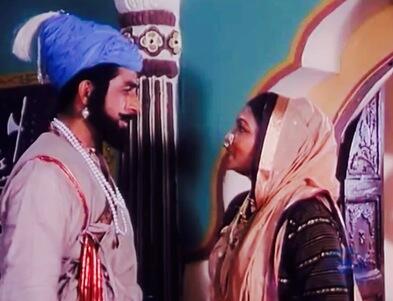
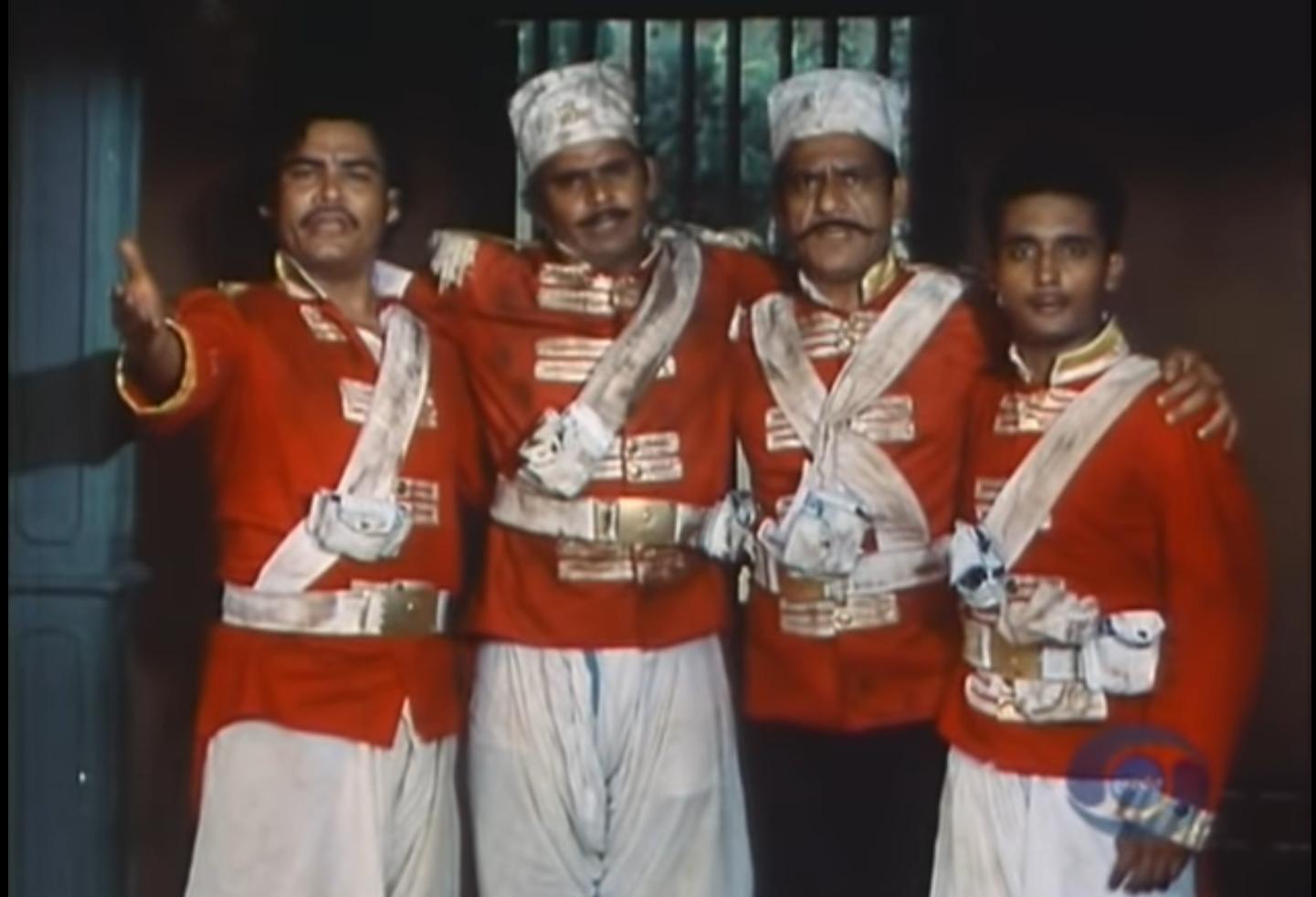
It took three-and-a-half years of meticulous research by 22 historians with the help of many government institutions, including the Archaeological Society of India, and roughly 20 months of shooting to bring Nehru’s magnum opus to life. Well-known writers and historians, like Shama Zaidi, Sunil Shanbag, Vasant Dev, Irfan Habib, RS Sharma, etc., were advisers to the project. Actors like Om Puri (as Aurangzeb), Kulbhushan Kharbanda (as Akbar), Vijay Arora (as Jahangir), Naseeruddin Shah (as Chattrapati Shivaji Maharaj), and Salim Ghouse (as both Rama and Krishna) adorned the masterpiece with their brilliant performances. Vanaraj Bhatia produced some excellent music in this fabulously crafted, edited, and directed show. Costumes were well researched. Roshan Seth as Nehru and Om Puri kept us captivated by their narration.
More than 500 actors, 144 sets, set designs spanning several centuries. The actors, the music, the folk songs, the dialogues, the language & the diction were consistently brilliant in all 53 episodes.
Bharat Ek Khoj is available online on YouTube via the Prasar Bharati Archives.
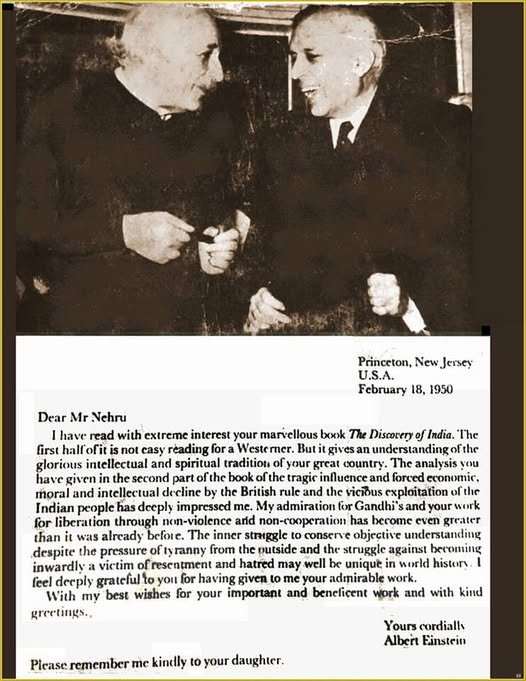
When Einstein read ‘The Discovery of India’
“Princeton,
New Jersey,
USA,
February 18, 1950
Dear Mr Nehru,
I have read with extreme interest your marvellous book ‘The Discovery of India’.
The first half of it is not easy reading for a westerner. But it gives an understanding of the glorious intellectual and spiritual traditions of your great country. The analysis you have given in the second part of the book of the tragic influence and forced economic, moral and intellectual decline by the British rule and the vicious exploitation of the Indian people has deeply impressed me…..”
Yours cordially
Albert Einstein
Please remember me kindly to your daughter.’’
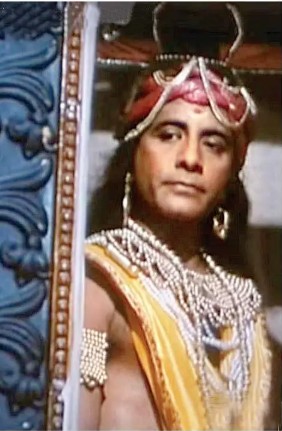
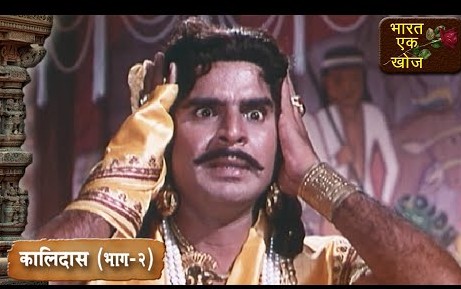
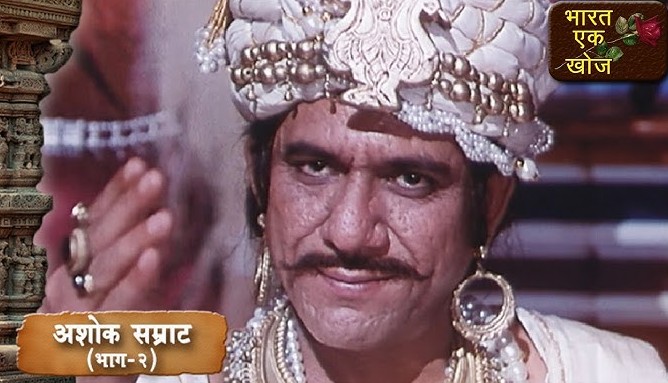
Photographs downloaded from various sources on the internet.

 Prerna's Photographs