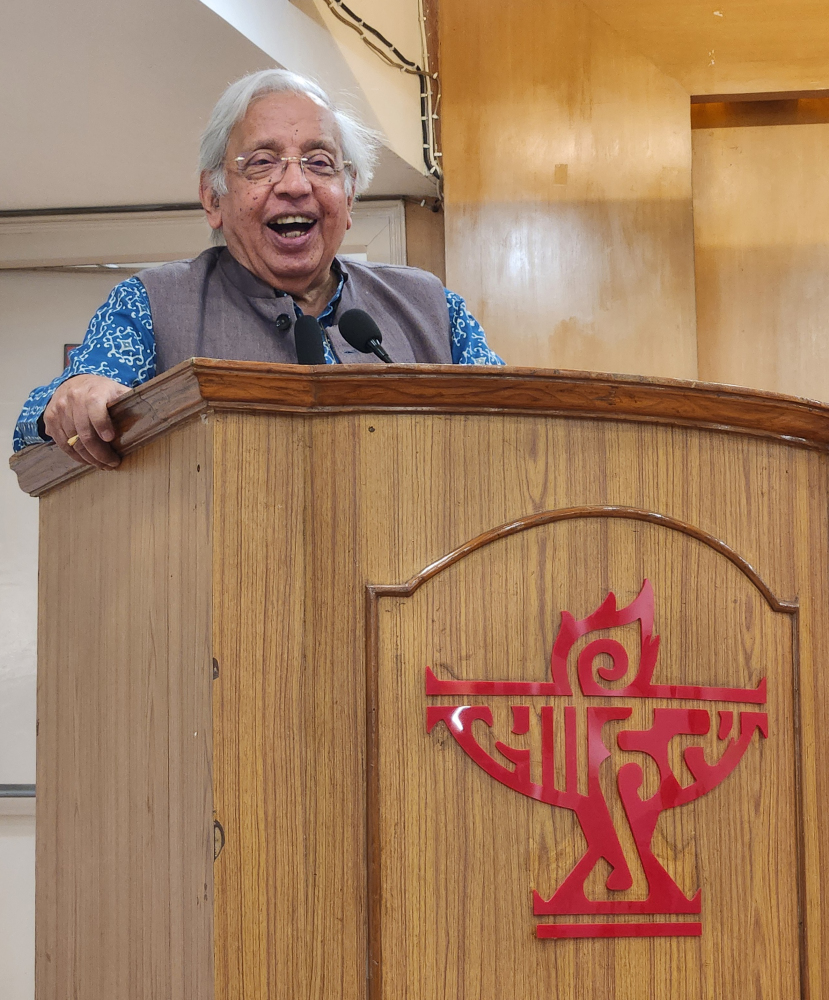
Sahitya Academy, India’s premier literary institution, was inaugurated in 1954 as an autonomous body to encourage creativity in various Indian languages, support writers and artists, and foster cultural unity through diversity. Jawaharlal Nehru, the first Prime Minister of India, served as the first president of Sahitya Akademi. He made sure it remained free of any political interference, “As President of the Akademi, I may have to tell the Prime Minister to mind his own business if he interferes”, he said.
The logo was designed by Satyajit Ray, one of the greatest film directors in the history of cinema. Literary luminaries, including Suniti Kumar Chattopadhyay, K.M. Panikkar, Dr Zakir Hussain, C. Rajagopalachari, and Maulana Azad, were a part of the Akademi’s first General Council. In 1961, the Akademi was shifted to its permanent home, Rabindra Bhavan, a beautiful building designed by the renowned architect Habib Rahman. Named so to commemorate the centenary of Rabindranath Tagore’s birth.
Sahitya Akademi recognises Rajasthani and English in addition to 22 languages recognised under the 8th Schedule of the Constitution. It confers Awards and Fellowships, publishes books and organises literary programmes in all these 24 recognised languages. The Sahitya Akademi Awards are among the most prestigious literary honours in India. Every year, writers from across the country are honoured for their exceptional contributions to literature, reflecting India’s rich linguistic and cultural diversity. The award includes a cash prize, a citation, and a plaque. The awards are criticised for a lack of transparency in the selection process; despite this, they remain a prestigious recognition of literary excellence in India and continue to promote cultural and linguistic diversity.
The Sahitya Akademi Awards 2025–26 reflect the diversity and richness of Indian literature across multiple languages. The Akademi honoured 24 writers across different Indian languages, recognising those who address contemporary themes such as identity, memory, and social change while also maintaining a balance across genres such as fiction, poetry, and memoir. A balance was maintained between established authors and fresh literary voices; legacy and innovation were both given due recognition.
Mamta Kalia won for her Hindi memoir Jeete Jee Allahabad. Navtej Sarna was awarded in English for his novel Crimson Spring. Other winners represented languages like Dogri, Gujarati, Bengali, and more, reflecting India’s multilingual literary richness. Prasun Bandyopadhyay for “Shrestha Kabita” in Bangla, H.M. Pernal (Henry Mendonca) for Konkani. Yogesh Vaidya for “Bhattkhadaki” in Gujarati, Amresh Nugadoni for “Dada Seerisu Tande” in Kannada, N Prabhakaran for “Maayamanushyar” in Malayalam, Raju Baviskar for “Kalyanilya Resha” in Marathi, Jinder for “Safety Kit” in Punjabi, Jitender Kumar Soni for “Bharkhama” in Rajasthani and Sa Tamilselvan for “Thamiz Sirukathaiyin Thadangal” in Tamil. Pritpal Singh Betab for “Safar Jari Hai” in Urdu, Nandini Sidha Reddy for “Animesha” in Telugu, Bhagwan Atlani for “Waghoo” in Sindhi, Sumitra Soren for “Mid Birna Chenne Saon Inag Sagai” in Santali, Mahamahopadhyay Sahu Bhadreshdas for “Prasthanacatustaye Brahmaghosah” in Sanskrit, Girijakumar Baliyar Singh for “Padapurana” in Odia, Prakash Bhattarai for “Nepali Paramparik Sanskriti Ra Sabhyata Ko Dukuti” in Nepali and Haobam Nalini for “Kanglamdriba Eephut” in Manipuri are also among the recipients of the award.
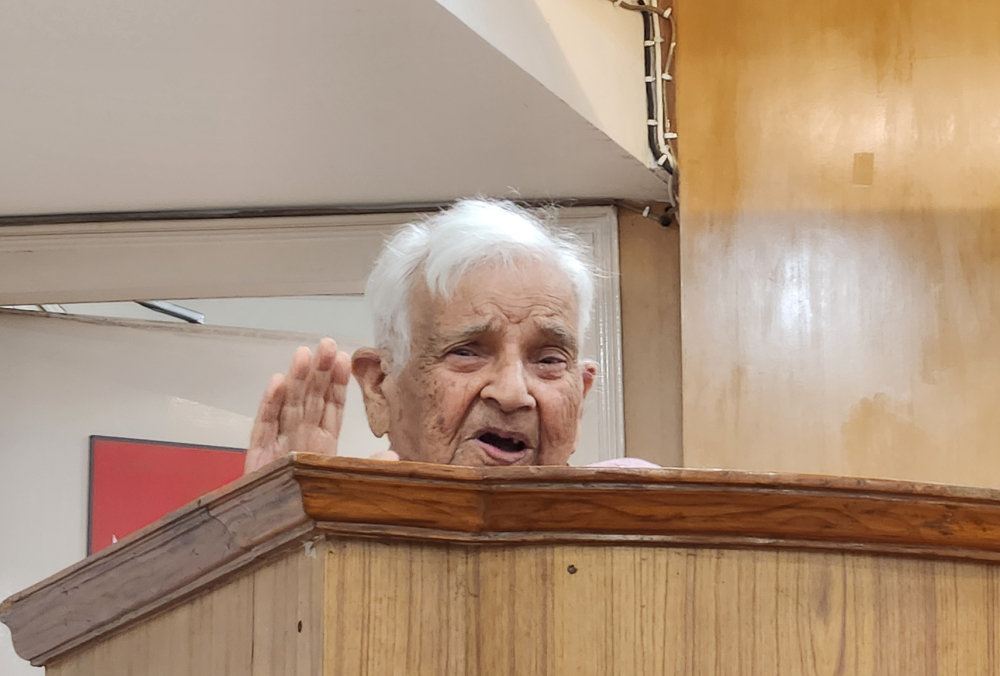
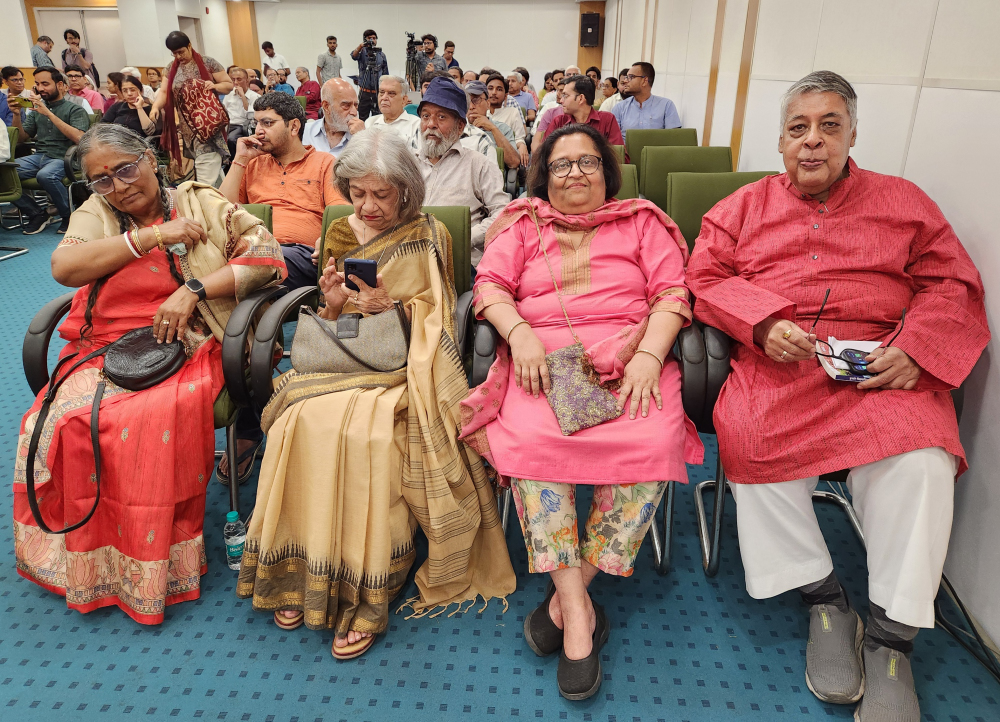
Dr Suman Keshri, reading an excerpt from Mamta Kalia ji’s book.
Text and pictures by Prerna Jain.

 Prerna's Photographs