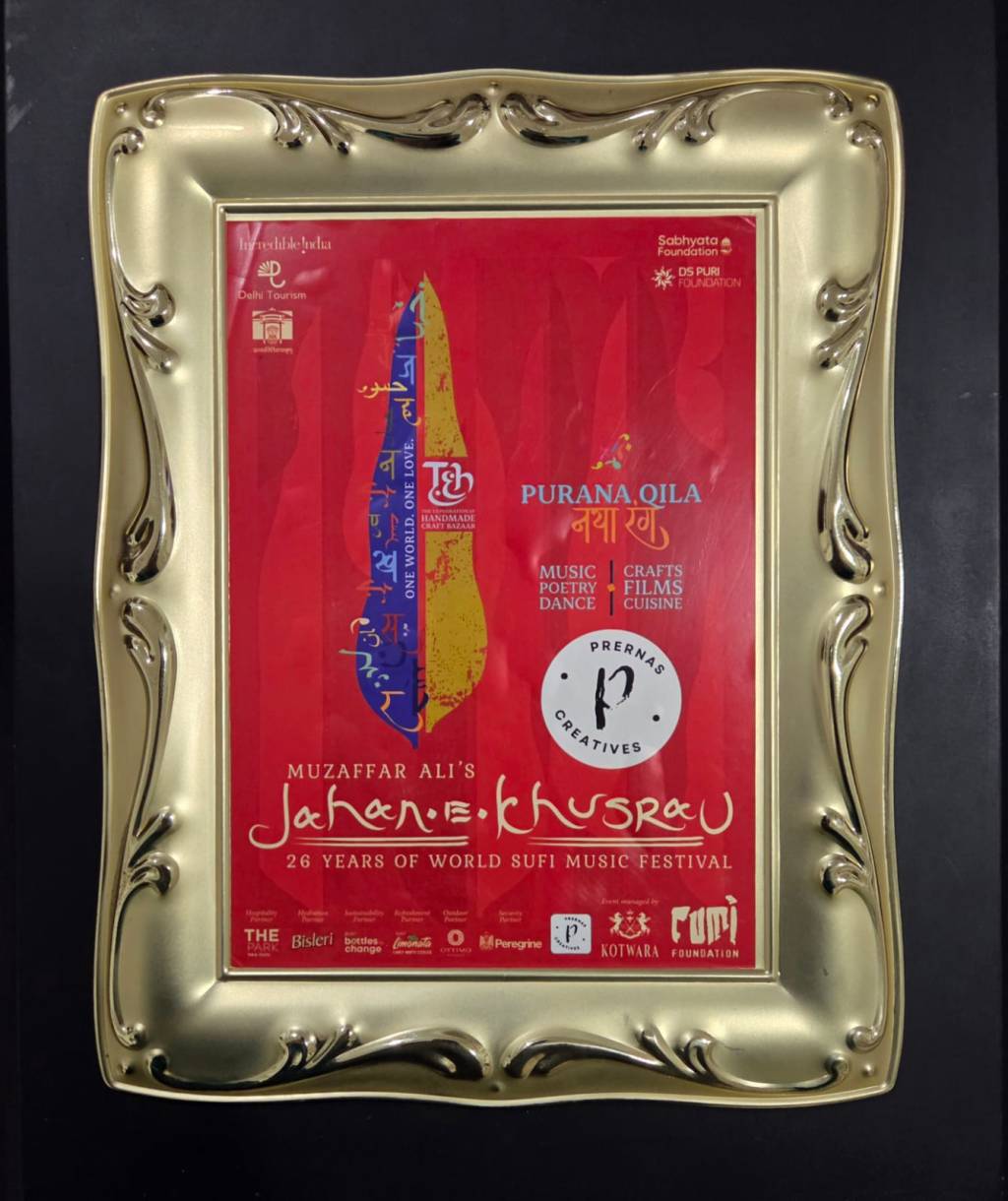
Jahan-e-Khusrau, a three-day soulful confluence of music, poetry, and devotion, ended yesterday. It started as a music festival twenty-five years ago and has now become a complete cultural ecosystem. Based on my multiple visits to the festival, I would describe Jahan-e-Khusrau as a safe space. A beautiful, fragrant bubble, inside which you forget all about what is happening in the world, the wars, the violence, the injustices.
Centuries ago, Khusrau had woven together languages, cultures, and hearts. Through Jahan-e-Khusrau, Muzaffar Ali Sahab seeks to achieve the same: he gathers scattered notes of culture, devotion, and longing and weaves them seamlessly. He weaves Persian and Hindvi, devotion and art and revives lost worlds of tehzeeb and nazakat, of voices that speak softly yet echo for a long time. Boundaries blur, and strangers become co-travellers on a beautiful spiritual journey at Jahan-e-Khusrau. Amir Khusrau’s presence can be felt in every note, every verse, every silent pause. The echo of his songs can be heard across centuries.
Khusrau’s music was never just meant to be heard, but to be felt—to dissolve the self into something greater. These verses by Khusrau beautifully express the Sufi idea that true love of the Divine requires the annihilation of the self (fana), leaving only the Beloved.
ख़ुसरो दरिया प्रेम का, उल्टी वा की धार
जो उतरा सो डूब गया, जो डूबा सो पार
Khusro says, love is a river that flows against the current—
Whoever steps into it drowns, and whoever drowns is carried across.
(True union with God comes only when the ego dissolves completely.)
मन तू शुदम, तू मन शुदी
मन तन शुदम, तू जान शुदी
ता कस न गोयद बाद अज़ीं
मन दीगरम, तू दीगरी
I have become you, and you have become me;
I am the body, and you are the soul.
So that no one can ever say again
That you are someone else and I am another.
(A perfect merging of identities—no separation remains.)
छाप तिलक सब छीनी रे मोसे नैना मिलाइके
प्रेम भरी पिया की नज़र, सब कुछ अपना भुलाइके
You have taken away my identity with just one glance;
With your love-filled gaze, I have forgotten everything of myself.
(The self is erased in the overwhelming presence of the Beloved—God.)
The qawwals, the singers, the percussionists at the Jahan-e-Khusrau follow this path and lose themselves in their singing. The result is that listeners can’t see their identities, the country of their origin, their gender, their religion, as though Khusrau is gently guiding each of them closer to that timeless truth of love and unity.
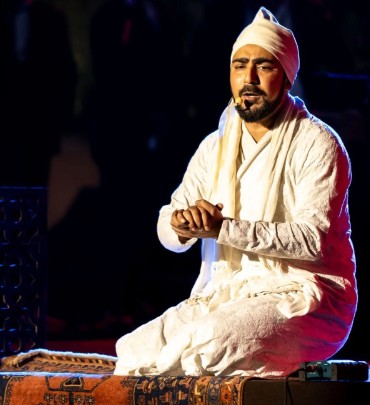
Rooted in the storytelling traditions that once flourished in the courts and bazaars of Hindustan, Dastangoi finds a natural home at Jahan-e-Khusrau. Syed Sahil Agha, the dastango, seated with quiet authority, wove tales that drifted between history and imagination. Powered only by the spoken word, his voice rose and fell, paused and flowed, and engaged the audience with humour and philosophy. The audience time-travelled and landed in ancient mehfils, where stories were not consumed, but lived. The simplicity and the power of words carried the audience into realms where language itself feels sacred.
The Teh bazaar of Jahan-e-Khusrau was an extension of the Sufi festival, not just a marketplace. The colours and textures felt like we were stepping into a forgotten era. Amidst handwoven fabrics, brassware and intricate jewellery, the scent of ittar drifted through the air. There was no rush; time seemed to slow as if creating a bridge between the past and the present. Traditions from different regions mingled effortlessly.
Khusrau was everywhere, in the soft glow of lamps, in the musical notes, in the silence between applause. From the first notes that rose into the evening sky to the last note that ended the three beautiful evenings, every note seemed to reach beyond the physical world, seeking something eternal. Jahan-e-Khusrau made us pause and listen, not just to the music, but to ourselves. The after effect is that you can’t decide whether you are empowered or all sorts of power has been taken away from you.
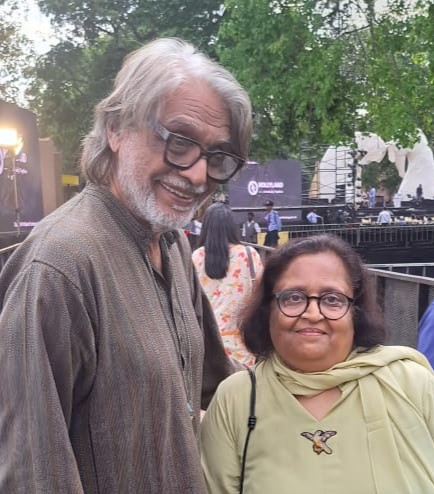
Muzaffar Ali Sahab, the creator of this beautiful world.
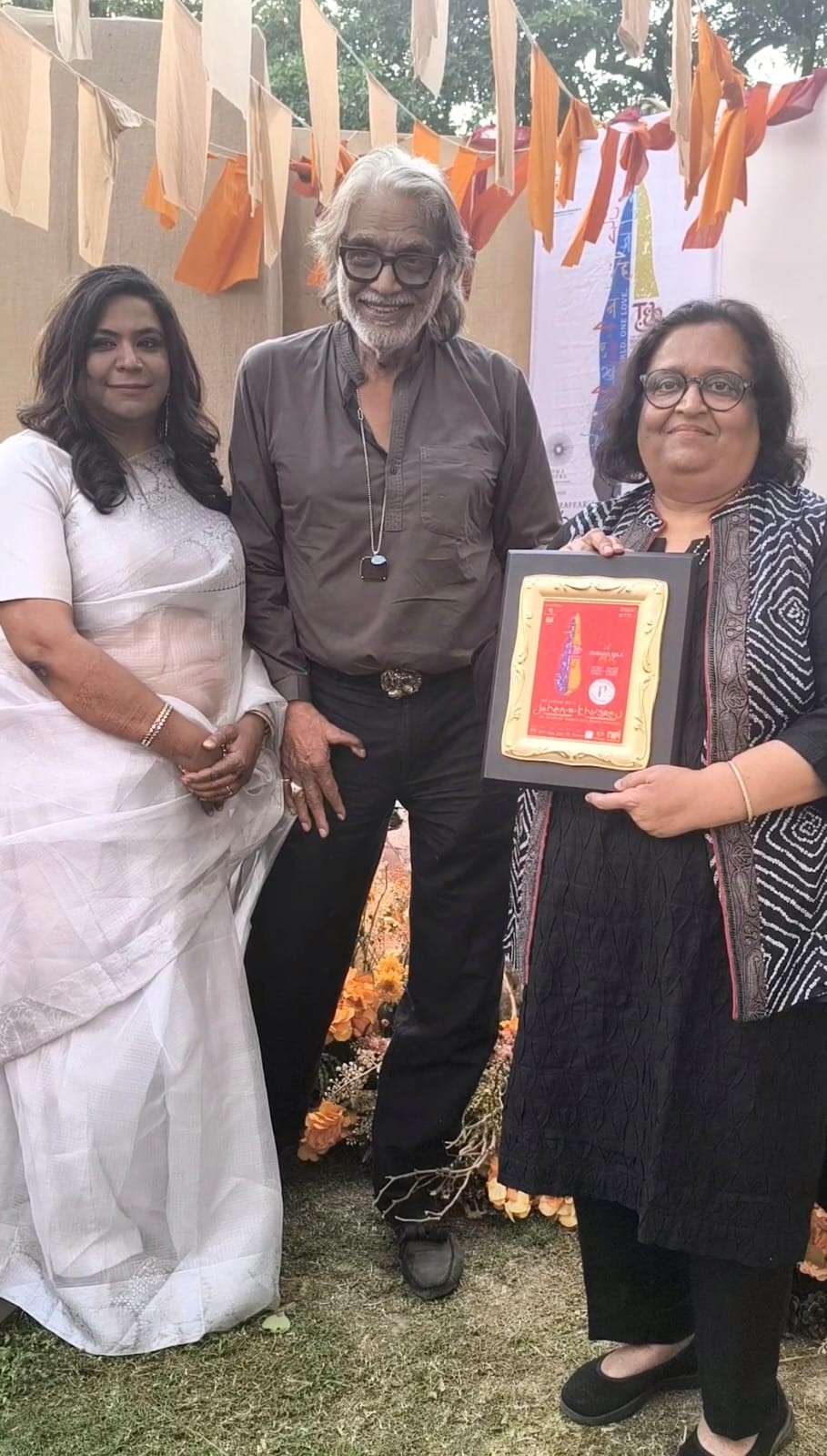

 Prerna's Photographs