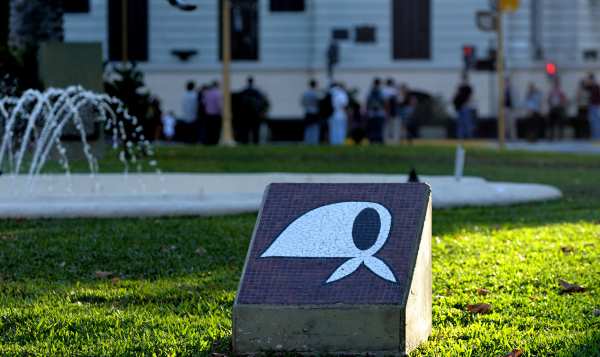
When I visited Argentina a few years ago, I often encountered a symbol depicting a white headscarf in Buenos Aires. A guide told me that the white headscarf represents a diaper. It symbolises the struggle of mothers and grandmothers, who are fighting for their missing children. She told me the heart-wrenching story behind the symbol.
In Argentina, after many military dictatorships, a coup d’etat was declared on March 24, 1976. It led to the most bloody and repressive period in the history of the country. Citizens were stripped of their rights. Political parties, strikes, and protests were all banned. The Military government systematically killed its citizens through kidnapping, torture, arbitrary executions, and enforced disappearance. Pregnant women were kidnapped and kept alive till they gave birth to their babies. Their newborn babies were taken away and the mothers were killed. Historians estimate that the number of dead individuals was around 30000.
Some mothers of young people who had been victims of enforced disappearance ran into each other at places like, police stations or on the bus and began to talk. The mothers discovered that they were not alone. They were often told the same stories by the officials. Most of them had young adult sons and daughters who had suddenly been pulled from their homes, work or classes. The authorities often made fun of the protesting women and called them “mothers of terrorists.” They mocked them: Your daughters disappeared because they have become prostitutes or ran off with some man. Your sons have left the country to run away from army service.
In 1977, some of these women began to demonstrate every Thursday in silent marches at Plaza de Mayo in Buenos Aires, the site of Argentina’s government. They publicly challenged Argentina’s brutal military dictatorship and its “Dirty War.” To identify each other, the women began wearing a white head scarf. They used a simple and very effective chant. “We want our children and we want them to tell us where they are.” Some carried pictures of the missing children.
At a time when most Argentineans either ignored the brutality of the regime or were afraid to speak out, these women expressed their pain. They were criticized and called “Las Locas” (Crazy Women). Their families were worried for their safety and told them, not to get involved. What can be worse than their taking my child, they responded. The women’s defiance of the military put their own lives at risk. Leading members of the original group “disappeared.” Others kept returning to the plaza. They had to outwit the police who came to break up their demonstrations. They learned to deal with attack dogs and tear gas. If one got arrested, they all went in a group. They felt strong in the plaza, it made them feel close to their children.
The mothers became known internationally during the 1978 World Cup in Buenos Aires, as they used the increased media coverage to spread their stories. Human rights groups called them to conferences outside Argentina. The Mothers educated themselves about the United Nations and Amnesty International. They learned the skills of public speaking, met political leaders and challenged the U.N.’s acceptance of the Argentine military regime. With help from a Dutch women’s group, they opened an office and published their newspaper. They took out full-page ads in newspapers and circulated petitions demanding the release of those in illegal detention. Their struggle became a symbol of many human rights movements.
Although the dictatorship ended in 1983, the children that were taken away, have still not been found. Their mothers are grandmothers now. They continue to meet at the plaza. Some are old and frail, yet haven’t given up their fight. They come in wheelchairs and use any means available to them. They desperately want to know, what happened to their children and grandchildren – children who must be adults now. The grandmothers use multiple ways to creatively communicate their message and further their search. They work with filmmakers to produce short films, videos and audio clips, which are broadcast on radio and television programs to spread awareness about their missing grandchildren. In partnership with other organizations, the grandmothers have put on theatre presentations to tell their stories. They host a winter festival for young children, with games and live screenings of some of the films they have made. They use social media networks like Twitter and Facebook to spread their message to a larger audience.

The Disappeared, a film made on the missing children of Argentina
The Grandmothers of the Plaza de Mayo have expanded their search through legal means. In search for clues, they have successfully pushed for the declassification of international documents from foreign governments such as the United States Department of State. Thanks to the courts and modern genetic matching, they have had a few successes. Four decades after their founding, the Grandmothers of Plaza de Mayo have located and identified 126 grandchildren. These grandchildren and their extended families carry on the search for other stolen grandchildren since most of the grandmothers are now quite elderly or have passed away.
An estimated 300 grandchildren are still missing, and the wounds are still there. Their website says: “The Grandmothers are not afraid. The worst that could happen to them has already happened. Their voices challenge the military regime that continues to deny the existence of the disappeared.”
Photos and content by Prerna Jain, the video is from Youtube.


 Prerna's Photographs