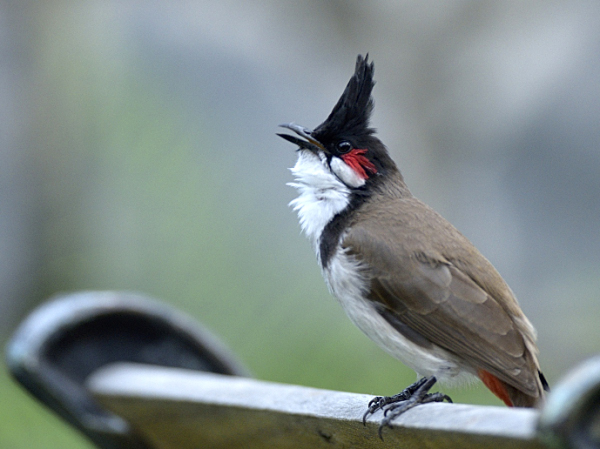
India celebrates its 76th Republic Day on 26th January 2025.
One of the oldest and most popular songs that matches the patriotic vibe of Republic day is Allama Iqbal’s –
“Sare jahan se achcha Hindostan humara, hum bulbulain hain iski yeh gulsitan humara(Our India is better than the entire world, we are its nightingales and it is our garden abode)”.
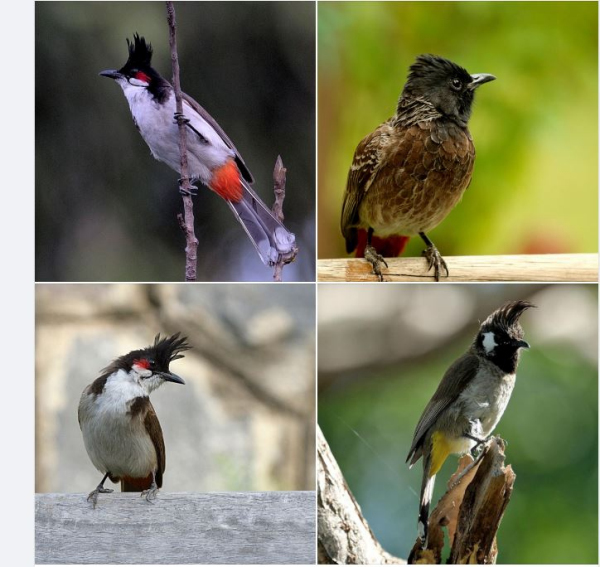
This song beautifully celebrates India’s multiculturism. What better symbol than the Bulbul to showcase its diversity? Various sources on the internet tell me that twenty-two different species of Bulbuls are distributed across India. From urban gardens to dense forests, you can find them everywhere.
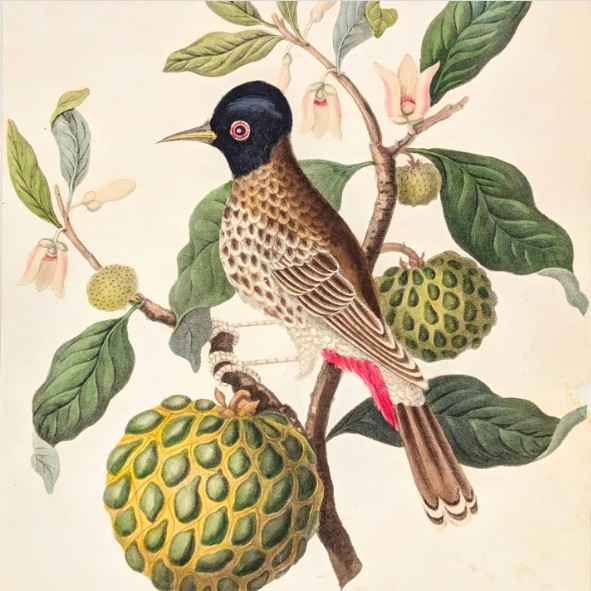
James Forbes a British artist and writer for the British East India Company, filled 52,000 manuscript pages with notes and sketches concerning all aspects of Indian life, wildlife, flora and architecture. He described the Bulbul as one of the most beautiful and melodious in Indian Ornithology.
Bulbul may be an Arabic word but it has been beautifully adapted in Hindi and many other Indian languages. For centuries, poets have used Bulbuls to express different emotions. In poems and songs, Bulbuls are described as passionate lovers.
Ghalib, the famous Urdu poet, had a different opinion-
Bulbul ke kar-o-bar peh hain ḳhandah’ha-e gul,
kehte hain jis ko ishq, khalal hai dimagh ka.
(The rose smiles at the Bulbul’s actions, love is nothing but a defect of the mind.)
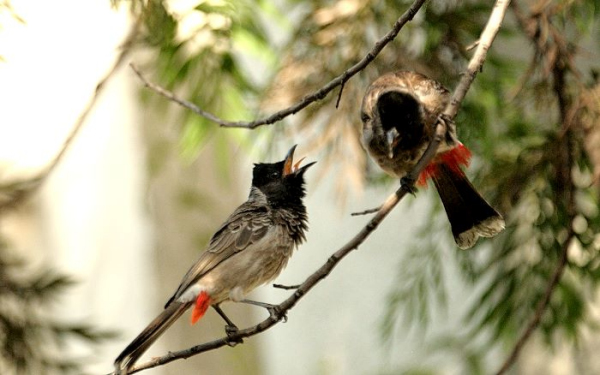
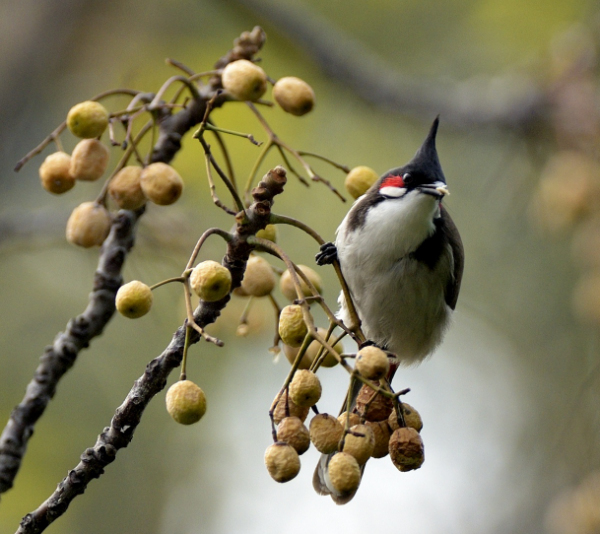
Unlike the rose in the Ghalib couplet mocking the Bulbul’s romantic actions, I love the bulbuls of my garden. My favourite among the commonly sighted Bulbuls is, the Red-whiskered bulbul. A pair of them had nested in my garden a few years ago. I had clicked them, preening, nibbling at small berries and feasting on insects.
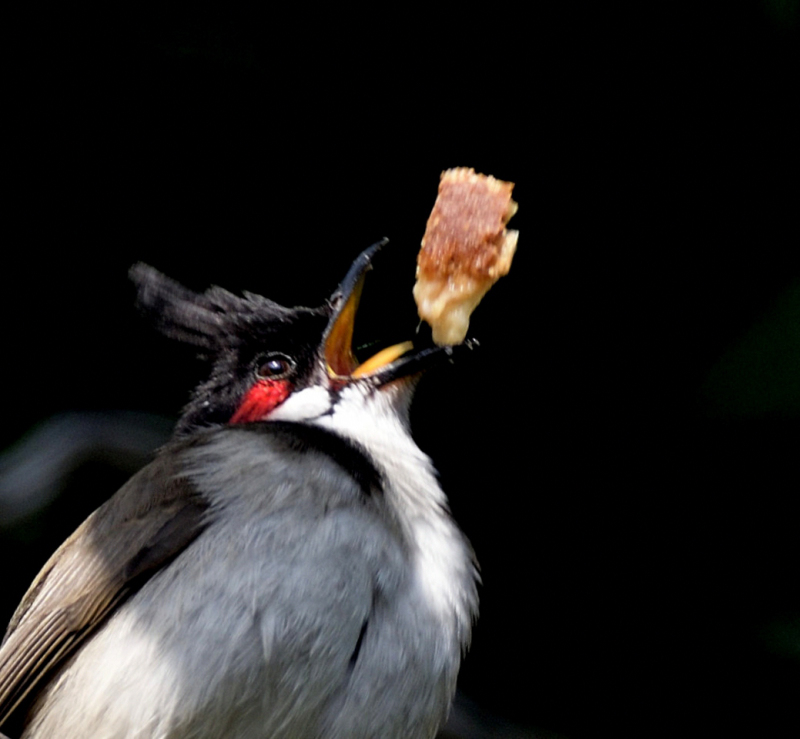
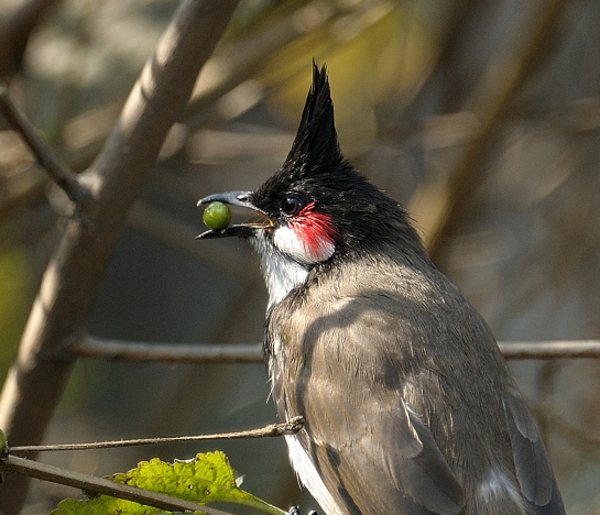
As the name suggests, this beautiful songbird has whiskers. It has a beautiful black pointy crest and cheeks dabbed with a patch of red. The red whiskers are located under the eye.
In the third couplet of “sare jahan se achcha“, Allama Iqbal says –
Aye ab raud ganga, voh din hain yad tujhko,
utara tere kinare jab karvan hamara
(Oh waters of Ganges, do you remember the days when our caravan had halted at your bank?)
Iqbal refers to various caravans that stopped and stayed back in India. Migrants assimilated and merged into the culture and civilisation of India. Unity in diversity is India’s biggest strength. Long live the Indian Republic and multiculturism of India.
Photos (except the James Forbes painting) and content by Prerna Jain.


 Prerna's Photographs