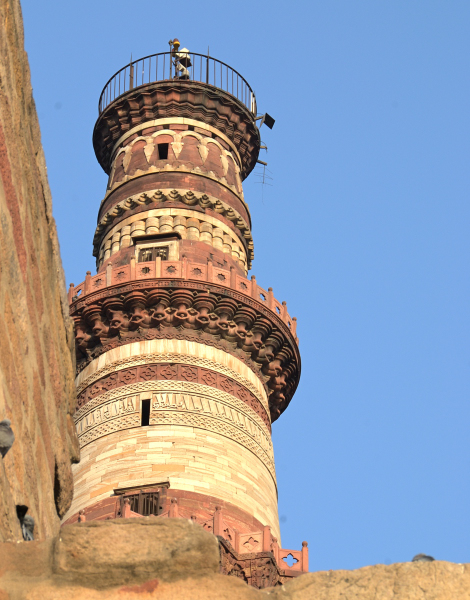
Picture the scene: after the Friday prayers in a Mosque in the 13th century, a woman dressed in red throws her chador off and appeals for justice from the people of her kingdom. This was happening at the Jami Masjid of Delhi (Quwwat-ul-Islam Mosque in the Qutub complex), at a time when women had their faces covered in veils and were confined to their homes.
Sultan Razia, the daughter of Iltutmish, the most famous Mamluk ruler(Slave dynasty) of the Delhi Sultanate, appealed for help in the name of her father against the intrigues of Shah Turkan, the powerful wife of Iltutmish. Razia had been trained in politics and warfare and had been appointed as his successor by Iltutmish. Shah Turkan controlled the state’s affairs. She crowned her son, Ruknuddin Firoz Shah, with the help of the nobles and tried to have Razia assassinated. According to the tradition of the time, one would dress in red when making a complaint to the king. The sight of Razia and her words made a profound effect on the people assembled for the Friday prayers. For the first time in the history of the Delhi Sultanate, citizens decided a succession issue on their own initiative. The support of the people of Delhi was the strength of Razia. With the title of Sultan Jalalatud-din Raziya, she became the Sultan. She stopped wearing a veil and donned robes, a tunic, and a turban, as was customary for men in those days. A woman was able to stage a coup and take over what had been denied to her.

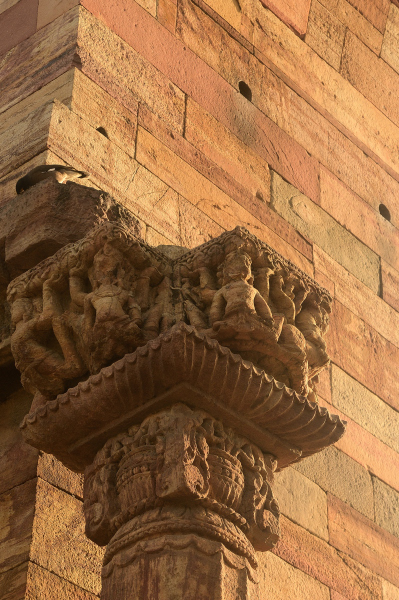
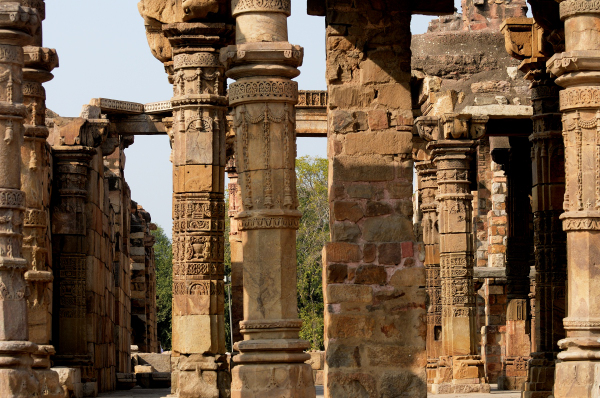
The Jami Masjid consists of cloisters surrounding a courtyard and was constructed using carved columns from the remains of demolished temples. This is all I knew about the Mosque until I read this fascinating history.
The Jami Masjid is a part of the Qutub Minar complex in Mehrauli, Delhi. Other than the Qutub Minar and the Jami Masjid, the complex includes: Iron Pillar, Alai Darwaza, the Tomb of Iltutmish, Alai Minar, Ala-ud-din’s Madrasa and Tomb, the Tomb of Imam Zamin, Major Smith’s Cupola and Sanderson’s Sundial.
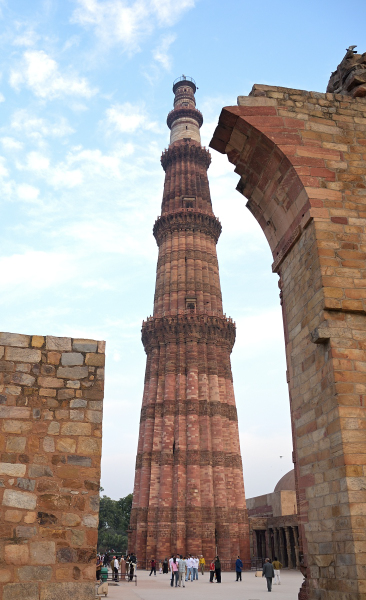
Qutub Minar, the tallest pillar in India and the tallest brick minaret in the world, was built during the early part of the Sultanate period by the first two slave kings. Some of the structures in the complex were built by the Khiljis. It was initially called Mazina (the muezzin‘s tower). Although it is a myth that it was used for calling people to prayers. The Qutub Minar is actually a victory tower. Another myth is that it was named after Qutb ud-Din Aibak, the first Sultan of the Delhi Sultanate. He had laid the foundation of the Qutub Minar. The construction began around 1192, but only the first story was completed before Qutb ud-Din Aibak’s death. His successor, Shams-ud-din Iltutmish, completed the first three storeys; the upper two were added by Firoz Shah Tughlaq, who also made the marble additions to the tower.
Qutub Minar was named after a Sufi saint, Khwaja Qutb-ud-din Bakhtiyar Kaki. It was said that this 240 ft tall tower connected Saint Qutbuddin Bakhtiar Kaki to heaven. That is why people called it “Qutub ki Laat (Qutub’s pillar). This red sandstone tower tapers from 2.75 metres in diameter at the top to 14.32 metres at its base. It contains a spiral staircase of 379 steps. Initially, it had only four floors. The top floor was severely damaged when it was struck by lightning in 1368. Firoz Shah Tughlaq carried out extensive repairs on this and removed the top story. He replaced the fallen storey with two floors and crowned it with a cupola. He introduced white marble into the otherwise red and buff sandstone. The railings on the balconies were put there by the English.
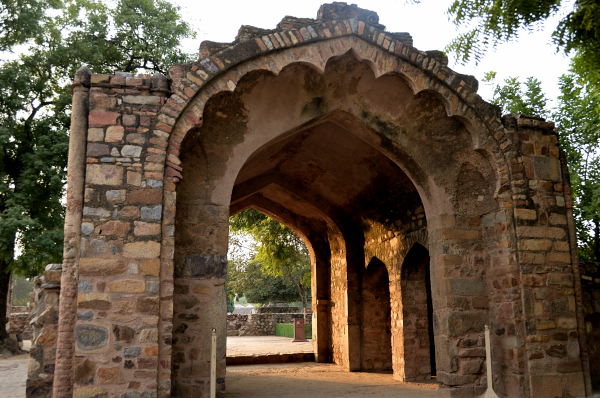
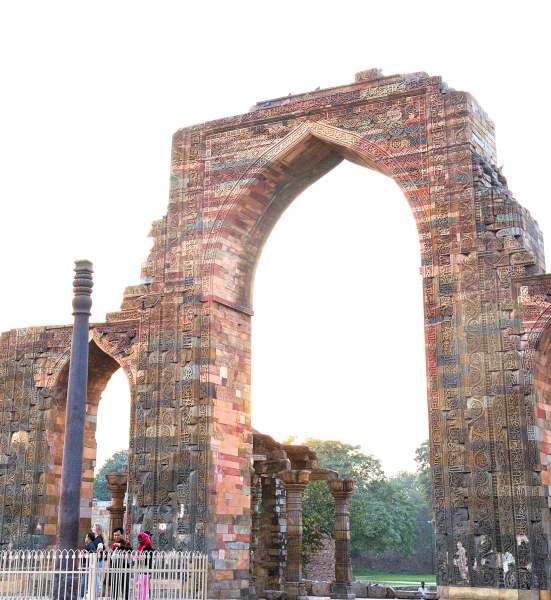
This large arch is right at the beginning of the Qutub complex.
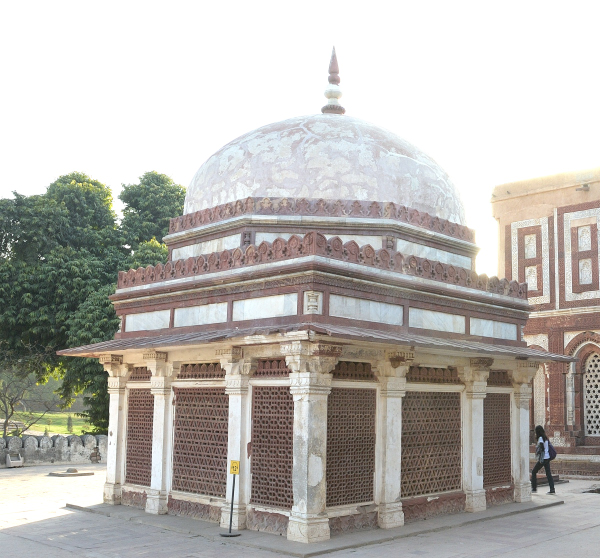
Tomb of Imam Zamin.
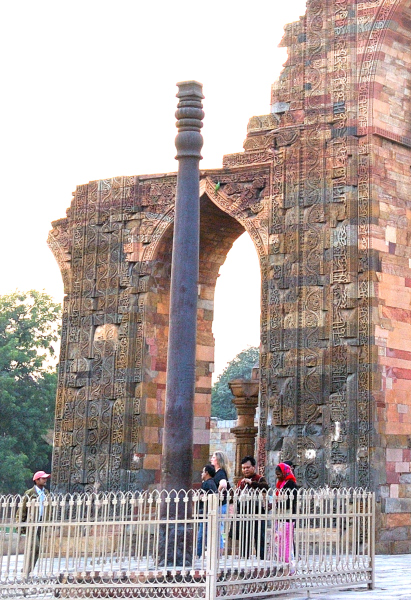
An iron pillar stands in the courtyard of the Jami Masjid. The pillar has remained corrosion-resistant and rust-free for over 1,600 years of its existence. Dating back to the Gupta Empire (5th century CE), it predates the Qutub Minar by over 800 years. It is believed that if a person stands with their back to the structure and clasps their hands while putting their arms around it, their wish will be fulfilled. A fence has been erected around it to prevent erosion by the physical touch of countless visitors to the monument. The pillar weighs more than six tons and is approximately 23.6 feet tall, with 3.6 feet of it buried below the ground.
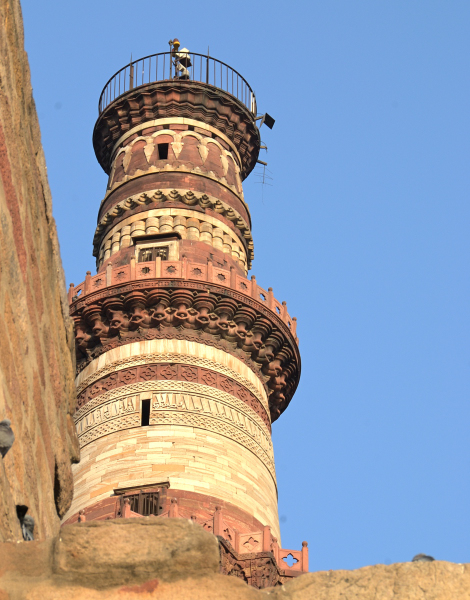
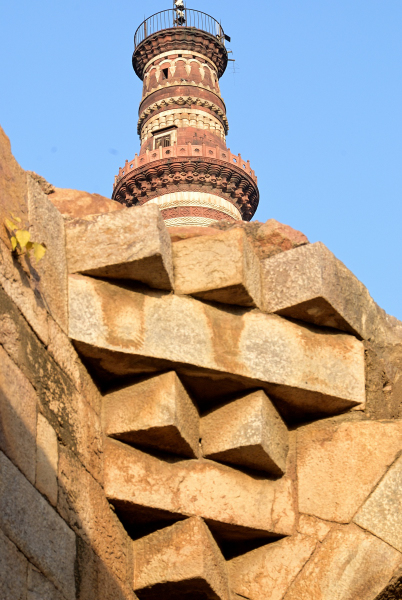
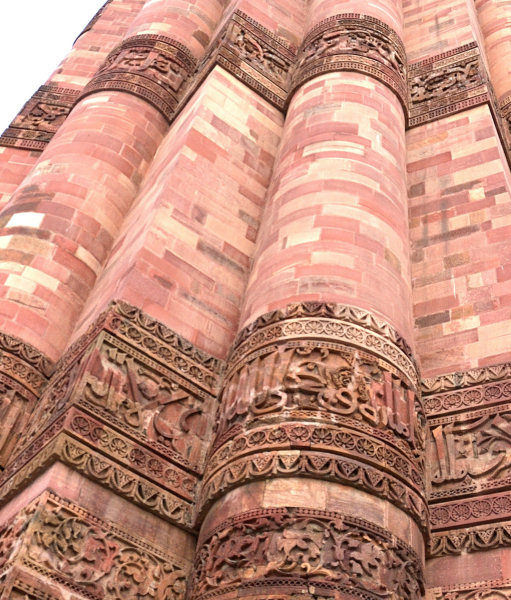

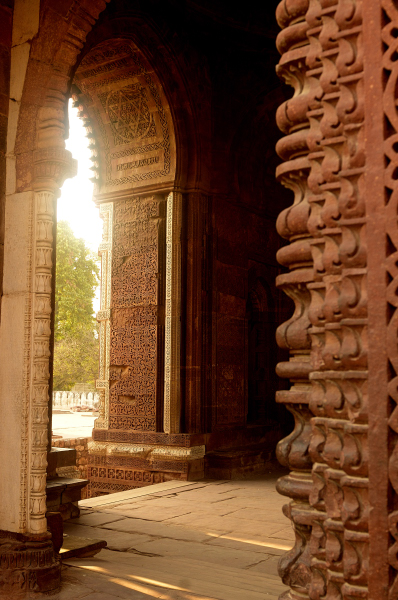
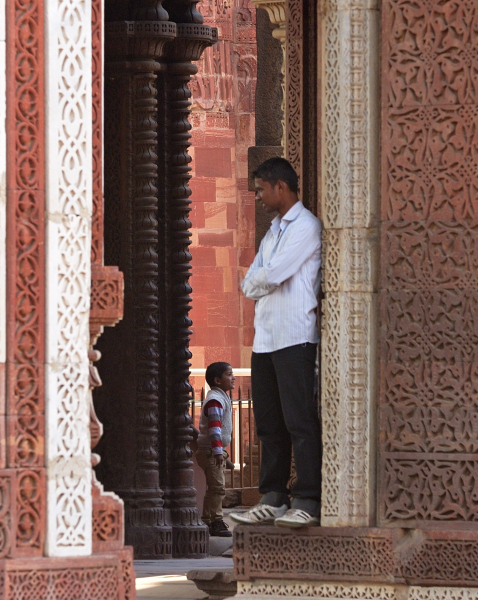
Alai Darwaza built by Alauadin Khilji.
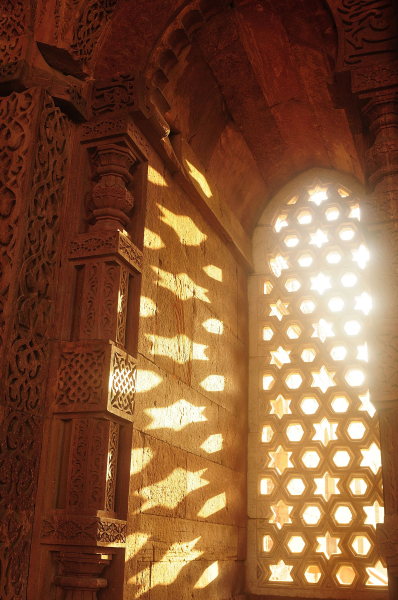
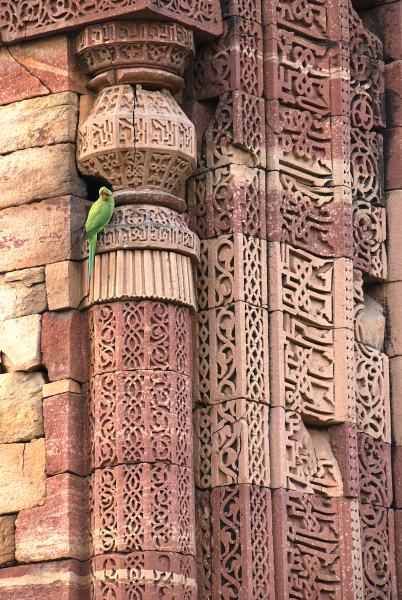
Perpetual knot carved on the arch, travelled with the Chinese traders to Central Asia, and from Central Asia it came to India.
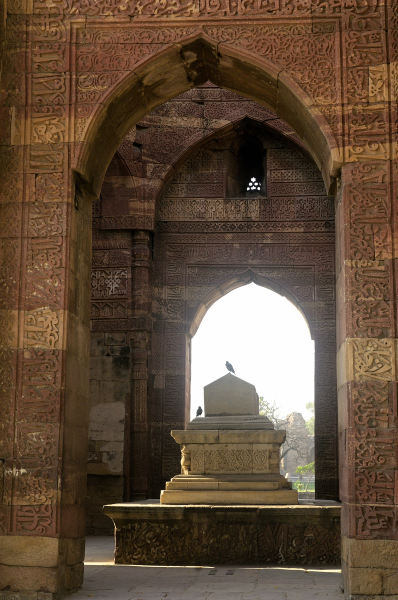
The square tomb of Iltutmish, in the Qutub complex. The tomb chamber is carved with Quranic calligraphy and geometric patterns.
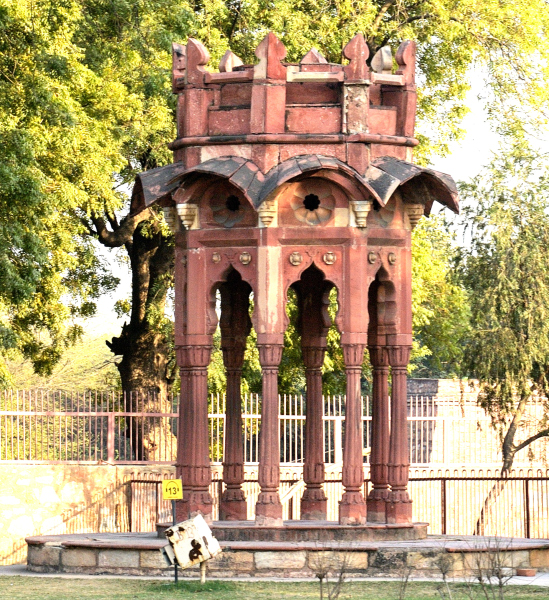
The earthquake of 1803 destroyed the cupola built by Firoz Shah on top of the Qutub Minar. British Governor-General of India, Lord Wellesley, authorised Major Robert Smith to carry out the necessary repairs in the Qutub Minar. Smith came to the conclusion that this building looks incomplete without the cupola. He decided to complete it, and he placed his own version of a cupola on top. The repairs were completed in 1828. The cupola was so out of place that Lord Harding eventually had it taken down in 1848 and placed it on the outer lawns of the Qutub Complex, where it still lies.
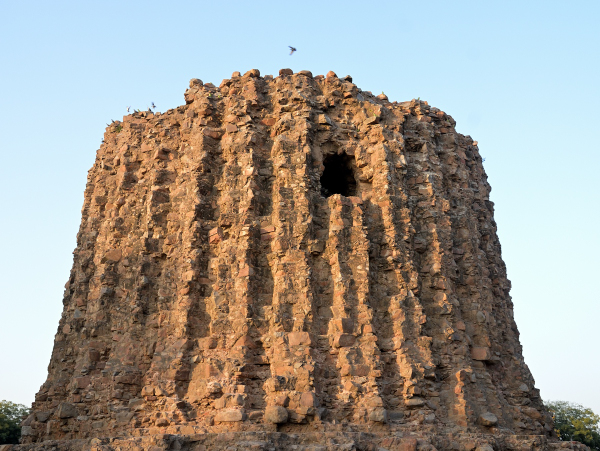
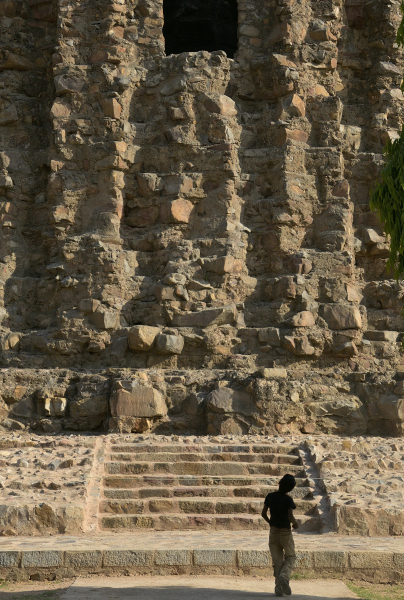
The first storey of the incomplete Alai Minar, which was envisaged to be twice the scale of the Qutub Minar, it stands 25 metres high. Qutub Minar was added to the list of World Heritage Sites by UNESCO in 1993.
The Qutub Complex is significant for so many reasons, historical, architectural, sociological and many more. Razia Sultan’s fight for justice is one of the most important of them.
Photos and text by Prerna Jain.


 Prerna's Photographs