
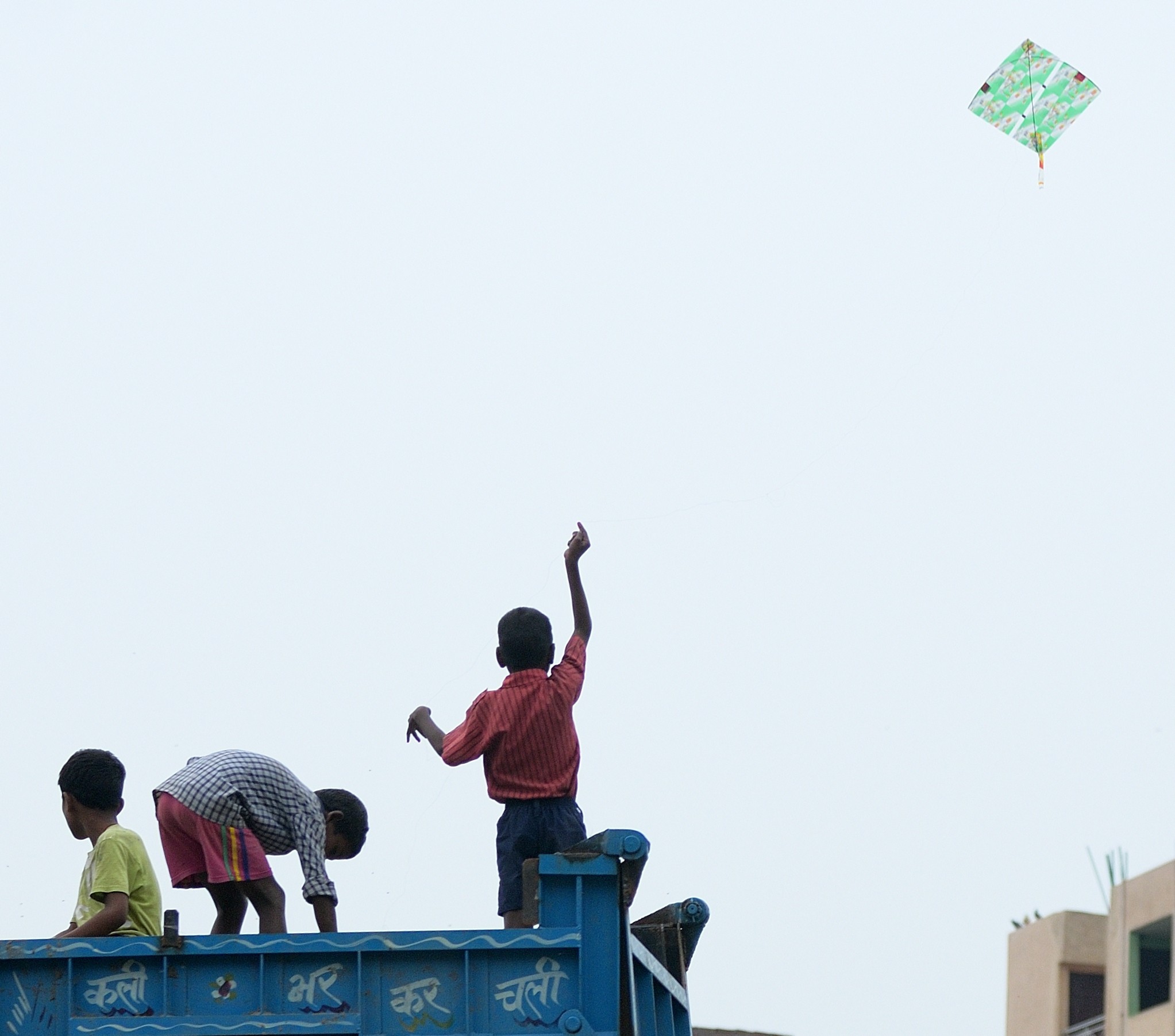
Around the world, kites carry stories, memories, and meanings far greater than simple amusement. In many cultures, people write wishes, prayers, or messages to those they miss on kites before releasing them into the sky. Some of the world’s oldest kite traditions continue to survive because they are lovingly passed from one generation to another. Kites, it seems, are never just kites.
As children, though, we never thought about symbolism or festivals. We flew kites whenever there was enough wind and enough enthusiasm. I never properly learned how to fly one myself. I tried many times but was rarely trusted with the spool for long. The experts in the neighbourhood lacked the patience to teach beginners. Traditionally, kite flying is considered to be a boy’s game. I would be allowed to hold the thread for a few glorious minutes, but the moment a rival kite appeared in the sky, the spool was quickly snatched back from me. Bringing down a rival kite is serious business.
I may not have mastered flying kites, but I was certainly part of making them. There were neighbourhood experts who crafted their own kites, and I happily assisted them. Coloured paper was cut into perfect diamond shapes. Flexible bamboo sticks were bent into curves and attached diagonally with lahi, a sticky glue made from refined flour. Saddi and manjha were carefully rolled onto spools.
“Saddi” was the plain cotton thread used to fly the kite. Back then, it was always cotton, though I hear polyester versions are common now. “Manjha” was the dangerous one, the glass-coated abrasive thread used for kite fighting, the weapon that sliced through rival strings mid-air.
Tying the string correctly to the kite required skill and precision. If the geometry was even slightly off, the kite refused to rise. Once the tail, string, and frame were ready, the wind direction was checked carefully. Usually, one younger child held the kite up while the flyer pulled the string sharply towards himself. If the launch succeeded, the kite would wobble briefly before finally surrendering itself to the wind. Then the spool would spin rapidly as more thread was released, sending the kite higher and higher until it floated above rooftops, trees, and electric wires, in a clear open current of air.
Flying the kite higher required constant pulling, loosening, and tightening of the thread. During a kite fight, the aim was to manoeuvre around the rival kite and cut its string using manjha. It demanded quick reflexes, strategy, and remarkable coordination between the flyer and the spool operator.
And then came the best part, the chase for the kites.
Once cut loose, the defeated kite drifted unpredictably across terraces, streets, trees, and balconies. Children would scatter in all directions, sprinting wildly while keeping their eyes fixed on the sky. Catching a falling kite required speed, timing, and a bit of luck. Sometimes the kite landed perfectly into someone’s waiting hands. Sometimes it disappeared onto a rooftop forever. And sometimes it got tangled in a tree and tore instantly, ending its life.
Looking back now, I realise kite flying was never only about the kite. It was about neighbourhood terraces crowded with people, arguments shouted across rooftops, children running breathlessly through lanes, and the quiet pride of making something with your own hands and watching it rise into the sky. The kite itself rarely lasted very long. The memories did.

Main hoon patang-e-kaagzi dor hai us ke haath mein,
chahaa idhar ghata diya chaha udhar badha diya
– Nazeer Akbarabadi


Photos and text by Prerna Jain.


