
World This Day and That Day, celebrated throughout the year, are meant to raise awareness and build collective action around some of humanity’s most pressing challenges. These international observances serve as reminders to realign efforts, renew commitments, and hopefully make a positive difference.
I recently browsed through the list of international days. To my surprise, I could not find a day dedicated to entertainment. Perhaps it is time to remember the old proverb: “All work and no play makes Jack a dull boy.” Without some entertainment and laughter, people become not only bored but also boring.
A few years ago, we may have missed the perfect opportunity to designate an International Entertainment Day.
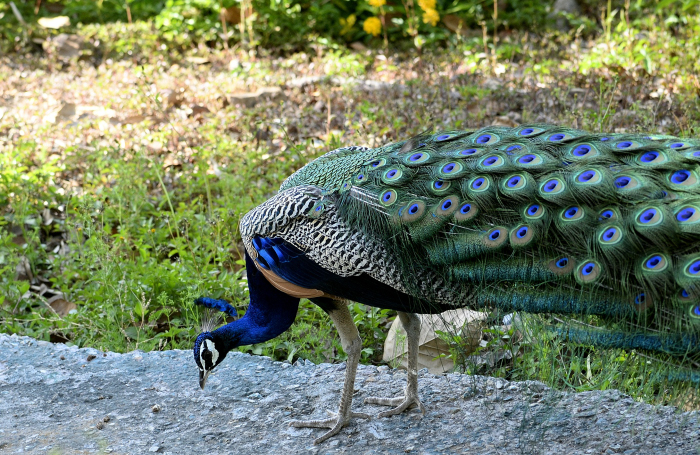
In June 2017, a judge in Rajasthan gave an entirely new meaning to the famous dialogue from the superhit Hindi film, Amar Prem, “Pushpa, I hate tears.” While speaking about India’s national bird, he claimed that the peacock is a lifelong brahmachari (celibate) and the peahen becomes pregnant by swallowing the peacock’s tears.
For generations, parents have entertained children with stories of storks delivering babies. This theory merely replaced the stork with a peacock and added a generous helping of tears, perhaps inspired by the phrase khushi ke aansoo (tears of happiness).
Social media had a field day. Memes, jokes, and song parodies flooded the internet. One popular adaptation borrowed a line from a Hindi song:
“Main khush hoon, mere aansuon pe na jaana.”
(Don’t worry about my tears; I am happy.)
Some of my favourite jokes were-
Q. Why do peacocks wear spectacles?
A. It is their mode of family planning.
Judge: How did you get pregnant, madam?
Woman: He shed crocodile tears, my lord. I found out later they were peacock tears.
Q. Why do peacocks blink so often and never stare at a computer screen for too long?
A. Because they are terrified of dry eyes.
Old peacock proverb:
“An eye for an eye will make the whole world impotent.”
I was reminded of this episode recently while reading some of the astonishingly unscientific claims circulating on social media. Every day seems to bring a fresh batch of self-appointed experts armed with confidence, misinformation, and internet access.
There is a silver lining in this mess. When such claims are discussed, questioned, and ridiculed in public, many people get the opportunity to learn the actual facts. Superstitions and pseudoscience thrive in darkness; public scrutiny exposes them. One can only hope that, over time, the number of padhe-likhe jaahil (educated fools) we produce may decrease, even if only by a small margin.


Text and Photos by Prerna Jain.
