
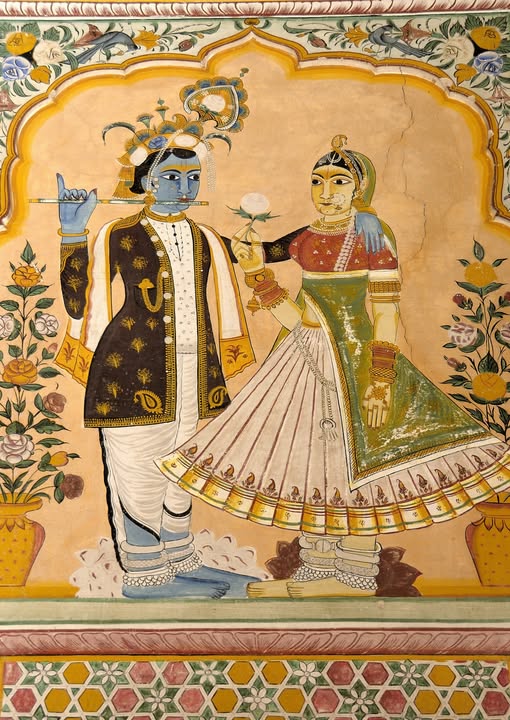
Rajasthan’s history is not just about golden forts, desert dunes, and royal palaces. In the northeastern corner of the state, the Shekhawati region showcases artistic treasures of the 18th and 19th centuries.
Shekhawati’s magic gradually reveals itself through a painted doorway, a faded fresco, a hidden courtyard, or a story shared by a local resident. Celebrated as an “open-air art gallery,” it is famous for its opulent havelis adorned with intricate frescoes. Every street seems to tell a story, painted in vibrant colours that have survived the harsh desert climate for more than a century. In Shekhawati, even a casual stroll to buy a cup of tea can turn into an unexpected art tour. A faded haveli wall may suddenly reveal a steam engine, a British officer, or a scene from the Ramayana staring down at you from a century ago.
Elaborately decorated havelis were built during the eighteenth and nineteenth centuries by wealthy Marwari merchant families who made their fortunes through trade and business. They invested in magnificent homes adorned with intricate frescoes. The walls became their canvas. Frescoes of Shekhawati are a fascinating blend of tradition and modernity, with a complete disregard for categories. The artists had no issues in sharing, mythology and modernity on the same wall. Alongside scenes from the Ramayana and Mahabharata, one may find paintings depicting trains, aeroplanes, and Victorian-era fashions. The walls became visual records of a changing world. Shekhawati’s frescoes are history books painted in colour.


Even after decades of sun, wind, and dust, many frescoes continue to glow with surprising vibrancy. Walls still glow with reds, yellows, and indigos. Delicate floral patterns frame larger scenes, while bright natural pigments bring the artwork to life.

Every doorway reveals another masterpiece, often hidden behind weathered wooden gates.

A faded door may open into a courtyard covered in paintings.


Many havelis have been abandoned as families moved to larger cities. Exposure to weather and neglect have caused some frescoes to fade or disappear altogether.

Shekhawati is one of India’s most extraordinary cultural landscapes. Conversations with local residents reveal fascinating stories about the families who once lived in these mansions and the artists who decorated them. Conservationists, heritage enthusiasts, and local communities are helping restore many of these architectural gems. Every preserved fresco is a rescued story. Every restored haveli is a chapter of history brought back to life.
Photos and text by Prerna Jain.


