
Every World Doctors’ Day, we thank the physicians who heal us, comfort us, and, many times, stand between life and death. Medicine is among the few professions in which complete strangers trust their lives, and those of their loved ones, in another person’s hands. While technical knowledge saves lives, empathy heals people. We appreciate a doctor’s dedication most during a personal medical crisis, but its true significance extends far beyond the walls of a hospital.
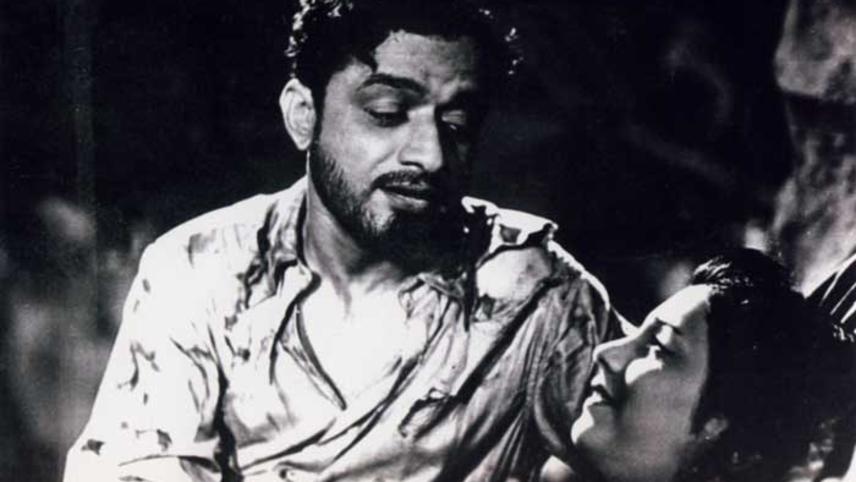
Few stories illustrate this better than that of Dr Dwarkanath Kotnis, immortalised in V. Shantaram’s 1946 classic Dr Kotnis Ki Amar Kahani.
One of the greatest filmmakers of Indian cinema, V. Shantaram, believed that cinema could educate, inspire and awaken the social conscience. His remarkable body of work is a testament to that belief. Dr Kotnis Ki Amar Kahani is far more than a biographical film; it is a heartfelt tribute to the noblest ideals of the medical profession.
The film chronicles the extraordinary life of Dr Kotnis, one of the five Indian physicians sent to China during the Second Sino-Japanese War as part of the Indian Medical Mission. While the other four eventually returned home, Dr Kotnis chose to stay. He devoted himself to treating wounded soldiers under unimaginable conditions until years of relentless work and physical exhaustion claimed his life at the age of just thirty-two.
What makes Shantaram’s direction so remarkable is his refusal to glorify heroism through melodrama. There are no long, preachy monologues or grand speeches extolling sacrifice. Nor does he attempt to elevate Dr Kotnis into an untouchable saint. Heroism emerges through endless surgeries, sleepless nights, overcrowded field hospitals, and the quiet determination to save one more life. Dr Kotnis does not seek glory; he simply refuses to abandon his duty. In Shantaram’s hands, the extraordinary is found in the ordinary routine of service.
For a film made in 1946, this approach feels remarkably modern. As in many of his films, Shantaram’s mastery of cinematic language is evident throughout. One sequence, in particular, continues to be admired by critics and film enthusiasts alike. Shot in a single uninterrupted take, it follows Dr Kotnis moving tirelessly across a battlefield, tending to the wounded without respite. Its brilliance lies not in the technical feat itself but in its emotional impact. The absence of cuts compels us to experience the relentless pace of a battlefield doctor’s life. The camera never looks away because the doctor cannot. Technique and emotion merge seamlessly to create one of the film’s most memorable moments.
The film also balances the brutality of war with moments of tenderness. The romance between Dr Kotnis and the Chinese nurse Guo Qinglan never feels like a commercial diversion. It reminds us that those who dedicate themselves to humanity also have personal dreams, relationships and vulnerabilities.
Their story continued beyond the film. In real life, Guo Qinglan lived to the age of ninety-six, passing away in 2012. Guo Qinglan later chronicled her memories in her memoir, My Life with Kotnis.
Rooted in a specific historical era, Dr Kotnis Ki Amar Kahani transcends nationalism. Dr Kotnis did not cross borders as a soldier or a diplomat; he crossed them as a healer. His patients spoke another language, belonged to another country, and fought another nation’s war. None of that mattered to him. Illness recognises neither nationality nor religion, and neither did the doctor treating it.
Nearly eighty years after its release, Dr. Kotnis Ki Amar Kahani remains one of Indian cinema’s most moving tributes to the medical profession. As we express our gratitude to the doctors who care for us and our families, it is worth remembering the young physician from Solapur who travelled to a distant land armed with little more than his medical training and an unwavering belief that humanity has no borders.
The film reminds us that medicine is not merely a profession; it is a moral calling. Human life stands above every other consideration. Through Dr Kotnis’s story, V. Shantaram reflects on the values that define the healing profession.

China released postal stamp to commerorate Dr Kotnis in 1982.

Indian Postal stamp to honour Dr Kotnis.
