
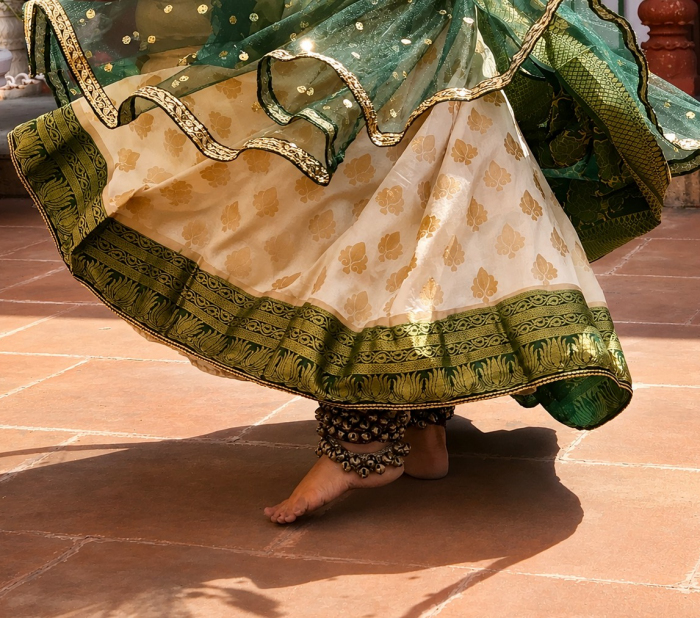
In Indian poetry, feet are never merely anatomical; they tell stories. They speak of the hesitant steps of a young bride, the measured gait of a classical dancer, the faint music of anklets echoing through an empty courtyard, and the delicate footprints left behind on rain-soaked earth. A bride enters her new home, leaving crimson alta footprints, symbolically inviting Goddess Lakshmi into the household. Pilgrims walk barefoot to temples, while devotees yearn for charan raj, the sacred dust beneath the Lord’s feet.
Sometimes, an entire romance begins with a glimpse of beautiful feet.
Perhaps the most celebrated compliment ever paid to a woman’s feet in Indian cinema comes from Pakeezah. More than fifty years later, it still sounds as enchanting as ever. Its enduring appeal lies not only in Kamal Amrohi’s exquisitely crafted dialogue but also in Raaj Kumar’s unforgettable delivery, where every pause and every syllable lends the words an almost poetic reverence.
“Aapke paon dekhe, bahut haseen hain. Inhein zameen par mat utariyega, maile ho jayenge.”
“I saw your feet, they are so beautiful. Do not let them touch the ground; they might become soiled.”
Long before beauty became something to be photographed, filtered, and displayed on social media, poets found inspiration in a woman’s footsteps. They admired not merely the feet themselves but the grace with which they moved and the memories they left behind.
No one expressed this more beautifully than Mirza Ghalib-
Jahan tera naqsh-e-qadam dekhte hain,
Khayaban khayaban Iram dekhte hain.
“Wherever I behold the imprint of your footsteps, every lane blossoms into Iram, the legendary Garden of Paradise.”
Ghalib says nothing about the beloved’s face, her eyes, or her smile, he celebrates the ground where she once walked. Her footprints transform an ordinary path into paradise.


Photos and text by Prerna Jain.


