
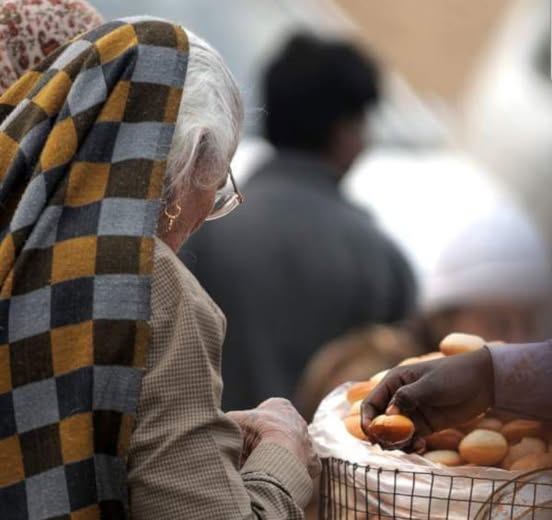
Nearly every evening during our summer vacations, my cousin and I would go to the street corner near my grandmother’s house, where a narrow lane met the main road at a perfect right angle. That little junction was home to Nimmo’s golgappa cart. Nimmo was a teenage girl, almost our age. While she worked, her father would sit quietly on a weathered wooden stool. Occasionally, her younger brother would join them, but it was always Nimmo who served the golgappas.
Her hands moved with practiced ease. She would pick up a hollow, crisp sphere of deep-fried wheat dough and, with a gentle press of her thumb, make a neat opening in its delicate shell. Into it went a spoonful of spiced boiled potatoes and chickpeas, followed by a quick dip in sweet tamarind chutney. Then came the best part. She would lift the lid of the earthen matka, releasing the irresistible aroma of mint, coriander, black salt, roasted cumin and countless other spices. One by one, the golgappas disappeared into the chilled green water and emerged brimming with the tangy liquid. They were placed deftly into a dona, a small bowl made of stitched leaves.
The moment a golgappa landed in the dona, we picked it up and popped it into our mouths. That is the only way to eat golgappas. The crisp shell shattered instantly, releasing an explosion of sweet, sour, salty and spicy flavours. Even today, I can recall that unforgettable burst of taste. What set Nimmo’s golgappas apart from every other vendor in the neighbourhood was her generosity with the pani. She filled each golgappa right to the brim. The minty water was deliciously fiery. The instant the shell burst, and the chilled, spicy water touched our tongues, our mouths flew open in search of cool air. Tears welled up in our eyes, our noses tingled, and we fanned our faces while laughing at each other’s expressions. We held out our donas and were ready for more. After our quota of 8 golgappas was over, our mouths would still be on fire. Nimmo would hand us a dry papri, a flat version of golgappas, to ease the fire.
The next evening, we were ready for more.
Irrespective of how passionately Kolkatans boast about their puchkas, Mumbaikars swear by their pani puris, or my own mother insists that nothing can match the pani batashas of Uttar Pradesh, I remain unconvinced. For me, no version has ever come close to the golgappas Nimmo served from her little cart at that street corner. Perhaps it was the generous helping of fiery mint water, perhaps the innocence of those carefree summer evenings, or perhaps simply the magic of childhood.


Golgappas being sold at a village fair in Rajasthan.

I tried making golgappas at home, nowhere close to the ones from Nimmo’s golgappa cart.

Photos and text by Prerna Jain.
