
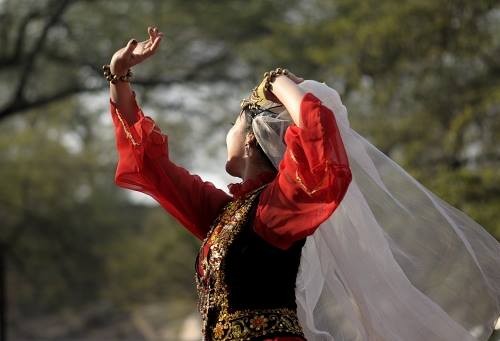
 Whenever I see young women standing at protest sites, holding placards and raising slogans, I wonder, are they also carrying the unfinished dreams of their mothers along with their own dreams. Perhaps even those of their grandmothers.
Their grandmothers belonged to a generation that was rarely encouraged to read beyond necessity, mostly religious texts. They had learned to swallow their opinions before speaking. They were taught that a girl’s desires should remain unspoken, that love must be hidden, ambition killed, and anger disguised as patience. Many of them spent their lives apologising unconsciously, for taking up space in the world. Their mother’s generation was treated a little better.
Women inherit many things from the generations before them, recipes scribbled in fading notebooks, family jewellery wrapped in old muslin, forgotten lullabies, and stories that survive only in memory.
They also inherit fear, disguised as love.
“Don’t stay out late.”
“Don’t answer back.”
“Ignore it.”
“Compromise.”
“This is how the world works.”
Fear is stitched into their school uniforms, folded into their dupattas, packed into lunch boxes and tucked beneath their pillows before bedtime, always presented in the garb of wisdom. Mothers pass it on reluctantly, not because they believe in it, but because it is all they have ever known. Daughters are taught not how to change the world, but how to survive in it.
Some daughters decide that fear will end with them.
When I see the scale of participation of young women in protests today, even in movements that are not specifically about women’s issues.The cause itself may be collective, political, and not gendered in its intent. I may not always agree with the language or tone some of them use. But their visible presence, in such large numbers, signals a shift in how women see themselves in public space, and how they choose to occupy it. I wonder, have they decided that fear will end with them.
The celebrated Urdu poet Fehmida Riaz spoke about such moments-
Kuchh log tumhein samjhayenge,
Wo tum ko khauf dilaenge.
Jo hai, wo bhi kho sakta hai,
Is raah mein rahzan hain itne.
Kuchh aur yahan ho sakta hai,
Kuchh aur to aksar hota hai.
Par tum jis lamhe mein zinda ho,
Ye lamha tum se zinda hai.
Ye vaqt nahin phir aayega,
Tum apni karni kar guzro,
Jo hoga, dekha jayega.
(Some will try to persuade you.
They will frighten you.
They will tell you that you may lose even what you already have.
They will warn you that the road ahead is full of dangers.
Anything can happen,
And often, the unexpected does.
But the moment you are living belongs to you, and it lives through you.
It will never return.
Do what you know is right.
Whatever happens, we shall face it).
When these women raise their voices today, they are not speaking only for themselves. They are speaking for their grandmothers who could never speak, their mothers who spoke only in whispers, and for themselves. They are not three separate stories. They are one story unfolding across three generations.
Every fearless daughter I see today feels like the echo of a silenced grandmother. Perhaps that is why her voice sounds so powerful.


Photos and text by Prerna Jain.
