

Mulla Nasruddin, or Nasreddin Hodja as he is known in Turkey, is one of the most beloved figures of Middle Eastern and Central Asian folklore. Traditionally placed in 13th-century Anatolia, he is said to have been a teacher, judge and wise man. His real talent, if the stories are to be believed, was making foolishness sound like wisdom.
Nobody knows how many of the stories about him actually happened, or whether any did. Perhaps there was once a real Nasruddin. Generations of storytellers supplied the rest. What survived was a wonderfully contradictory character: sometimes wise, sometimes foolish, often both at once.
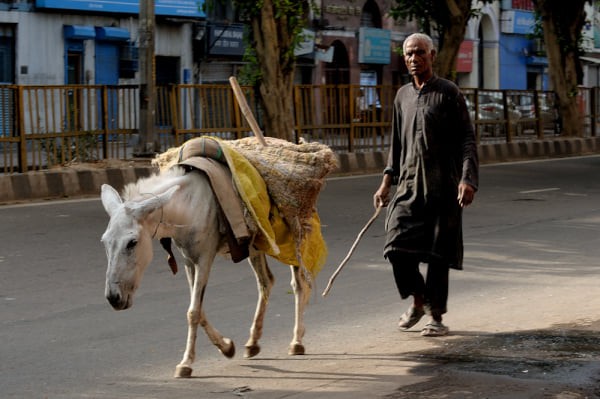
And then, of course, there was his donkey.
One day, carried away by a sudden burst of enthusiasm, Mulla took his donkey up to the roof of his house. Nobody knew why he took the donkey there. Why the donkey agreed to go was an even greater mystery. They spent some time on the roof, enjoying the view. Mulla seemed pleased with his idea. The donkey seemed less impressed. Eventually, Mulla decided it was time to come down. He led the donkey towards the stairs. The donkey refused. Mulla pulled. The donkey stood still. Mulla pushed. The donkey dug in its heels.
Mulla pleaded. The donkey looked at him as if to say, “You brought me up here. You figure it out.”
After several unsuccessful attempts, Mulla finally gave up. He came downstairs and decided to wait. Surely, he thought, the donkey would eventually realise that it was easier to go down than to stay on a roof. But the donkey had other plans. A little while later, Mulla heard a terrible noise coming from above. He looked up. The donkey was kicking the roof. Mulla was horrified.
“The roof!” he cried. “That roof is not strong enough to withstand a donkey!”
He rushed upstairs and tried once again to persuade the donkey to come down. But the donkey was now completely committed to demolishing the house. Mulla pushed it towards the stairs. The donkey kicked him. Mulla fell flat on his back. The donkey went back to kicking the roof. Then came a loud crack. The roof collapsed. Down came the donkey, the broken roof, and whatever remained of Mulla’s dignity. Mulla sat among the ruins for a long time, staring at the donkey.
He nodded wisely and said, “I have learned something today. A donkey should never be taken to a high place. First, it may hurt itself. Second, it may destroy the high place. And third, it may hurt the fool who took it there.” Mulla walked away, leaving the donkey and the broken roof.
Some wisdom comes from experience. Some comes from having made a spectacularly bad decision.
Agar bandar ke haath mein ustra ho, toh daadhi ki nahin, gardan ki fikr karni chahiye.
(If a razor is in a monkey’s hand, don’t worry about your beard. Worry about your neck)

The story is an old folk tale, and the photos are by Prerna Jain.
