
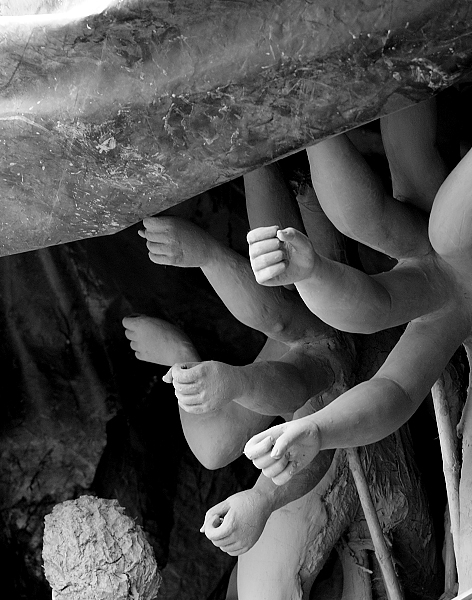

Living close to Chittaranjan Park, Delhi’s little Bengal, I can watch Durga Puja take shape well before the festival begins. The pandals rise, bamboo frames acquire their elaborate coverings, and workers rush about with last-minute arrangements. An unmistakable festive hum fills the neighbourhood as anticipation builds for the Goddess’s arrival. Soon come the crowds, traffic diversions and inevitable jams. These disruptions are part of C.R. Park’s annual transformation, a small price to pay for the colour, energy and collective joy that arrive with the Goddess.
Across India, Navratri celebrates the Goddess through nine nights of prayer, fasting, music and dance. The traditions may differ, but the central idea remains the same: the triumph of good over evil, of courage over fear, of justice over oppression.
At the heart of these celebrations is the story of Durga, the embodiment of Shakti, who confronts evil, challenges arrogance and defeats those who misuse their power. It is a story we have told for generations. Yet I wonder how much of its spirit travels beyond the puja pandals into our everyday lives.
Our beloved Goddess is welcome on the stage, but a woman who questions authority may not be quite so welcome at home. We organise magnificent celebrations and illuminate entire neighbourhoods, while women continue to calculate the risks of travelling home after dark. We worship a Goddess who refuses to be intimidated by power, yet often struggle to extend that same freedom and courage to women in our own lives.
The contradictions extend to our public life. We speak of dharma but are less insistent about accountability. We celebrate the victory of truth over evil, yet we can treat questioning those in power as disloyalty. We invoke the glories of our civilisation, while the democratic principle that those who govern must answer difficult questions seems less convenient.
Perhaps we admire the Goddess’s weapons without always considering what she fought against. We celebrate her courage, provided it does not inspire too much of it in citizens who question authority.
Traffic jams during Pujo are a small price to pay for a city making room for celebration. If only we were as willing to make room for inconvenient questions, dissent and accountability.


Photos and text by Prerna Jain.
