
G
The Nilgiri Tahr seems perfectly at ease in landscapes where the rest of us would hesitate to take even a step. This mountain-dwelling wild goat makes steep cliffs and rocky slopes look like ordinary walking paths. Often seen perched on narrow ledges at dizzying heights, it moves across the rugged mountains with remarkable confidence and balance.
Found only in the Western Ghats of southern India, the Nilgiri Tahr is a hoofed, plant-eating mammal that inhabits high-altitude grasslands and rocky mountain slopes, particularly in the Nilgiri and Anamalai ranges. Its sturdy body, short, coarse coat and powerful legs are well adapted to this demanding terrain. Its specially shaped hooves provide a firm grip on rocky and uneven surfaces, allowing it to climb and descend slopes that would be difficult for most other animals.
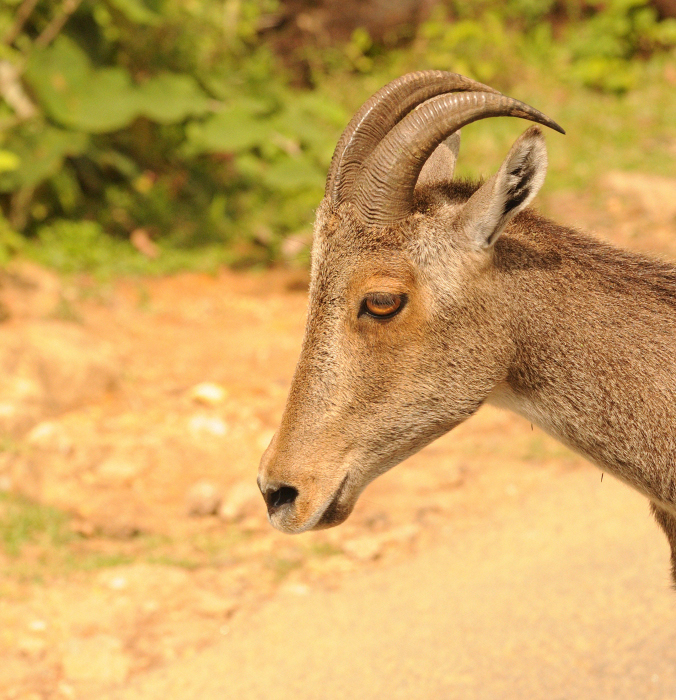
The coats of adult males turn dark brown, sometimes almost black, with a distinctive lighter, saddle-shaped patch on the back. Females and younger males are generally lighter in colour. Both males and females have backward-curving horns, though those of adult males are usually thicker and more prominent.
The Nilgiri Tahr has lost much of its natural habitat to human activities, including plantations, development and other forms of land-use change. Hunting has also contributed to its decline. It is classified as an Endangered species and receives legal protection under India’s wildlife laws. Eravikulam National Park, near Munnar in Kerala, is one of the best places to observe the Nilgiri Tahr in its natural habitat.
There is something humbling about watching an animal thrive in such a challenging landscape. Its extraordinary sense of balance, sure-footed movement and instinct for survival are fascinating. Perhaps great strength lies not merely in knowing how to move forward, but in knowing exactly where to place one’s feet.
