
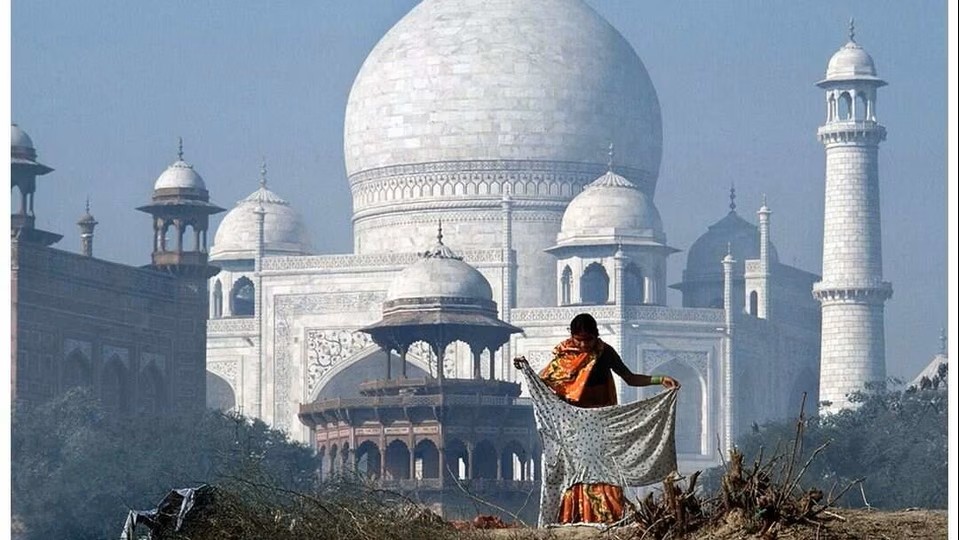
“A camera never lies” may feel like a dated claim in an age of manipulation and excess imagery. Yet, in the work of Raghu Rai, the phrase regains its moral weight. His photographs do not merely record, they testify.
For over six decades, Raghu Rai chronicled India with an intimate gaze. From the upheaval of the Bangladesh Liberation War to the carefully staged power of Indira Gandhi, his images move between history and humanity. A protege of Henri Cartier-Bresson, who saw in him a rare instinct, Raghu Rai’s induction into Magnum Photos in 1977 placed him within a global lineage of visual storytellers, yet his sensibility remained rooted, unmistakably Indian.
If there is one body of work that defines his legacy, it is his documentation of the Bhopal Gas Tragedy. Raghu Rai’s images from Bhopal confront and disturb, and refuse to let that horrible memory fade. His lens is not confined to catastrophe. It found poetry in everyday life and in portraits of figures like the Dalai Lama and Mother Teresa. As he once said, a photograph captures a fact of life that lives forever. His images ensure that history is not just recorded, but felt.
Raghu Rai extensively covered the socio-political landscape of India for half a century and elevated photojournalism to an art form. “Journalism is the first draft of history, and photojournalism is the evidence of history,” he said, “For me, photography started as a bid to freeze memories.”

The stately presence of Indira Gandhi is captured in a frame, seated in her office, with her Ministers, all men, standing around her.

A chaiwala at the gate of a moving train with his tray, cups and saucers.

He lent a magical touch to Bismillah Khan’s portrait.


He documented history through his photographs during the Bangladesh Liberation War. Rai’s photos of the plight of refugees became the testament of the times.

Raghu Rai’s story is the story of India, documented honestly through the years. His photos spoke through, the interplay of light and shadow.

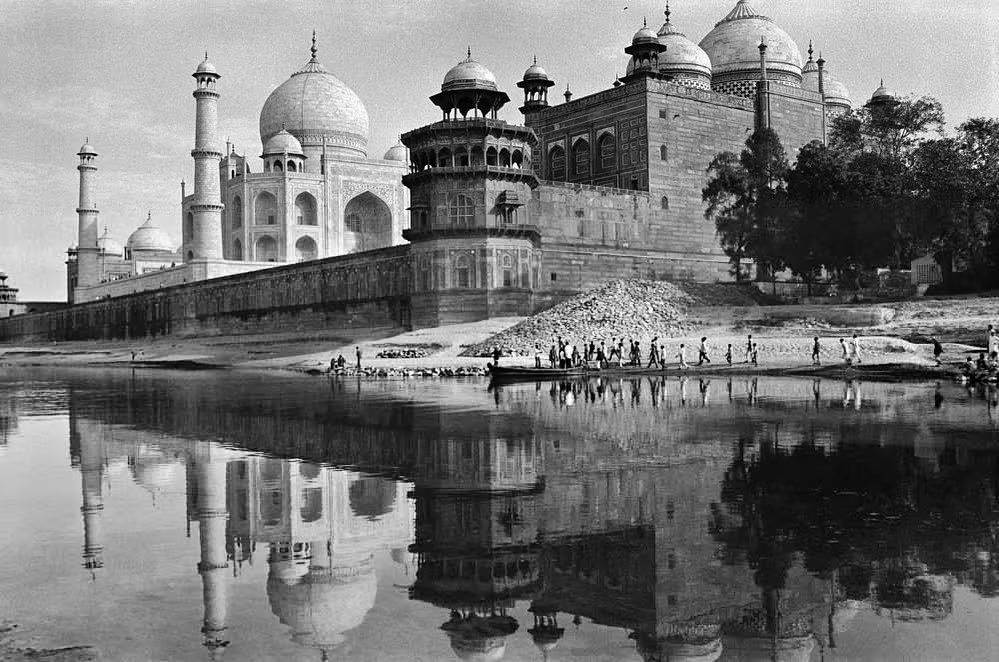
The Taj Mahal has been captured millions of times, but looking it through Raghu Rai’s lens was something special.


The Dalai Lama.

Raghu Rai was awarded the Padma Shri in 1972 and the Lifetime Achievement Award in 2017 by the Indian Ministry of Information and Broadcasting for his decades of service to photography. Recipient of the inaugural Acadèmie des Beaux-Arts Photography Award, he produced more than 18 books, among them Raghu Rai’s Delhi, The Sikhs, Calcutta, Khajuraho, Taj Mahal, Tibet in Exile, India and Mother Teresa. His photo essays appeared in Time, Life, Geo, The New York Times, The Sunday Times, Newsweek, The Independent and The New Yorker. He served three times on the jury of the World Press Photo and twice on the jury of UNESCO’s International Photo Contest.
With Raghu Rai’s passing, India lost its visual biographer. His photographs will tell unbiased stories of our times for a long, long time.
All the photos in this post are by Raghu Rai and were taken from various sites on the internet.


