
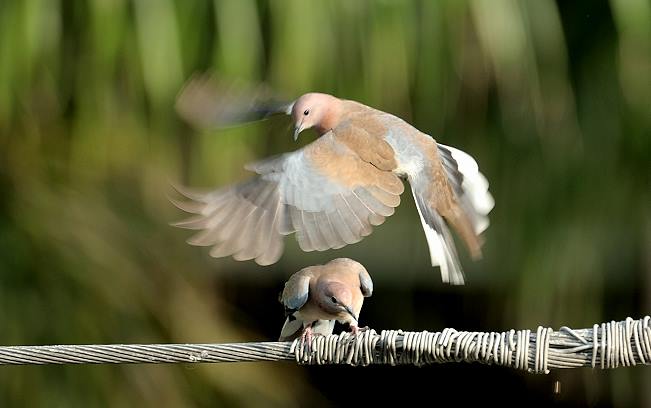

The dove woke up one morning with noble intentions of changing the world for the better. Her mission was crystal clear. Spread peace, promote harmony, and perhaps pose for a few photographs near a rainbow. If all went well, she might even be featured on a few podcasts by the end of the week.
Her speech was rehearsed. Her outfit was ready. She had carefully chosen a simple look. She wanted to appear as one of the people she hoped would support her.
Standing before the mirror, she practised once more-
“Dear friends, let us resolve our differences through dialogue. Let us build bridges, not walls. Let us coexist peacefully.”
Then she noticed something in the top-right corner of the mirror.
An eagle.
A very large eagle.
A very hungry-looking eagle.
The dove did what any sensible creature would do. She postponed the peace conference indefinitely. Before launching her campaign, she decided to conduct an audit of her followers. Last month, her cousin had challenged a hawk. He marched confidently into battle, convinced that hundreds stood behind him. By the time he reached the battlefield, most had quietly defected to the eagle’s camp. The remaining few were busy explaining on prime-time television why he was actually the problem. Some accused him of corruption. Others declared that only the eagle could save the world. The poor fellow never stood a chance.
The dove looked at her follower list again. How many truly believed in peace? How many could be persuaded by a slightly larger nest, a handful of premium birdseed, or a safety net from other predators?
Bravery is admirable, but survival has its own wisdom. The dove wasn’t being cowardly; she was being practical. Peace is a wonderful thing, but it becomes difficult to preach when you are simultaneously trying not to become lunch.
As the line from the song in the Hindi film Pakeezah says:
“Aaj ki raat bachenge to sehar dekhenge.”
(If we survive the night, we shall see the dawn).
Waiting quietly on a branch, the dove reflected on the challenges facing peacemakers. Good intentions are important, but they are not enough. Peace requires wisdom, especially among the powerful.
That thought brings to mind one of the most beautiful prayers ever written:
“Allah Tero Naam, Ishwar Tero Naam, Sabko Sanmati De Bhagwan.”
(Allah or Ishwar, whatever name we call you with, grant wisdom to all, O Lord)
The beauty of these words lies in their simplicity. They do not ask for wealth, success, influence, or power. They ask for sanmati, good sense, wisdom, and sound judgment. Perhaps that is what the world needs most.
We often speak of giving strength to the weak. But it is just as important to give wisdom to the powerful. A weak person with strength can defend himself. A wise, powerful person can prevent the fight from happening in the first place.
The eagle flew away. The dove resumed her journey. Peace is a persistent effort. Sometimes the dove waits patiently on a branch, watching the horizon and keeping one eye on the eagle. Courage is admirable. But wisdom means taking one look at the eagle and saying, today is not the day. The dove needs to remain alive while wishing that her prayer is accepted-
Give strength to the weak, and wisdom to the powerful.
वो फ़ाख़्ता जिसे लाना था अम्न का पैग़ाम
उड़ी नहीं थी कि उस ने उक़ाब देख लिया
– अंजुम ख़लीक़
*उक़ाब- बाज़
Wo faḳhta jise laana tha amn ka paigham
udi nahin thi ki us ne uqaab dekh liya
– Anjum Khaleeq
Photos and text by Prerna Jain.


