
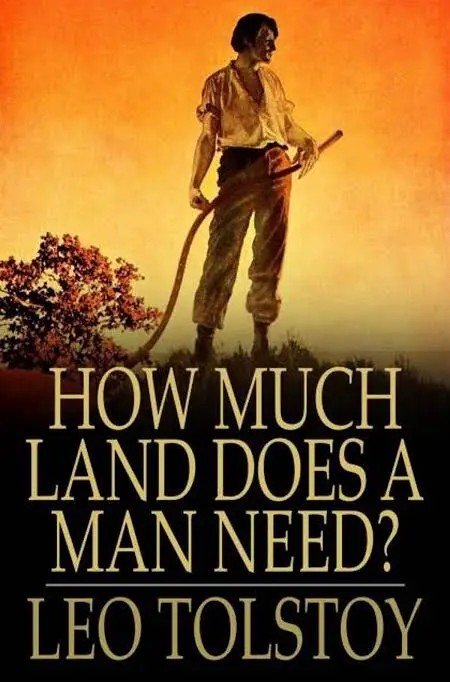
Recently, I reread Leo Tolstoy’s classic story “How Much Land Does a Man Need?” As a young girl, when I read it, I saw it as a tale about greed. Reading it today, I see something much larger. I see a story about power.
Pakhom, the ambitious peasant and the story’s protagonist, spends an entire day chasing land. He receives what would today be called a limited-time exclusive offer: Add a little more to your cart and unlock unlimited benefits! Or perhaps the literary equivalent of an all-you-can-eat buffet.
The Bashkirs tell him that for 1,000 rubles, he can own all the land he can walk around in a single day. There is only one condition: he must return to his starting point before sunset. The farther he walks, the more he wants. Every distant patch of earth looks too valuable to leave behind. By the time he realises he has gone too far, it is too late. He races back to the starting point, collapses, and dies. In the end, all the land he needs is a grave six feet long and three feet wide.
Tolstoy called it a story about land. Did he mean power when he wrote land? Land was the currency of power in Pakhom’s world. Today, there are multiple currencies. Power is measured through wealth, political influence, corporate dominance, military strength, social media followers, and occasionally by the number of people who agree with you without using their brains. Andhbhakti mein hi shakti hai.
As I read the story again, I could not help thinking about wars. Wars begin with noble speeches, like destroying weapons of mass destruction. Leaders speak of security, national pride, historical rights, strategic interests, or the protection of future generations. Beneath the motivating lofty speeches lies the greed for a little more territory, a little more influence, a little more control. This border is vital. That region is indispensable. This expansion is necessary for security. But the horizon keeps moving. Every victory reveals another objective. Every gain creates a new justification for gaining more.
More than a century after Tolstoy wrote his story, Pakhom is alive and well. Sometimes he wears a business suit. Sometimes a military uniform. Sometimes he stands behind a podium, addressing a nation.
When Pakhom overreached, he paid the price with his own life.
When nations overreach, entire generations pay the price.


Photos and text by Prerna Jain.
