
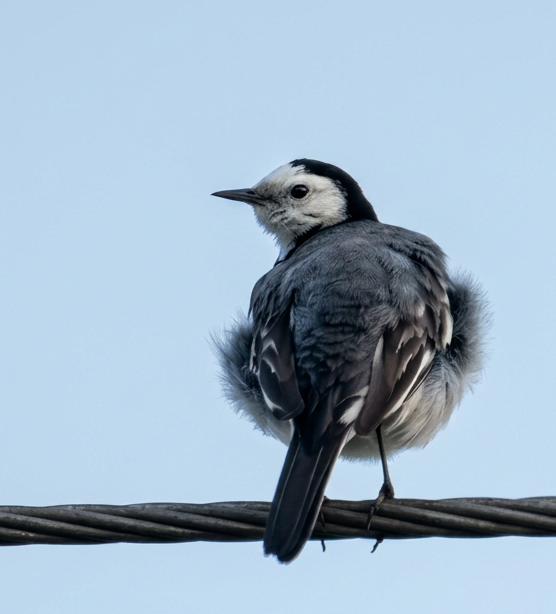
Photographing a White Wagtail (Motacilla alba) is both rewarding and frustrating. Its elegant black-and-white plumage creates striking photographs, making it a favourite subject for bird photographers. The frustration begins when you have checked every angle, the light is perfect, the composition looks promising, your camera is focused, and at that exact moment, the bird decides to sprint away in pursuit of a tiny insect.
The White Wagtail simply refuses to stand still. Watching one in action, you begin to wonder whether it has consumed too much caffeine. Every time I see one, I am reminded of a famous line from an old battery commercial: “Battery khatam hi nahin hondi” (“The battery just never runs out!”). The bird seems to run on an endless supply of fully charged batteries.
It dashes across open ground, suddenly screeches to a halt, snatches an unsuspecting insect, and then races off again. Unlike many small birds that hop, wagtails prefer to walk and run. And throughout all this activity, the tail never stops moving. Up and down, up and down, in a rhythm so constant that it appears to be dancing to music only it can hear. Perhaps it is listening to its own private playlist, much like contestants in those television games where participants wear headphones and dance to tunes nobody else can hear.
The White Wagtail is a winter visitor to northern India. Travelling thousands of kilometres from Europe, Central Asia, and Siberia, they arrive around September and remain until March or April, escaping the harsh winters of their home grounds. As temperatures plummet in their northern homes, they seek warmer habitats, settling in wetlands, agricultural fields, riverbanks, and even urban parks.
They spend their days cheerfully hunting insects in muddy fields, along pond edges, and in open grassy areas, showing little concern for nearby humans. Wherever insects are plentiful, a White Wagtail is likely to appear, striding briskly with the confidence of a bird that firmly believes it owns the place.


Photos and text by Prerna Jain.
