
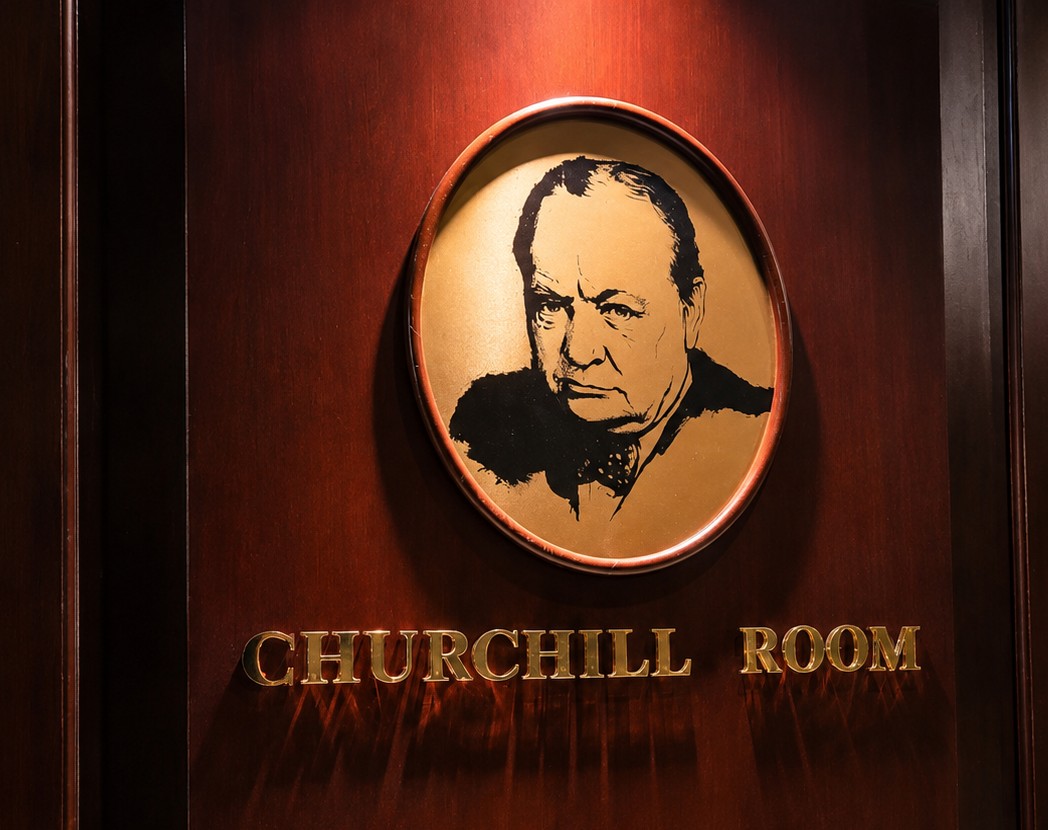

In the first week of August, at the Tanglin Club in Singapore, history created a little drama in my head. I noticed Winston Churchill’s portrait hanging on the wall, surrounded by polished wood, and the unmistakable atmosphere of the British Empire, carefully preserved under several layers of varnish.
August is a significant month for anyone carrying a little historical baggage from the British Empire. For Indians, 8 August brings back the memory of the Quit India Movement of 1942, when Mahatma Gandhi gave the call to “Do or Die” and demanded that the British leave India. There were, of course, some Indians who opposed the movement. But let us forget them for a while. For the people of Singapore, August brings a very different but equally significant memory. 9 August 1965 was the day Singapore became an independent and sovereign nation, separating from Malaysia.
Two Augusts. Two struggles for self-determination. And there I was, in Singapore, looking at Winston Churchill. The Tanglin Club itself has quite a history. Founded in 1865 by “forty good men and true,” it began as a social club for the British community in colonial Singapore. The name “Tanglin” may have come from the Tanglin tree, also known as the Saraca tree. Over the decades, the Club survived colonial rule, two world wars, the Japanese occupation, Singapore’s transformation and, eventually, independence. The institution that began with forty British members now has more than 4,000 members representing over 70 nationalities. The Empire is gone. The Club remains. And Churchill is still watching.
I looked at the portrait and said, “You are still here.”
There was a long silence. I could almost hear the sound of a colonial typewriter somewhere in the background.
“The British Empire had a civilising mission,” he said.
“Of course it did.” I stared at him.
“Why do you look surprised? India benefited enormously from British rule. Railways. Law. Administration. Education. Have you forgotten all that development?”
“Taxes. Extraction. Famines. Political repression.”
Churchill frowned. “You Indians have a very selective memory. We were not perfect. I had serious reservations about Indian self-government. You were not ready. Your leaders were inexperienced. Your country was deeply divided. You had enormous poverty and illiteracy.” He looked triumphant.
“And all that qualified you to rule over us?”
He didn’t respond.
I decided to change the subject. “You called Gandhi a ‘half-naked fakir’. How does it feel to have judged a man because of what he wore?”
“Gandhi was a political agitator.”
“Yes. And he managed to make your Empire extremely agitated.”
Churchill looked irritated. “You people have turned Gandhi into a saint.”
“We have turned him into a symbol. There is a difference. And what do you have to say about the Bengal famine?”
His expression hardened. “The circumstances were complicated. The war required difficult decisions.”
“Indians starved.”
He stared at me.
“Millions suffered during the Bengal famine. The people who were starving were Indians, while the government responsible for them was a colonial government.”
Churchill said nothing.
“So much for the civilising mission.” I looked around the Club.
The chandeliers, the portraits, the polished furniture. It was easy to imagine another century. British gentlemen in impeccable suits. Alcohol flowing generously. Maps spread across tables. And someone thousands of miles away deciding what was best for millions of people who had not been invited to the meeting.
Churchill’s famous words about Indian independence began to echo in my mind, the warnings about power falling into the hands of “rascals, rogues and freebooters,” and his dismissive descriptions of Indian politicians. I paused. I wanted to be fair. Historians have questioned whether some of those exact words can reliably be traced to Churchill. But there is no shortage of evidence for his deep opposition to Indian self-government. He had predicted disaster. India would fall apart. Democracy would fail. Indian politicians would prove incapable of governing.
Well, democracy did survive. Not without hiccups, admittedly. It is not perfect. Far from it. Elections happen. Repeatedly. Governments change. India is now one of the world’s major economies. We have corruption. Inequality. Religious tensions. Political opportunism. Bureaucracy. Bad roads. Good roads that soon become bad roads. Politicians who promise the moon and occasionally deliver a pothole.
As if Churchill had read my mind, he almost smiled.
“But we also have scientists, writers, artists, entrepreneurs, universities, industries, elections, arguments, newspapers, films, cricket, and an astonishing ability to survive your own politicians.”
He looked thoughtful.
“You are suggesting I was wrong?”
“I am suggesting history didn’t quite follow your script.”
He didn’t answer. I turned towards the door. Then I paused. Churchill was hanging in Singapore. The Empire was gone. Singapore was independent. India was independent. And Churchill was still here, looking down at all of us.
He raised an eyebrow.
“History remembers its victors.”
I looked back at him. I smiled.
“People who are absolutely certain they are on the right side of history should occasionally check whose history they are talking about.”
There was something deliciously ironic about the scene. I was an Indian woman, sitting comfortably in a club born in the British colonial era, looking at the portrait of one of the Empire’s most formidable defenders. History had come full circle. Or perhaps history had simply developed a sense of humour.
The Tanglin Club, at least, seems to have done something sensible with its past. It has preserved it without remaining frozen in it. What began as a club for a colonial European elite is now a cosmopolitan institution whose membership reflects more than 70 nationalities. Perhaps that is what history is supposed to do. Do not erase the past. Do not pretend it never happened. Remember it. Question it. Laugh at its absurdities when you can. And, most importantly, don’t let the people in the portraits have the last word.


Text and pictures by Prerna Jain.


