
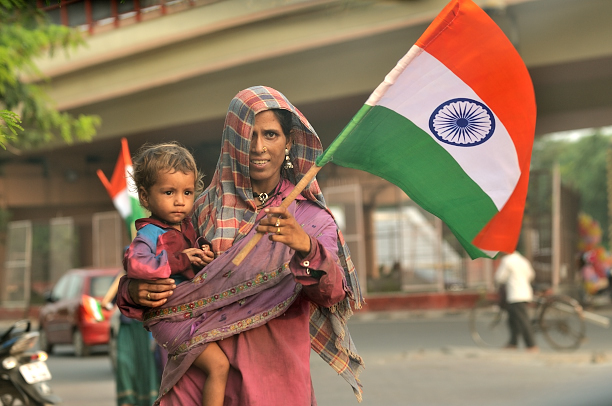

Our grandparents’ generation won a great battle on 15 August 1947. For our grandparents, freedom meant breaking the chains of colonial rule. They had seen a country divided, families displaced, homes abandoned and lives uprooted. Freedom was a dream they had waited for, fought for, sacrificed for and, for many, paid the ultimate price for. But between the generation that fought for freedom and the present generation that questions what freedom means today, two generations are often forgotten. The first was the generation that inherited freedom and then spent its life building a country with it. My parents belonged to that generation. The second was my generation, the children who grew up in independent India and witnessed the silver jubilee celebrations of Independence. We watched, alongside our parents, as a young Republic found its feet.
We saw our parents live through ration queues, the Licence Raj, wars, the Green Revolution, the Emergency, the arrival of television, black-and-white television giving way to colour, the coming of computers, economic liberalisation and, eventually, the internet. They waited years for a telephone connection. They celebrated when a scooter, refrigerator or colour television entered the house. I remember people performing a pooja before using a new gadget, as though every new appliance represented not just a purchase but a small milestone in the country’s progress. They saved, struggled, adjusted, educated their children and built homes. They may never have thought of themselves as nation-builders, but in their own quiet way, they were. They inherited a fragile democracy and spent decades strengthening its foundations. They believed progress meant giving their children opportunities they themselves had not had. They endured shortages, waited patiently, adapted to change and quietly built a better future.
Freedom means something different to every generation. For our grandparents, it meant freedom from colonial rule. For our parents, and to some extent for our generation, it meant the freedom to build, to educate our children, create opportunities, improve our homes and participate in a young democracy. For the present generation, freedom may also mean breaking the chains we do not always see, the chains of fear, silence, prejudice, inequality, intolerance and the fear of questioning.
Adam Gondvi (Ram Nath Singh), the celebrated Indian poet known for his sharp critique of social and political inequality, placed the responsibility of judgement squarely on the shoulders of the new generation:
Ye nai peedhi pe mabni hai, wahi faisla de,
Falsafa Gandhi ka maujoo hai ki Naxalvaad hai.
The judgement belongs to the new generation;
it must decide whether the philosophy of Gandhi remains relevant, or whether Naxalism has become the answer.
As the lyrics from my favourite Hindi song from the black and white era say-
Hum laaye hain toofaan se kishti nikaal ke,
Is desh ko rakhna mere bachchon sambhaal ke.
We have steered this boat through the stormy seas;
my children, now guard this country with care.
Happy Independence Day.


