
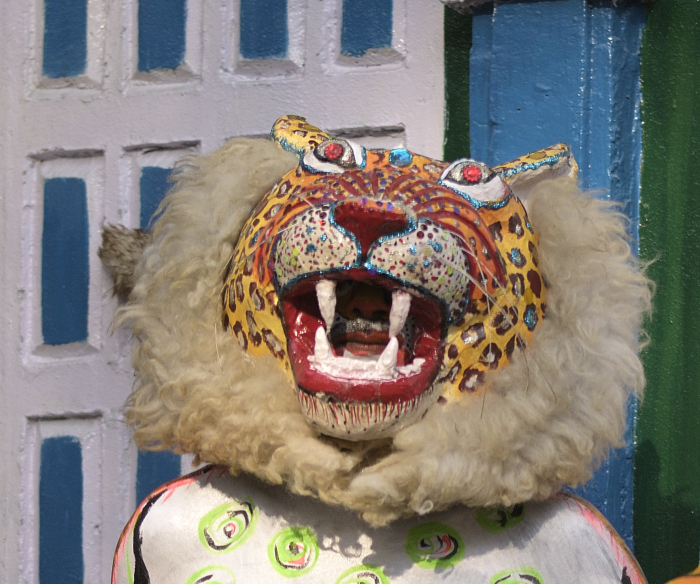

Once a year, in the streets of Kerala, the tiger gets to have the last word. Pulikali, literally meaning ‘ tiger play ‘, is one of Kerala’s most exuberant folk traditions, particularly associated with Thrissur and celebrated during Onam.
Pulikali is loud, colourful and theatrical. Men are painted yellow, orange and white, with black stripes across their bodies. The street becomes part jungle, part theatre. Ordinary men who, a few hours earlier, were presumably occupied with ordinary things: work, traffic, petrol prices, lunch, sit patiently for hours as their bodies are painted and striped until the men disappear and the tigers emerge. The chenda (a traditional Kerala percussion instrument) begins to thunder, its powerful rhythm filling the streets as the painted tigers start to dance. It does not provide background music; it takes over the street. The rhythm seems to enter the dancers’ bodies. They prowl, crouch, sway, turn and spring, becoming remarkably convincing tigers.
The dancers play with the crowd. There is no stage, no curtain, no distance between performer and audience. The street is the theatre, and everyone becomes part of it. You hear the drums before you see the dancers. Then the colours appear. The crowd parts, and suddenly a tiger appears in the middle of the street. For a few hours, ordinary men become tigers, streets become theatres, and the drums become heartbeats.


Photos and text by Prerna Jain.
